Social Documentary Photography for a Better World!

Sunday, June 5, 2011

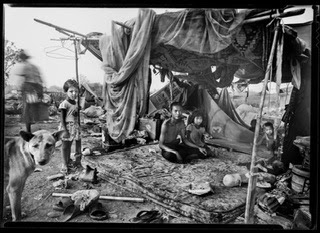
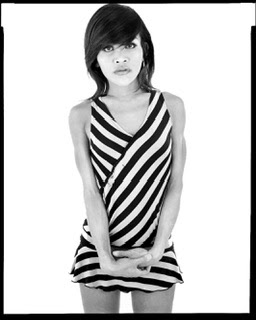
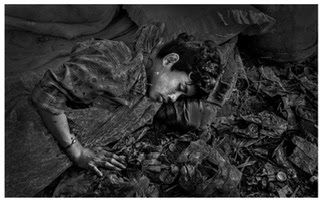
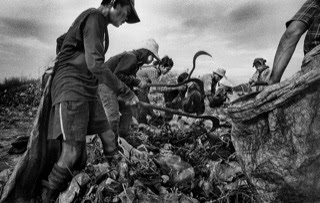
Some More Xpan Scans From Thailand

These will probably the last Xpan scans from the 2010 Thai trip. I was just looking through the contacts and chose out a few I liked.


Friday, June 3, 2011

Quotes: Vincent Van Gogh

"I am risking my life for my work, and half my reason has gone."

"The only time I feel alive is when I'm painting."

"I want to touch people with my art. I want them to say 'he feels deeply, he feels tenderly."

" The emotions are sometimes so strong that I work without knowing it. The strokes come like speech."

" It is not the language of painters but the language of nature which one should listen to, the feeling for the things themselves, for reality, is more important than the feeling for pictures."

Wednesday, June 1, 2011

AGA, Warhol and Carr

I really loved the show yesterday at the AGA, will probably go back at least 2 more times before it runs out. I learned of a new artist yesterday, Emily Carr. I had heard the name and even been to her art school in Vancouver but did not know her art or history. Carr was one tough lady with some very inspiring work done amongst the Haida native Indians on Haida island (north of Vancouver island).

Saw Warhol also and loved the fun of his show. They had several of his silkscreens, a large sliver Liz (Elizabeth Taylor), they had several of his films including a guy sleeping for 8.5 hours, they had 3 videos going, one of him talking on the phone, one of him painting (very interesting to watch) and one that was a variety of vids including one with a surprised Warhol learning someone had died. He was interviewing a fellow artist and was told a mutual friend had died, and Warhol could not believe it, he asked like 5 times, "he's dead?" Then he finally says" He's really dead? but he's so rich!" the comment broke me up, I laughed out loud, the artist he was talking to said, "yes even rich people get sick and die!"

In the show they had several of his photographs mostly his Polaroids, including several self portraits in drag, which were loads of fun, Warhol heads shots in drag. I loved the vulnerability of these photographs, my favorite part of the show, Warhol showed wonderful courage in making and showing them. They also had 5 of his wigs! and some wig stories, there is something eary about looking at a guys fake hair, like your peeking in a wardrobe drawer in his bedroom.

I bought a Emily Carr book new on Amazon yesterday for ($27, new with free shipping) the exact same book retails for $75 in the AGA bookstore. I want to learn more about this amazing women, she was also a very successful writer. I bought Carr's journal as well online, reading artist diaries is usually very interesting, you get a feel to their artistic process, why they create what they created.

http://www.amazon.ca/gp/product/1553651731/ref=oss_product

http://www.amazon.ca/gp/product/1553651723/ref=oss_product

While waiting at the front desk I got both the phone number and email to the person in charge of submissions for the small Alberta only RBC new works gallery at the AGA. I want to send an email (I do better in email) and find out more on the submission process. It is a bit of a cheat to be put into a Alberta only room but heck, beggars like me can't be choosers. It would be an honor to get work into the AGA anywhere! Think I will try and submit some sex worker portraits done down the years, later on will also try submitting some of the "Peoples Series Portfolio" which I still have to make. The other option is to submit work done in Klong Toey but I need to do more photography there as well. Since the new museum reopened I have seen 4 or 5 shows in this space and nothing has nocked my socks off, so I know my work is good enough to be shown, it is not like I would be competing for space in the main gallery with Burtynsky, Karsh, Matisse, Warhol or Degas. It is a very achievable goal, so will check the submission requirements and make submissions over the next few years. Who knows maybe someday will get into this new works gallery for Albertans and in later years get into the non segregated sections of the museum.

Sunday, May 29, 2011

Quote: Martin Luther King Jr.

"Human progress is neither automatic nor inevitable... Every step toward the goal of justice requires sacrifice, suffering, and struggle; the tireless exertions and passionate concern of dedicated individuals."

Saturday, May 28, 2011

Quote: Consuelo Kanaga (Photographer)

"Young is old in poor cultures."

Wish I Was Making Photographs

Another 12 hour night shift, scrambling to make money so that I can make photographs at some far off later date. I see so much wastage in the world, people blowing money on trifles, I wish I just had enough money to get by, enough money to live on, travel and make photographs everyday, telling the stories I want to tell. Life is passing me by, am running out of time to create the body of work I want to create. We all only have some much time to do what needs to be done I've got to get back to making photographs soon while I am still young and fit enough to do it.

Would Rather Be Invisible

I am working on my little speech for the show but do not want to talk about GERRY!! I hate listening to those types of speeches, I plan to give a very quick 2 or 3 sentence overview of me, then move on and talk longer about the pictures in the show. I think giving a bit of background on the shots might be fun for the people, sort of a story behind the photograph. The thing I do not like about doing that is that a picture should be able to stand on its own without all the verbal blabbering crap, the art speak nonsense etc. I have been asked to talk so will live up to that obligation, will make it a short sweet 5 minute thing.

Am making up a list of people I am inviting to the show, the friends section is by far the biggest, something like 25, mostly photo club folk. I am not really keyed up about inviting friends, they sometimes feel the obligation to pat you on the back and give praise, possibly false praise. Praise in general is also something I am not keen on. If the photograph communicates the message I want it to then that's great but the praise and the pats on the back always make my stomach churn and makes me feel uncomfortable. Personally I prefer people who do not know me and who respond or do not respond to the photographs in a genuine way. I wish I could just be the anonymous Mr Yaum, that's one of the reasons I invented the guy. I am not important it's the photographs that matter. It is the subjects, the people in the photographs that are important, I would rather be invisible and watch quietly from the sidelines.

I will live up to my commitment thou and do what is asked, its part of the process unfortunately and I need to learn to live with it.

Thursday, May 26, 2011

I Have Some Good News And Bad News For You

You know when an email starts out like that your going to be partially disappointed. I got one print accepted into the art archives of Alberta through the foundation for the arts program, the bad news was that the second print was rejected.

I am happy to be part of this collection, it is something I have dreamed of for several years. When I started in photography many years ago I wanted to create a body of work that would be remembered after my death, guess that's a bit of a selfish goal but heck we all are selfish to a degree. Now that this single photograph was accepted I know that it will be in the archive after I pass, and that's a very comforting thought.

I am very happy that the young boy I photographed (the accepted photograph is "Young Monk Chiang Khong Thailand 2010") will be remembered, he will live on in the archive as the person I met and photographed that day. This boy had a real beauty to him, when I was photographing him I thought, what potential he has as an individual, his whole life stood before him. The boy had a amazingly vibrant skin, he looked like a new born babies hands look, perfect, un-scared and un-wrinkled. Now that he is part of the archive a piece of him will always remain perfect. His life will change, maybe he will live a long life or maybe die young, he might have a family or might continue life as a monk. The cool part of photography is that this small piece of who he was on that day is now captured forever, and because of this art archive 200 years from now someone might look at the photograph and remember this young boy, think about him, wonder about his life. How cool is that!! To be a small part of that process is wonderfully exciting.

http://gerryyaum.blogspot.com/2011/03/young-monk.html

I am sad thou that I let the other person down that was under consideration. I did a photograph in Klong Toey slum of a man in the entrance to his home. I so wanted to have this man remembered as well and I failed to do that. I feel I have an obligation to the people I photograph. They gave me the opportunity to make the their portrait, I should have made a portrait that worthy of being collected. I feel like I failed this man, did not live up to my responsibility to him. When I return to Thailand in September I will go give him his photographs and try to photograph him again, maybe I can make a better job of it the second time around. I hope I can remember where he lived, it was such a small sad little place it might be hard to track him down again. I feel lousy about not living up to my obligation to him. He deserves to be remembered and I did not rise to the opportunity he gave me, I failed him.

So it was a good and bad news type day. I am happy to be part of the provinces archive, it will also be good to have a small credit I can place on my CV for the coming group show. Both Larry and Jonathan (the other photographers involved in "Faded Lives") are heavy hitters and adding this to my resume makes the field slightly more balanced.

On a more practical level. I made $400 with the print sale which I will use to buy 300 sheets of Tri-x 4x5 film for the Asia trips this year. I am short of money now, have to find the funds somewhere to continue the work. I might have to take a second job so I can pay off bills and save money for future photo trips. Got to figure out new ways to fund my work, maybe try to get some grants from the provincial or federal governments. Even thinking of putting a donate link on this blog from paypal! Don't think it costs anything to add the link and who knows it might give me the opportunity to make photographs I might not otherwise have the money to make. The worse that could happen is I might have a link that is not used.

Monday, May 23, 2011

I Feel It

I feel confident, I feel like I can now make the kind of photos I always dreamed of. I just need to get to the right place at the right time and everything else will follow. I have to re devote myself and triple my efforts, work harder, harder, harder Gerry.

Saturday, May 21, 2011

Final Klong Toey 35mm Shots

Even thou I wasted lots of film and many times had technical slow shutter-speed blur issues, I am quite happy with the 35mm Klong Toey photos. I will continue to work with this wonderful Leica range-finder system, and extremely sharp lens. I need to find a important subject to devote myself to with this world class tool, something I am extremely passionate about, something I can throw my whole body and soul into.

Here are the last scans from film shot in December 2010, Klong Toey Slum Bangkok.


The group of children I was teaching English to for a short time.
http://gerryyaum.blogspot.com/2010/12/mouth.html


More More Klong Toey 35mm Slum Photos

Spending my Saturday morning doing some color printing. I am printing up 3 Cambodian brothel portraits for the July 14th "Fading Lives" show. While the current print I am working dries thought I would add some more b/w 35mm scans from Klong Toey.


Friday, May 20, 2011

Hard Edged 35mm Photo Story

I need to find a hard edged subject to photograph, something with lots of depth and humanity to do a photo story on. Drug addiction? Brothel life? Violent crime? Man made disaster (like Minamata disease)? Some story that I can tell that raises awareness and hopefully leads to positive change.

Looking at the important work of Sebastiao Salgado and W. Eugene Smith is inspirational. I want to tell an equally powerful story, Failure is a possibility but I would rather try and fail than live with the regret of not trying.

What story? I have to scan online news and look for it.

What about the life of an average poor man? or family? their struggle to survive, loss, anger, love of family etc. concentrate on one impoverished families life from every angle. Not sure it is visually dramatic enough but it certainly is a human enough subject.

Wednesday, May 18, 2011

More Bangkok Klong Toey Slum 35mm Scans

Working with the Leica rangefinder was lots of fun, I did get some shots I liked but much of the work was poor in quality. I need to concentrate more when I am making the pictures and need to be more selective when shooting, using the camera like a machine gun just wastes film. I need to be more patient when I am with my subject, to wait and then pounce when the message presents it self.

I will take the Leica M6 with 28mm F2 lens again with me next trip when I plan on visiting North Thailand and parts of Laos. Should I take a second Leica, a couple of different lens? I will also be shooting the 4x5 Linhof for the first time overseas so 2 cameras should be enough (unless I have a break down of some kind).

Here are some scans from contact sheet selections made a few weeks back. I think I am better off shooting the landscape, building photos with the 4x5 than these 35 small negs.


Tuesday, May 17, 2011

"Faded Lives", Details

Well the June show has been moved to Thursday July 14, and now has a name "Faded Lives" I had a meeting tonight with Larry and Jonathan the 2 other participants and we hammered out some details. There will be 150 show cards made up, we will each get 50 to hand out. There will be a press release as well as various reviewers and press people invited along with local photographers, artists, friends and family. We will serve wine and catered food, which will help create a friendly atmosphere.

The one part I am not to keen on is each photographer will do a little talk about their work to the gathered people. Larry will do most of the speaking but Jonathan and I will each have our moment in the spotlight, I will give a very short 4 or 5 minute speel about myself and the history of the photographs being shown. I am not big on public speaking but it is one of those things I need to improve at, in the future if the photography career continues to grow decent public speaking skills will be required.

It should be a pretty awesome evening. Hopefully I can add my work to the Provincial Archives in June to have an extra credit, Larry and Jonathan are both pretty heavy hitters, a foundation of the arts buy would add a bit of weight to my CV.

Saturday, May 14, 2011

Edward Weston: Seeing Photographically

Photography—Not Pictorial
Edward Weston, Camera Craft, Vol. 37, No. 7, pp. 313-20, 1930

"Art is an interpreter of the inexpressible, and therefore it seems a folly to try to convey its meaning afresh by means of words." This thought from Goethe is so true to me, that I hesitate before adding more words to the volumes both written and spoken by eager partisans—or politicians. I have always held that there is too much talk about art—not enough work. The worker will not have time to talk, to theorize—he will learn by doing.

But I have started with art as subject matter, though I have been asked to write my viewpoint on "Pictorial Photography." Are they, or can they be analogous? I would say, "Let the pedants decide that!" And yet—that word "Pictorial" irritates me: as I understand the making of pictures. Have we not had enough picture making—more or less refined "Calendar Art" by hundreds of thousands of painters and etchers? Photography following this line can only be a poor imitation of already bad art. Great painters—and I have had fortunate contacts with several of the greatest in this country, or in the world—are keenly interested in, and have deep respect for photography when it is photography both in technique and viewpoint, when it does something they cannot do; they only have contempt, and rightly so, when it is an imitation painting. And that is the trouble with most photography—just witness ninety per cent of the prints in innumerable salons—work done by those who if they had no camera would be third rate, or worse, painters. No photographer can equal emotionally nor aesthetically the work of a fine painter, both having the same end in view—that is, the painter's viewpoint. Nor can the painter begin to equal the photographer in his particular field.

The camera then, used as a means of expression, must have inherent qualities either different or greater than those of any other medium, otherwise, it has no value at all, except for commerce, science, or as a weekend hobby for weary businessmen—which would be fine if they did not expose their results to the public as art!

William Blake wrote: "Man is led to believe a lie, when he sees with, not through the eye." And the camera—the lens—can do that very thing—enable one to see through the eye, augmenting the eye, seeing more than the eye sees, exaggerating details, recording surfaces, textures that the human hand could not render with the most skill and labor. Indeed what painter would want to—his work would become niggling, petty, tight! But in a photograph this way of seeing is legitimate, logical.

So the camera for me is best in close up, taking advantage of this lens power: recording with its one searching eye the very quintessence of the thing itself rather than a mood of that thing—for instance, the object transformed for the moment by charming, unusual, even theatrical, but always transitory light effects. Instead, the physical quality of things can be rendered with utmost exactness: stone is hard, bark is rough, flesh is alive, or they can be made harder, rougher, or more alive if desired. In a word, let us have photographic beauty!

Is it art—can it be? Who knows or cares! It is a vital new way of seeing, it belongs to our day and age, its possibilities have only been touched upon. So why bother about art—a word so abused it is almost obsolete. But for the sake of discussion, the difference between good and bad art lies in the minds that created, rather than in skill of hands: a fine technician may be a very bad artist, but a fine artist usually makes himself a fine technician to better express his thought. And the camera not only sees differently with each worker using it, but sees differently than the eyes see: it must, with its single eye of varying focal lengths.

I cannot help feeling—and others have too—that certain great painters of the past actually had photographic eyes—born in this age they might well have used the camera. For instance, Velazquez. Diego Rivera wrote of him: "The talent of Velazquez manifesting itself in coincidence with the image of the physical world, his genius would have led him to select the technique most adequate for the purpose: that is to say, photography."

And there is Vincent Van Gogh who wrote "A feeling for things in themselves is much more important than a sense of the pictorial." Living today he might not use a camera, but he surely would be interested in some present day photographs.

Photography has or will eventually, negate much painting—for which the painter should be deeply grateful; relieving him, as it were, from certain public demands: representation, objective seeing. Rivera, I overheard in a heated discussion one day at an exhibit of photographs in Mexico: "I would rather have one of these photographs than any realistic painting: such work makes realistic painting superfluous."

For those who have been interested enough to follow me so far I will explain my way of working. With over twenty years of experience, I never try to plan in advance. Though I may from experience know about what I can do with a certain subject, my own eyes are no more than scouts on a preliminary search, for the camera's eye may entirely change my original idea, even switch me to different subject matter. So I start out with my mind as free from an image as the silver film on which I am to record, and I hope as sensitive. Then indeed putting one's head under the focusing cloth is a thrill, just as exciting to me today as it was when I started as a boy. To pivot the camera slowly around watching the image change on the ground glass is a revelation, one becomes a discoverer, seeing a new world through the lens. And finally the complete idea is there, and completely revealed. One must feel definitely, fully, before the exposure. My finished print is there on the ground glass, with all its values, in exact proportions. The final result in my work is fixed forever with the shutter's release. Finishing, developing, and printing is no more than a careful carrying on of the image seen on the ground glass. No after consideration such as enlarging portions, nor changing values—and of course no retouching—can make up for a negative exposed without a complete realization at the time of the exposure.

Photography is too honest a medium, direct and uncompromising, to allow of subterfuge. One notes in a flash a posed gesture or assumed expression in portraiture—or in landscape, a clear day made into a foggy one by use of a diffused lens, or an underexposed sunset labeled "Moonlight"!

The direct approach to photography is the difficult one, because one must be a technical master as well as master of one's mind. Clear thinking and quick decisions are necessary: technique must be a part of one, as automatic as breathing, and such technique is difficult. I can, and have taught a child of seven to expose, develop, and print creditably in a few weeks, thanks to the great manufacturers who have so simplified and made fool-proof the various steps in picture making: which accounts for the flood of bad photography by those who think it an easy way to "express" themselves. But it is not easy! —not easy to see on the ground glass the finished print, to mentally carry that image on through the various processes of finishing to a final result, and with reasonable surety that the result will be exactly what one originally saw and felt. I say mentally carry the image to stress the point that no manual interference is allowed, nor desired in my way of working. Photography so considered becomes a medium requiring the greatest accuracy, and surest judgment. The painter can, if he wishes, change his original conception as he works, at least every detail is not conceived beforehand, but the photographer must see the veriest detail which can never be changed. Often a moment or a second or the fraction of a second of time must be captured without hesitancy. What a fine training in seeing, in accuracy, for anyone—for a child especially. I have started two of my own boys in photography and expect to with the other two: not wanting nor even hoping that they will become photographers, but to give them a valuable aid in whatever line of work they may choose to follow.

I may be writing for a very few persons, maybe only one, no more is to be expected. To the few, or the one, I would finally say, learn to think photographically and not in terms of other media, then you will have something to say which has not been already said. Realize the limitations as well as possibilities of photography. The artist unrestrained by a form, within which he must confine his original emotion, could not create. The photographer must work out his problem, restricted by the size of his camera, the focal length of his lens, the certain grade of dry plate or film, and the printing process he is using: within these limitations enough can be said, more than has been so far—for photography is young.

Actually I am not arguing for my way. An argument indicates a set frame of mind by those who participate, and to remain fluid, ready to change, indeed eager to, is the only way to grow. Personal growth is all that counts. Not, am I greater than another, but am I greater than I was last year or yesterday. Each of us is in a certain stage of development and it would be a drab world if we all thought alike.

Some there are who will remember my work of fifteen years ago, or less, and some will like my past better than my present. To the latter I have not much to say; they are still in a world where lovely poetic impressions are more important than the aesthetic beauty of the thing itself.

Seeing Photographically
Edward Weston, The Complete Photographer, Vol. 9, No. 49, pp. 3200-3206, 1943

Each medium of expression imposes its own limitations on the artist —limitations inherent in the tools, materials, or processes he employs. In the older art forms these natural confines are so well established they are taken for granted. We select music or dancing, sculpture or writing because we feel that within the frame of that particular medium we can best express whatever it is we have to say.


The Photo-Painting Standard

Photography, although it has passed its hundredth birthday, has yet to attain such familiarization. In order to understand why this is so, we must examine briefly the historical background of this youngest of the graphic arts. Because the early photographers who sought to produce creative work had no tradition to guide them, they soon began to borrow a ready-made one from the painters. The conviction grew that photography was just a new kind of painting, and its exponents attempted by every means possible to make the camera produce painter-like results. This misconception was responsible for a great many horrors perpetrated in the name of art, from allegorical costume pieces to dizzying out of focus blurs.

But these alone would not have sufficed to set back the photographic clock. The real harm lay in the fact that the false standard became firmly established, so that the goal of artistic endeavor became photo-painting rather than photography. The approach adopted was so at variance with the real nature of the medium employed that each basic improvement in the process became just one more obstacle for the photo-painters to overcome. Thus the influence of the painters' tradition delayed recognition of the real creative field photography had provided. Those who should have been most concerned with discovering and exploiting the new pictorial resources were ignoring them entirely, and in their preoccupation with producing pseudo-paintings, departing more and more radically from all photographic values.

As a consequence, when we attempt to assemble the best work of the past, we most often choose examples from the work of those who were not primarily concerned with aesthetics. It is in commercial portraits from the daguerreotype era, records of the Civil War, documents of the American frontier, the work of amateurs and professionals who practiced photography for its own sake without troubling over whether or not it was art, that we find photographs that will still stand with the best of contemporary work.

But in spite of such evidence that can now be appraised with a calm, historical eye, the approach to creative work in photography today is frequently just as muddled as it was eighty years ago, and the painters' tradition still persists, as witness the use of texture screens, handwork on negatives, and ready-made rules of composition. People who wouldn't think of taking a sieve to the well to draw water fail to see the folly in taking a camera to make a painting.

Behind the photo-painter's approach lay the fixed idea that a straight photograph was purely the product of a machine and therefore not art. He developed special techniques to combat the mechanical nature of his process. In his system the negative was taken as a point of departure—a first rough impression to be "improved" by hand until the last traces of its unartistic origin had disappeared.

Perhaps if singers banded together in sufficient numbers, they could convince musicians that the sounds they produced through their machines could not be art because of the essentially mechanical nature of their instruments. Then the musician, profiting by the example of the photo-painter, would have his playing recorded on special discs so that he could unscramble and rescramble the sounds until he had transformed the product of a good musical instrument into a poor imitation of the human voice!

To understand why such an approach is incompatible with the logic of the medium, we must recognize the two basic factors in the photographic process that set it apart from the other graphic arts: the nature of the recording process and the nature of the image.


Nature of the Recording Process

Among all the arts photography is unique by reason of its instantaneous recording process. The sculptor, the architect, the composer all have the possibility of making changes in, or additions to, their original plans while their work is in the process of execution. A composer may build up a symphony over a long period of time; a painter may spend a lifetime working on one picture and still not consider it finished. But the photographer's recording process cannot be drawn out. Within its brief duration, no stopping or changing or reconsidering is possible. When he uncovers his lens every detail within its field of vision is registered in far less time than it takes for his own eyes to transmit a similar copy of the scene to his brain.


Nature of the Image

The image that is thus swiftly recorded possesses certain qualities that at once distinguish it as photographic. First there is the amazing precision of definition, especially in the recording of fine detail; and second, there is the unbroken sequence of infinitely subtle gradations from black to white. These two characteristics constitute the trademark of the photograph; they pertain to the mechanics of the process and cannot be duplicated by any work of the human hand.

The photographic image partakes more of the nature of a mosaic than of a drawing or painting. It contains no lines in the painter's sense, but is entirely made up of tiny particles. The extreme fineness of these particles gives a special tension to the image, and when that tension is destroyed—by the intrusion of handwork, by too great enlargement, by printing on a rough surface, etc.—the integrity of the photograph is destroyed.

Finally, the image is characterized by lucidity and brilliance of tone, qualities which cannot be retained if prints are made on dull-surface papers. Only a smooth, light-giving surface can reproduce satisfactorily the brilliant clarity of the photographic image.


Recording the Image

It is these two properties that determine the basic procedure in the photographer's approach. Since the recording process is instantaneous, and the nature of the image such that it cannot survive corrective handwork, it is obvious that the finished print must be created in full before the film is exposed. Until the photographer has learned to visualize his final result in advance, and to predetermine the procedures necessary to carry out that visualization, his finished work (if it be photography at all) will represent a series of lucky—or unlucky—mechanical accidents.

Hence the photographer's most important and likewise most difficult task is not learning to manage his camera, or to develop, or to print. It is learning to see photographically—that is, learning to see his subject matter in terms of the capacities of his tools and processes, so that he can instantaneously translate the elements and values in a scene before him into the photograph he wants to make. The photopainters used to contend that photography could never be an art because there was in the process no means for controlling the result. Actually, the problem of learning to see photographically would be simplified if there were fewer means of control than there are.

By varying the position of his camera, his camera angle, or the focal length of his lens, the photographer can achieve an infinite number of varied compositions with a single, stationary subject. By changing the light on the subject, or by using a color filter, any or all of the values in the subject can be altered. By varying the length of exposure, the kind of emulsion, the method of developing, the photographer can vary the registering of relative values in the negative. And the relative values as registered in the negative can be further modified by allowing more or less light to affect certain parts of the image in printing. Thus, within the limits of his medium, without resorting to any method of control that is not photographic (i.e., of an optical or chemical nature), the photographer can depart from literal recording to whatever extent he chooses.

This very richness of control facilities often acts as a barrier to creative work. The fact is that relatively few photographers ever master their medium. Instead they allow the medium to master them and go on an endless squirrel cage chase from new lens to new paper to new developer to new gadget, never staying with one piece of equipment long enough to learn its full capacities, becoming lost in a maze of technical information that is of little or no use since they don't know what to do with it.

Only long experience will enable the photographer to subordinate technical considerations to pictorial aims, but the task can be made immeasurably easier by selecting the simplest possible equipment and procedures and staying with them. Learning to see in terms of the field of one lens, the scale of one film and one paper, will accomplish a good deal more than gathering a smattering of knowledge about several different sets of tools.

The photographer must learn from the outset to regard his process as a whole. He should not be concerned with the "right exposure," the "perfect negative," etc. Such notions are mere products of advertising mythology. Rather he must learn the kind of negative necessary to produce a given kind of print, and then the kind of exposure and development necessary to produce that negative. When he knows how these needs are fulfilled for one kind of print, he must learn how to vary the process to produce other kinds of prints. Further he must learn to translate colors into their monochrome values, and learn to judge the strength and quality of light. With practice this kind of knowledge becomes intuitive; the photographer learns to see a scene or object in terms of his finished print without having to give conscious thought to the steps that will be necessary to carry it out.


Subject Matter and Composition

So far we have been considering the mechanics of photographic seeing. Now let us see how this camera-vision applies to the fields of subject matter and composition. No sharp line can be drawn between the subject matter appropriate to photography and that more suitable to the other graphic arts. However, it is possible, on the basis of an examination of past work and our knowledge of the special properties of the medium, to suggest certain fields of endeavor that will most reward the photographer, and to indicate others that he will do well to avoid.

Even if produced with the finest photographic technique, the work of the photo-painters referred to could not have been successful. Photography is basically too honest a medium for recording superficial aspects of a subject. It searches out the actor behind the make-up and exposes the contrived, the trivial, the artificial, for what they really are. But the camera's innate honesty can hardly be considered a limitation of the medium, since it bars only that kind of subject matter that properly belongs to the painter. On the other hand it provides the photographer with a means of looking deeply into the nature of

things, and presenting his subjects in terms of their basic reality. It enables him to reveal the essence of what lies before his lens with such clear insight that the beholder may find the recreated image more real and comprehensible than the actual object.

It is unfortunate, to say the least, that the tremendous capacity photography has for revealing new things in new ways should be overlooked or ignored by the majority of its exponents—but such is the case. Today the waning influence of the painter's tradition, has been replaced by what we may call Salon Psychology, a force that is exercising the same restraint over photographic progress by establishing false standards and discouraging any symptoms of original creative vision.

Today's photographer need not necessarily make his picture resemble a wash drawing in order to have it admitted as art, but he must abide by "the rules of composition." That is the contemporary nostrum. Now to consult rules of composition before making a picture is a little like consulting the law of gravitation before going for a walk. Such rules and laws are deduced from the accomplished fact; they are the products of reflection and after-examination, and are in no way a part of the creative impetus. When subject matter is forced to fit into preconceived patterns, there can be no freshness of vision. Following rules of composition can only lead to a tedious repetition of pictorial cliches.

Good composition is only the strongest way of seeing the subject. It cannot be taught because, like all creative effort, it is a matter of personal growth. In common with other artists the photographer wants his finished print to convey to others his own response to his subject. In the fulfillment of this aim, his greatest asset is the directness of the process he employs. But this advantage can only be retained if he simplifies his equipment and technique to the minimum necessary, and keeps his approach free from all formula, art-dogma, rules, and taboos. Only then can he be free to put his photographic sight to use in discovering and revealing the nature of the world he lives in.

Monday, May 9, 2011

Eugene W. Smith Moment

So there I am in the darkroom, having worked for 8 hours or so, I kept making tiny mistakes on the photograph I was printing ( Girl on Bicycle Klong Toey Slum). I was making 16x20 prints on Ilford warm tone paper, the print involved 15 steps of burning/dodging, along with the normal bleaching and toning. The work involved 2 burning masks along with small area burns, and 3 dodges of facial and hand areas. I was getting pretty darn tired and I had to come to work tonight to do my 12 hour night shift. I was down to 6 hours sleep before the night shift, I did not have the print yet and needed to make 3 more attempts. I felt like quiting but ended up thinking "What would Eugene Smith do, quit or keep going?"

I kept going, ended up with 4 hours sleep.

The print still might not be up to snuff, I am letting them dry before making the final assessment, might have to reprint this photograph next week off. I only have 1 more week off of printing left, am only partially done, need to really focus.

Will use the week of May 30th to finish the framing and get the prints to the gallery so they can be hung on time for the June 3rd show.

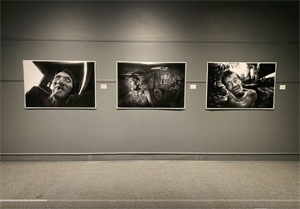
Debating whether I should show the color sex worker head portraits from Thailand (2010) or the color brothel potraits from Cambodia (2003).


Girl On A Bicycle Klong Toey Slum, Bangkok Thailand 2010

Deleting History

This story reminds me a bit of what happens in my photo club. Something offends? Adobegraph it out!

http://religion.blogs.cnn.com/2011/05/09/religious-paper-cuts-clinton-from-iconic-photo/?hpt=C2


I wanted to write a blog on the original photo. The impact this single decisive moment (undoctored) had on people was gratifying. This photograph proves that photography still has power when it records a decisive moment during a real event.

Hopefully news/documentary photojournalism can retain its honesty and strength even as digital photography and photoshop offer easy fixes and outs.

Friday, May 6, 2011

Color Printing Started

Did some color printing last night but the old 16x20 paper I have might be to old to use. I did tests last night on 8x10 Kodak metallic photo paper and it came out quite nice with the new chemistry but the 16x20 stuff had a weird color balance issue. I have a large 200 foot x 20 inch roll of the paper coming in next monday but will probably not have access to it until the last week before the show week. I can probably get 4 or 5 color images printed in that one week so do not think thats a problem.

Will probably go back to printing the rest of the b/w photos over the next 3 nights to see if I can finish off that. I have 4 b/w prints done but might reprint 2 of them yet. I need 5 or 6 black and whites to go along with the color work. I might try my first 35mm Lecia slum shot of a young girl on a bicycle, can use the same over mat size for that shot and the all the color work. I need to take in print samples and get the over mats cut my last week before the show week as well.

Lost one of my show prints when I made the Foundation For The Arts submission, might have to reprint that work. I looked over the other prints of the same subject I have and only 1 might pass muster. I guess I cannot be to to fussy as I am running out of time but I want to make the best prints I can for the show.

Oh well, going to have supper then back into the dark, only 3 nights more printing before I have to go back to work for a week. During my work week after the nightshifts I plan on continuing to work on the frames, I will sand down the cut corners and put 3 of the 4 frame sides together so they they will be ready for the final stage when I get the prints and over mats done.

Thursday, May 5, 2011

Frames Cut

Cut the framing for the show tonight with my friend Rob, actually he did the hard work if truth be told. Got all the pieces I will need now unless I go to a glass instead of the plastic Rob gave me. I have always been a believer in glass but the plastic does look very good, is lighter and transmits more light, the down side is plastic might attract a bit more dust and scratch more easy. I have to get the over mats cut yet but need to finish all my prints before I can do that. I also have to sand, ink, wipe down and put together the frames. The frame profile is a nice black glossy metal thats an inch and 1/4 off the wall with a thin almost flat face. The off white mat boards and the warm tone b/w prints should look nice, hopefully the metallic finish paper color stuff with off white over mats will also look OK, in the frames. All frames measure 20x24, all prints will be on 16x20 paper size with a smaller image size.

Running Out Of Time

Am running out of time to get the show prints ready, the show opens June 3rd and I need to have all the pictures framed and mounted earlier that week.

I am a bit burned out after the 20 hour darkroom session over the last few days, will concentrate on doing some of the color prints today which will be a change of pace. If I could make 3 to 5 color prints in the remaining days this week then that would make my final weeks work easier.

I am going to go cut the frames with my friend Rob tonight. I got all the supplies I need now, RA-4 chemistry, Kodak metalic paper is coming next week a 20 inch by 200 foot roll (I have a few sheets left in a box I can use this week). I also have all the warm tone Ilford b/w paper I need. My only real concern is where I can get the over mats cut, I talked to the folks at the place I bought the framing material and they agreed to cut the over mats but am not 100% sure they will, might have to find a backup place to do it.

Yesterday I dropped off the two prints at the Alberta Foundation for the arts, one they requested and one replacement print (of the same subject as the one they requested). It was a relief to finish off that little project. I hope at least one of the prints is accepted but if not I will try again next year and every year after. I would one day like to get 10 prints into this collection, not sure that is possible but you got to reach high sometimes. I also will start submitting work to the Art Bank of Canada next year. I want to get the work seen by a larger audience. I need to tell the stories of the people I photograph and want those photos to be seen and collected. If the work is collected then it can live past my lifetime, thru the work the people in the photographs can also live past their lifetimes, their stories can continue to be told. On a more practical level I could also use the money to help with my air ticket to Asia, I am planning two trips this year and need all the spare change I can muster (probably around $1400 a ticket). I need to get there, need to meet people, need to learn about their lives and most importantly I need to make more portraits.

The jury is looking over all the work in stage 2 of the Art by Acquisition process mid May. I should find out sometime in early June whether my photograph/s will be part of the Alberta provincial art collection.

Wednesday, May 4, 2011

Partial Failure

Started working in the darkroom 20 hours ago trying to get my 2 prints made for the Foundation For The Arts round 2 submission. I was able to make a nice version of one negative, it was very complex with 3 burning masks, burning at 2 different contrasts and 3 areas of dodging. I am quite happy with this print, ended up with several that should work and that I can use in the group show as well. The second print broke me thou, I had all kinds of trouble with it. Ended up spending about 5 hours on it plus the time last week and got no where, one big mess.

I am exhausted and out of time so I took another version of this photo (young monk), a better version in my opinion, that I already had printed and am submitting that. I wrote on the plastic cover sheet that the original negative was damaged (true). Not sure this will fly, they asked for one image and I am giving them another, that does not generally work in these situations. The subject is the same but the composition is different.

I did my best, wish I would have another day or 2. I am going to take a bath then go drop off the prints at their office. Hope the first print gets accepted and that they are not put off that I added the different negative print.

Got to go get this done, then come back and sleep, damn tired!

Monday, May 2, 2011

Nice Meeting

Had a very nice time at the year end photo club meeting and meal tonight (guess I have to put my retirement on hold!). We had an outside judge come in who is an art professor (and part time comedian) to teach and entertain us. I would not have a chance to meet him and others like him if I left the club.

The judges from the year were at the meeting tonight, I asked them to attend the group show June 3rd. I will send out emails to everyone later.

Sunday, May 1, 2011

Framing This Week

I ended up buying framing material through my friend Rob's company. By buying and cutting the frames myself with lots of help from Rob I was able to purchase 2 sets of frames for the 2 group shows this year. I plan on doing black 20x24 inch frames for the June 3rd show and will make larger white frames for the sex worker group show in October.

Am bit worried about the over matting, I am a poor mat cutter. I need to get it cut professionally somewhere, shitty mats really ruin the look of a print, have to make sure I get that looking professional.

Working On My Spotting

Made up some more test prints to work on my spotting. I am trying to improve something I am not that good at, like anything it takes time and practice to improve your technique. Woke up a few hours early and made up the test prints, will try spotting them tonight when I have more time.

I plan on making the 2 Foundation of Arts prints Monday and Tuesday night and then moving onto the show prints the rest of the week. I am still waiting on color chemistry to do RA-4, I also ordered some more color Metallic photo paper. I had to buy a 200+ foot 20 inch roll of the stuff (designed for machines) because Kodak does not make sheet sizes anymore (typical for Kodak). I hope I can start on the color printing this week, I want to print 4 or 5 brothel portraits with Metalic paper and RA-4 chemistry. I will probably use one of the Foundation of Art prints in the group show as well, so thats sort of killing 2 birds with 1 stone.

Time To Leave The Club World?

Been thinking more and more that it might be time for me to leave the world of photo clubs. I have had a few people recently tell me that maybe it was time I left that level and try and move up to the next.

This year I have had several good experiences in the club so am reluctant to leave, but I have to admit that after being exposed to world class photography in the museums I visited in Europe and through new friends and contacts much of what the club produces seems boring, trite and commonplace. I guess thats to be expected, comparing world class photography with club amateurs is not really fair. The positive is its fun to be around photo people, its fun to interact and spend time with them. Our club also brings in outside judges which can bring a fresh perspective or new friendships ( like I have now with a judge from last year, Larry).

I am not sure how to proceed, I do not want to be one of those arrogant SOBs who thinks he is to good for the group but I am not sure how much I get out of the club these days. I also find all the rules and regulations limiting at times, some members seem much to concerned with rules and not as concerned with seeing new work. I am basically the last darkroom worker (one other member brings in a few darkroom prints a year), so lots of the discussion in the club is photoshopese, which I have limited interest in. I also find all the collaging that goes on sort of insulting to the spirit and history of photography (sound a bit arrogant there!). I just feel that photography is about capturing a decisive moment in time and if you don't get it you don't get it, try again! I get tired of the 6 photos in 1 collages or the work that is just a series of cloning exercises to knock out anything that distracts (you need to do that during composition! and when you decide to press the shutter).

I am also the only club member that does what I do, I have been sort of a loner for 15 years, maybe that's long enough. Maybe I need to move on and just do my own thing by myself all the time. I could concentrate solely on making my photos and do more submissions along with trying to get work included in collections starting with the Foundation of the Arts in Alberta and the Art Bank of Canada. I could also devote more time to trying to get a book published and working with people like Quinton Gordon of the Luz Gallery.

I have to think about this some more, maybe I need to take a leave from the club for a year or 2 to see if I miss it. The club might also be better off without me around, sometimes I am a bit to strong in my opinions and a bit to straight/harsh in my photography (nude ladyboy sex worker shots alongside other members infrared landscapes and open books in window light photos). Tomorrow night is the year end competition and I kind of feel like just going to eat and coming home without entering images for judging. I have to print the 2 Foundation for the Arts photos by Wednesday, an extra hour or 2 might come in handy.

I have benefited greatly through the years from my experiences and friendships in the club but maybe its time to move on, all good things eventually come to an end. More thought needed here.

Saturday, April 30, 2011

Up Early Again

Woke up early again to do some darkroom work on the Art Alberta Foundation prints. I am going to print some samples and do some spotting on one 4x5 negative print today. I am not the best spotter in the world so need to see if I can hide these small blemishes. Dust and tiny hairs can be a real problem in large format photography. I did not have to many issues when I was doing the 8x10 sex worker white background work but with the 4x5 on the street (the dusty outdoors) the problems seem to have grown. I will use plastic zip lock bags to hold the holders when I am in the field next trip, inconvenient but necessary.

Friday, April 29, 2011

To Many Rules

I think I am not much a joiner when it comes to groups and clubs and the like, mostly because I feel confined by to many rules. About 10 years ago I left a local photo club because I felt controlled and uncomfortable being in a group thought situation, having to conform my photography to fit the group is just not my thing. I have always disliked people telling me what to do with my photography, I would have been a shitty pro, I need to do what I need to do and do not like following the rules of others.

Recently I had another issue with another club that I have belonged to for 15 years or so. I find it confining and irritating when I'm told what size print I cannot bring in, how many color or b/w prints are allowed etc. If you bring in a postage stamp size image or a wall sized print, if its a b/w print, color print or any combination in between, who cares? Art is not about rules and regulations, its about letting creativity flow naturally as each individual sees it.

With the advent of digital the decisive moment in photography has disappeared in the club, many people collage multiple photographs together to represent one. With digital photography most images start out as color and are converted by photoshop into b/w. Most photos in the club are also some sort of adobegraph and not a photograph anymore anyway so lets loosen up with all the rules stuff (adobegraph is my word for heavily photoshoped images) . What has to be done is the work simply needs to be presented and live or die on its own, no need to take out the measuring tape to see what size it is or if it includes color, b/w or whatever. Lets just put the work up at the front of the room and talk about it in an open instructive way. We are there to see artwork (was going to type photographs but that does not apply in my club much anymore), to help each other become better creative people, lets toss as many rules as we can in the trash heap where they belong. I guess some people just feel more comfortable if they can institute and follow rules and regulations, but it works against creativity. Lets cut down on the rules and build up a environment of free/open expression.

Oh well nuff of that, back into the darkroom got to try to work on the Alberta Foundation For The Arts prints, I have 2 hours of darkroom time before I need to go work my 12 hour night shift. The provinces archive includes work by Yosuf Karsh and Edward Burtynsky, it would be an honor to have even one print included in a collection with those boys.

Quote: Sebastiao Salgado

"I believe there is no person in the world that must be protected from pictures. Everything that happens in the world must be shown and people around the world must have an idea of what's happening to the other people around the world. I believe this is the function of the vector that documentary photography must have, to show one person's existence to another."

Thursday, April 28, 2011

Quotes: Fazal Sheikh

"I believe that it is the individual and his testimony that allows us to access broader themes--through the specific to gain entry to the universal."

"I want to be able to go to a community and and ask that it teach me about its truth."

More on the Alberta Foundation For The Arts

Woke up 4 hours early today to do some printing for the Alberta Foundation For the Arts deadline. Been struggling with the negative for 2 hours, another 1 hour and 30 minutes before I have to start getting ready for my night shift.

I returned the call to the foundation today and got more information. I also got an extra day! Can now drop off the prints on the 4th.

The Art by Acquisition program has been acquiring art work for the province of Alberta for several years, the current number of works number 8000.

Here is a link to their holdings.

https://hermis.alberta.ca/afa/

Once collected the work is loaned out to government agencies and non profit organizations for a small fee. It is also takes part in traveling exhibits around the province, the traveling shows are divided into the 4 regions of the province. If the artist has a gallery show they can also request that the foundation loan them their own work back to them for the duration of the show.

I hope I can get one or two of the works sold, to be collected in this manner has always been a dream of mine and on a more practical level any money I receive from the sales will be put towards making more photographs.

I guess what happens now is that I drop off the works at their downtown office/gallery, and then the jury people come and make the final recommendations on what should be purchased. Should find out next week what's what. I have to take it as a positive even if the work is not accepted. I missed the deadline for the Canada Art Bank this year but next year I will submit work to both the Provincial and National programs.

Wednesday, April 27, 2011

Alberta Foundation For The Arts: Round 2

A few months back I made a submission to the Art by Acquisition program through the Alberta Foundation for the Arts (first time I tried this). This program buys art from Alberta artists on a yearly basis. Painters, sculptures, photographers and other artists submit work for consideration. I submitted 5 photographs from the recent Thailand trip. Today I got a phone call telling me that 2 of the works had been accepted for the round 2 part of the submission.

In round 2 of the jury process they need to look at the real prints not just the scans. The problem is I have no prints ready! The deadline is May 3rd at 430pm and I have nothing printed yet, I had just scanned the negs for the first part but now I need 2-16x20 prints by May 3rd for the jury to look over and decide if they want to buy the photographs. I am working 12 hour night shifts until May 1st. I will have to try to sneak in a couple of hours after each of my remaining night shifts then do an all night session on May 2nd. I need to get the prints done as early as possible so the fiber paper can dry properly.

Some how there do not seem to be enough hours in the day to get all the things done I need to do. My group show is June 3rd and printing hard for that also. It is nice to have some limited success with group shows, gallery representation, a possible book and possible acquisitions by the province, but damn this all takes time. I got to cut out other parts of my life and spend more hours in the darkroom over the coming month, got to make some sacrifices in other areas to get this all done.

Monday, April 25, 2011

Blog Link

Not exactly sure who this is. He has a link to my blog page on his blog, so thought I would reciprocate.

http://klaasgoethals.wordpress.com/

More Zone Landscape/Abstract Tests

Went out with Rob yesterday and had a very nice day of photography. I was able to work on a few zone things and try out filters I had not used before. I also changed up my tripod a bit to allow easier use. Did normal, +1 and +2 development of the negs today.

Here are some scans from our outing.


Grass Under Water


Pond 1 (Cropped Negative)


Grass In Ice


I need to work a lot harder on my visualizations, I need to see clearly what I want the photograph to be as I am composing it.

Saturday, April 23, 2011

Inside Home Photos

In Cambodia I want to show the photographs to show the lives of the people, one easy way to do this is to show their living conditions, the interiors of their homes. Walker Evans did the interior home photograph to great effect, I need to shoot more of these type images next trip.

These photographs was shot in Northern Thailand and Klong Toey slum in Bangkok.


Zone Heads

Today I made some head-shots using the Linhof 210mm and Pentax spot meter. I wanted to place the face (asian darker skin) on zone V 1/2 but then the hair fell off below zone 2 (I want to see some detail in the black hair). I did exposures where the hair was placed up higher so I could get more shadow detail but that also pushed up the face into the zone VII/VIII area.

I think I might have to try metering the hair in the future and place that on about Zone III and let the face fall where it falls as long as its not to high Zone IX or higher, then burn down the face. I might also try exposing the hair for Zone III and using N-1 development to bring down the face a bit.

I need to perfect all of this before I leave for Cambodia, where I hope to shoot dozens of head-shots this way.

Friday, April 22, 2011

More Thai-Cambodian Border Problems

Thailand and Cambodia continue to have border fighting and killings. I hope my portraits of Cambodia and Thailand or Cambodia and Vietnam will shown in the capitals of these cities and in the border areas. We have so much more that connects us as peoples of the world than divides us. Maybe the photographs can help educate, even if they make a tiny tiny bit of difference in peoples attitudes that would be a victory.

Thai, Cambodian troops exchange heavy border fire
by Anusak Konglang


BANGKOK, April 23, 2011 (AFP) - Heavy fighting broke out again Saturday between Thai and Cambodian soldiers, a day after six died in the bloodiest border clash since the UN appealed for a permanent ceasefire in February.

The two neighbours have fought a series of deadly gunbattles in recent years in disputed jungle near ancient temples strung out along the frontier, which has never been fully demarcated, partly because it is littered with landmines.

"Fresh fighting started at around 6 am (2300 GMT Friday) with rifles and mortar shelling at the same flash point" as Friday's clash, said a Thai army spokesman in the border region, Colonel Prawit Hookaew.

"We are negotiating to stop the fighting," he said.

Cambodia confirmed the latest outbreak of hostilities.

"The fighting started at 6:15 am. It involves artillery shelling," said defence ministry spokesman Chhum Socheat in Phnom Penh.

There were no immediate reports of casualties in Saturday's violence.

Friday's clash was the first serious outbreak of hostilities since February when 10 people were killed in fighting near the 900-year-old Hindu temple Preah Vihear, prompting UN Security Council members to call for a lasting ceasefire.

The latest fighting, which left three soldiers dead on each side on Friday and more than a dozen others wounded, took place near a different group of temples over 100 kilometres away from Preah Vihear.

Indonesia, which holds the rotating chairmanship of the Association of Southeast Asian Nations (ASEAN) regional bloc, called for an immediate end to the violence.

"Indonesia, as current chair of ASEAN, strongly calls for the immediate cessation of hostilities between Cambodia and Thailand," Indonesian Foreign Minister Marty Natalegawa said in a statement released on Friday.

The two sides blamed each other for Friday's clash, which lasted for more than six hours and prompted thousands of villagers to flee the border area.

Ties between the neighbours have been strained since Preah Vihear -- the most celebrated example of ancient Khmer architecture outside Cambodia's Angkor -- was granted UN World Heritage status in July 2008.

The World Court ruled in 1962 that the temple belonged to Cambodia, but both countries claim ownership of a 4.6 square kilometre (1.8 square mile) surrounding area.

Observers say the temple dispute has been used as a rallying point to stir nationalist sentiment in Thailand and Cambodia.

The two countries agreed in late February to allow Indonesian observers in the area near Preah Vihear, but the Thai military has since said they are not welcome and they have yet to be deployed.

Cambodia has called for outside mediation to help end the standoff, but Thailand insists the dispute should be resolved through bilateral talks.

Thailand recently admitted using controversial Dual Purpose Improved Conventional Munitions during the February fighting but insisted it did not classify them as cluster munitions.

The arms are defined as cluster munitions by the global campaign group Cluster Munition Coalition (CMC), which condemned Thailand's use of the weapons.

Printing For The Show

I have been printing the last 3 nights for the June 3rd show (still unnamed). The first print I chose might have been the wrong one, its a very complicated print to make. There is a exposure with dodging in 5 areas followed by burning in 3 areas at #3 contrast, then burning of 5 other areas at #O filtration. Followed by development and fixing process, tray wash, bleaching, a second fix, hypo clear, toning and archival wash.

Spent the last 3 nights learning the negative, I have 6 prints downstairs washing now, 2 might be ok for the show. If they do not pan out I can print this negative again later, it should be a lot easier the second time around.

I have moved onto another negative now, will spend the rest of the night working on this one which promises to be a lot simpler.

Have lined up the RA-4 chemistry for the color brothel prints I want to show, I wish I had more Kodak Metallic color paper. I might have to print on a different type of color paper.

Thursday, April 21, 2011

Zone Practice

Went out for a quick 6 photos as the sun was setting, I shot tri-x with the Linhof and 75mm lens. Using the Pentax spot-meter and zoning the exposures is working great, I feel confident, I know what the negs are going to look like before I take them out of the drum. When your doing zone placement of the tones and using 1 developer and 1 film it simplifies things, that's where I am at now. I am simplifying the tech stuff, now I need to pre-visualize the photograph and use the tools better to tell the story I want to tell.

I am also using the Linhof viewfinder to help me choose focal lengths and compositions which seems to be making that process easier. Am slowly getting better at using a view-camera, faster focusing as well as using all the different advantages of the camera (a fun one is adding shape to the foreground of the image by using back movements).

Zone System metering should work great for the Asian portraits, I can place the face, hair and other details where I want them and get strong technical negs which will make printing easier, no more underexposed faces under hats.

Here are a few scans from the shoot a few hours ago.


Over the next few days I will try to do some shallow focus heads or heads and shoulders with the Linhof, and zone metering (will place the faces on Zone 6 or 5.5). I hope to do plenty of heads/heads and shoulders when I am in Cambodia later this year.

Done With New Equipment

Feel I am done getting new camera equipment unless something breaks down. In the past I spent to much money on the gadgetry of photography, thats finished, I have some of the best film cameras and optics ever made, time to stop buying cameras and start making photos.

From now on my photography buying will be limited to film and darkroom supplies.

Sunday, April 17, 2011

Cambodia Trip

Been reading Cambodian history and working a bit on the language. I have been fascinated by Cambodia since I saw the movie "The Killing Fields" in 1984. Such a tragic complex history, how did what happen there happen? How did the Khmere Rouge come to power? How can men hug their grand children in photos now and yet during the Khmere Rouge period these same men killed children by slamming their heads into trees?

I need to go there to make portraits and try to understand.

The coming Cambodian trip is quite far off but am already getting excited, I expect to buy the air ticket in about 3 weeks. I will stay in Phnom Penh the whole 3 week trip. I have to buy my second Asian trip air ticket before I leave for the first trip. I was planning on spending the second 5 week trip in Thailand but might go to Cambodia as well the second trip. Maybe I can buy the second ticket to Phnom Penh then travel the country for 2 or 3 weeks and spend the final 2 or 3 weeks in Thailand before departing from Bangkok.

Am studying the wonderful work of the photographer Bill Burke, who shot extensively in Cambodia, Thailand and Vietnam. Check out the the beauty, the independence, the strength and defiance in this Bill Burke portrait.


Bill Burke's "Woman with Elephant"

Monday, April 11, 2011

1/2 Day Out In The Countryside

On Sunday I went out on a nice 1/2 day photo trip with my friend Rob. It was a beautiful day to make photographs, nice and warm with soft sunlight and no wind. I really enjoy these outings, we have nice talks and make photos, a grand old time. Rob is much better at this type of photography than I am but I always enjoy the challenge (landscape photography is tough!) and I get to try out new equipment/techniques I can use in Asia.

I got to use my Linhof 4x5 with viewfinder and Pentax spot-meter out in the field for the first time. I found the viewfinder (which allows you to see the scene through various focal lengths) a great help for finding my compositions. I ended up using the 210mm Nikon lens for the most part and just set the viewfinder at 210mm and walked around looking for photographs. I loved using the Linhof and the Pentax spot-meter as well, this set up should work well in Cambodia/Thailand when I am making portraits for the "Peoples" project. I should be able to make the work flow, get good composed, focused and exposed negs quickly, which will allow me to give most of my attention to my subject, I can concentrate on bringing that special/telling moment out of them.

On Sunday used zone metering for the photos and ended up with some decent negatives. I hope to refine and improve on these negs and my zone technique in the future. I think using a spot-meter and zone system for the Asia portraits is the way to go, then I am ensured of getting proper exposures and printable negs.


Saturday, April 9, 2011

35mm Klong Toey Work

Well I have all the contacts completed from the November Thai trip both in b/w and color. Today I am going through a selection of 35mm negs shot in Klong Toey. The Leica lens are very expensive the 28mm F2 I used in Klong Toey was around $3000 but boy is it a wonderful, sharp,fast lens!

I am making 11x14 prints of some of the negs, the prints have grain (tri-x) film but look quite wonderful. I am very pleased so far with the look of the 11x14 RC prints. I think I will probably change the photos chosen for the Larry group show again. I am thinking now to do 5 or 6 children photographs from Klong Toey along with 4 or 5 color Cambodian brothel portraits shot in 2003.

When I return to Cambodia I expect to take 2 of the Leicas with a few lens choices to continue the work with this wonderful camera system.

Wednesday, April 6, 2011

Quote: Francis Bacon

This quote was posted on Dorothea Lange's darkroom door.

"The contemplation of things as they are, without error or confusion, without substitution or imposture, is in itself a nobler thing than a whole harvest of invention."

Tuesday, April 5, 2011

Found Some 16x20 Paper

I found some more Ilford Warmtone 16x20 way in the back of my other papers so am going to continue tonight to work on the b/w photos for the show. I also found what might be some unfogged Agfa Classic 16x20. I should be up all night in the dark, am quite excited by that. Will go for a birthday dinner with my father in a few hours, he is 79 I am 47 (we have the same birthday 32 years apart).

I ordered $1300 worth of photo paper last week!! I will probably not use all of it now but its good to have around, seems like more show opportunities are developing. I also am going to make up a portfolio of work for Luz in Victoria so Quinton can use it for promotion purposes. Part of the $1300 is 200 sheets of 11x14 which I plan on using in the portfolio.

Yesterday went to the gallery space my friend Larry is building, its really beautiful as good as I have seen with wonderful lighting through out. Larry hopes to use the space to promote photography in Edmonton. I took some of the prints I might show at the group show (June 3rd) to check what they looked like in the gallery light. Overall I was quite happy with the look of the prints the tone and the glossy finished showed up quite nicely, the photos came to life under the lights. I might have to lighten up the prints just a tad and pull back on the contrast a bit.

My friend Rob also placed a frame order for me (another $1200-$1400). Rob and I plan on building the frames ourselves. Rob is the pro at this sort of thing, so he will probably do most of the work, I will do what I can and say "Thank You Rob, Thank You", lots of times. I got enough framing material both in black and white so I can go a few ways with what I choose to do. I also have a group show in October so am thinking of saving the white framing material for that show and using the black for this one.

Got to concentrate now on trying to save money, am paying off the paper, film and framing orders but then I need to save money for Cambodia, and after that Thailand so I can work on the Peoples series photos.

Emotional Involvement

Was just setting up the darkroom for tonight's all night printing session and was thinking of the importance of emotional involvement in your photographs. I talked of this before but I need to find my Minomata, something that I can throw my body and soul into, something that I am absolutely passionately involved in.

Maybe it will be a specific aspect of the sex worker subject, maybe people scavenging the dumps of Cambodia, it might even involve something in another part of the world, but I need to find it. I feel my technical ability it is at a high enough level that I can make the photographs I want to but I need to find that subject thats going to inspire me to do the work. I might have found it already in the peoples project will see how that goes next trip when I am in Cambodia.

I need to find a subject that I would die for, something that I can throw everything into and forget everything else.