Social Documentary Photography for a Better World!

Sunday, October 25, 2009

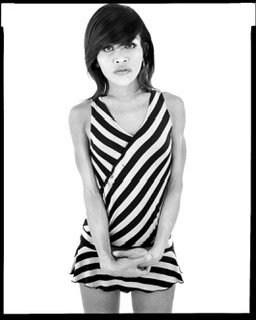
New 2003 Bargirl Series Photos

Finally got around to developing these Bargirl Series Photos from 2003.

Num 25

Nit 22

Naung 38

Saturday, October 24, 2009

Excited

Been involved with photography for over 30 years now but the excitement continues to grow. Tonight I am working in the darkroom developing film and printing, my head full of photographs I want to make in the future, full of ideas. Photography is so exciting, so rewarding, fills me with so much purpose. There is nothing I would rather do with my life.

Prints For Sale on Ebay

Trying to sell some prints on ebay to help fund a return to Asia to make photographs for the "Khon Thai" project.

http://shop.ebay.com/?_from=R40&_trksid=p2769.m38.l1313&_nkw=gerry+yaum&_sacat=See-All-Categories

Bla 21 In Her Room

These photos of Bla were made in a room she shared with another lady, the room rented for around $7 USD a day. All the outside guests who visited also had to pay a fee to a man out front who ran the place. Bla brought her customers to this room for shortime sex, she told me sometimes the men left without paying her. I remember during the shoot a cockroach scurried across the floor and Bla pushed it out the door with a tissue. Shot this with a Contax G2 plus flash, Tri-x developed 1/50 in Rodinal for 10/11 minutes, 20c, with very little agitation. Not sure I like the heavy grain, have to think about this some more. I also shot some medium format and color photographs that I will post later.


Friday, October 23, 2009

Leica/Rodinal Tests

Been working with Leica Range-Finder cameras along with Tri-x and Rodinal. I am trying to get a certain grain and look to the negs/prints. The idea would be to work with this camera along with the Razzle camera making portraits in rural Thailand and Cambodia. Here are some first attempts.


Monday, October 19, 2009

Ladyboy Sex Worker Headshots 2008


Nit 2008 Color Contact

This contact strip is from 2009, the third time I photographed Nit. She is in a shortime sex room she has used many times with her customers.

Sunday, October 18, 2009

Quote: Daisetz Suzuki-Zen Teacher

"If one really wishes to be master of an art, technical knowledge of it is not enough. One has to transcend technique so that the art becomes an 'artless art', growing out of the unconscious."

My Photographs Online At Cousin Corrine

Noah from the New York based site Cousin Corrine was nice enough to post some of my photos. The site is filled with diverse work from many compelling photographers. I especially like the work by Alec Soth and Pieter Hugo, stunning!

Cousin Corinne will also be publishing a magazine shortly.

http://www.cousincorinne.com/

Saturday, October 17, 2009

Quote: Lisette Model

"Don't shoot till the subject hits you in the pit of your stomach."

Friday, October 16, 2009

Quote: Brian Wallis, Chief Curator ICP

...and really (that) is what art history or the history photography is all about: encouraging a way of reading images that helps people understand better their own lives and culture.

Sunday, October 11, 2009

Oh Yeah I Can Use That Thing Afterall

Funny how you plan to use something in the future and then for years nothing happens, finally your very happy to have that thing that was in the way for all those years.

Years ago I bought a condenser enlarger from a school that was selling their stuff to go digital. The darn thing sat in in my darkroom taking up space for 5 years. I could never find a negative to print in the enlarger. The reason I bought it was so that I could do high contrast work with it if I had the need, I could go higher contrast with the condenser head than I could with my Saunders LPL enlargers.

Today I finally found some negs that it works with. I am printing the b/w ring flash heads of Bla and Da with this enlarger.

Now if I could just figure out how to make good photos with some of those odd camera purchases from the past, I'm set!

Thursday, October 8, 2009

New Gallery

Set up a new gallery on the web page "Sex Worker Series 2009"

http://www.gerryyaum.com/sex%20worker09.html

Wednesday, October 7, 2009

Sunday, October 4, 2009

Arts Deadline Link

Submission deadlines.

http://www.artdeadlineslist.com/

Quotes: Yousuf Karsh

"The size of the camera, of the film, must not enter into the question at all. Who cares whether a book is written standing or sitting, with pen or pencil, or on a typewriter? It is the result that is important. In whichever medium an artist feels more at ease, that is the medium he should use to express himself."

"The most important skill for a photographer to develop, is that of being able to see his subject through his eyes before he sees it through his camera."

Submitting Work

Well am doing my best to get a one man show somewhere, anywhere! I made 4 submissions to the VAAA and one to the Truck Contemporary Art Gallery (Calgary). I am also thinking of submitting some older images to the Milner gallery here in the city (lobby of the main library).

Sent out emails to 3 different places last night asking about submission requirements. I also got a book online (Photographers Market 2008) that gives me the names and addresses of many American galleries, hopefully that will lead to submissions and work being shown.

I have rooms filled with negatives, time to get a few of these photographs actually showing someplace.

Quotes: Elliot Erwit

Speaking about digital manipulation.
------------------------------------------------------------------------------------------------------------------------------------
"Obviously manipulation is totally unacceptable to me in photography. Photography has to do with what is, not what you manipulate or conjure up."

"A manipulated photograph is no longer a photograph, if someone wants to do that why don't they just learn how to paint or something?"

"If they do call it a photograph they should have in huge letters saying, this is not a photograph this is a manipulated image."

"The basic quality of photography is that it should be believable. People that take pictures and manipulate them would like you to believe these are real photographs and that's wrong."

Saturday, October 3, 2009

Sebastiao and Ansel

Well I finally made to the Salgado exhibit in Berkeley, and was pleasantly surprised to get a “two-for”, as there was an Ansel Adams exhibit running too! I hit the Salgado exhibit first. What did I think? In a word, “Wow........”. I was stunned by the images. I did not bother to count them, but there must have been around 250 of Salgado’s images on display. There were several images where traditional rules of composition were broken; like feet cropped off at the bottom of the frame, building tips cropped at the top, and people posed with their faces centered in the image... And they were still incredible, powerful and moving images. All were printed to 16X or 20X, and the darkroom work was masterful. This is a “must see” exhibit in my book. I love the work of Ansel Adams too... And it hurts to say it, but I’ll add this comment at the risk of committing heresy: after Salgado’s work, the Adams images on display seemed like simple postcards...
Cheers,

-- Jack Flesher February 21, 2002

Sunday, September 20, 2009

Studying Cambodia


I continue to learn a word or two a day of Khmer. Today learned Money/Loy, Skull/Low-Lia. Also reading several books on Cambodia. Started the best book I have read so far, it was written by Dr Haing Ngor (actor who played Dith Pran in the movie The Killing Fields)and Roger Warner. The book is titled "Survival In The Killing Fields" It is stunningly good, very informative and thought provoking. I just read a early section that brought me to tears.

Haing Ngor was an incredible man, he became a doctor, survived the killing fields of Cambodia, won a oscar for best supporting actor and then went onto a second career as actor. He was also a champion for human rights and worked to help the Cambodian people.

He died back in 1996 when he was shot by a street gang member outside his home in the Chinatown area of Los Angeles. Three gang members had all ready robbed him of his Rolex which Mr Ngor gave up willingly but when he was asked for the locket he wore around his neck it was refused. The gang member then shot and killed him. The reason Haing Ngor refused to give up the locket was because it contained the lone picture he had of his dead wife, a wife he had lost during the Khmer Rouge period along with most of his family.

The Time I Have Left

Been thinking a lot about the photographs I want to make with the time I have left in my life. I am now 45 years old, if I take care of myself and with some luck I should be able to shoot in the field for another 25 years maybe 30.

What type of photographs to make in the time left?

Photographing people is a given but what peoples? Where? The Khon Thai project? Photographs in Cambodia? Should I try to go to Africa or Central/South America?

Photographs that show the human condition, that document peoples lives, that are honest to life is what I should strive for.

I might have to make some sacrifices in my personal life to chase down these goals. I have to find the money to allow me the freedom to shoot what I want, how I want.

I am running out of time got to get the photos made, need to concentrate my efforts.

Saturday, September 19, 2009

Yearly VAAA Submission

Well got the yearly submission into the VAAA. It has sort of become a tradition for me to be rejected by this gallery. Think I have been turned down 6 times now including 4 years in a row.

Actually made 4 submissions this year all with "Sex Worker" themes, will probably be rejected again but who knows, no harm in trying. I also am going to make a submission to a Calgary gallery, The Truck Contemporary Gallery of Art. Hopefully they will be a bit more open minded and less fearful in regards to the subject matter.

Would love to get this work shown, will probably move in a new direction on next years trip to Asia.

Thursday, September 10, 2009

Khon Thai Preview?


Was looking through some of my old negs today in the darkroom, I wanted to make up some postcards to send out to friends. I found some images taken back in 1996, the photographs were portraits made in rural Thailand. I think that I might be working in this way (hopefully a bit more fluently!), next year when I start making the khon thai photos.

Wednesday, September 9, 2009

Quote: Edward Weston


"Photography's greatest difficulty likes in the necessary coincidence of the sitters revealment, the photographer's realization, the cameras readiness. But in comparison. In the very overcoming of the mechanical difficulties which would seem to restrict the camera lies its tremendous strength. For when the perfect spontaneous union is consummated, a human document, the very bones of life are bared.

Tuesday, September 8, 2009

Trying Some Diptychs

Trying to put together some diptychs for a VAAA submission. I make a yearly submission that is rejected, think I have been rejected 5 times now. This year am going to try to do more than one submission, maybe as many as four. When I shot the sex worker images this year I had diptychs in mind, here are the first attempts.

Um 22

Nanoy 27

Da 22

Oew 33

Wednesday, September 2, 2009

Photography's Greatest Strength Lost

I have always felt that photography's greatest strength was the illusion of reality it represents. You see it in a photograph and there is an assumption that it is real, that it really happened (This assumption is of course false because photographs are not reality but a subjective statement created by the photographer). The fact that it is perceived as real gives the photograph special power that painting/drawing etc can never obtain.

The problem with the current digital age in photography is that this illusion of reality is being lost. People who view images in the year 2009 know that in photoshop you can pretty much create anything you want. Is the photo real? Did it really happen? No it is just a photoshop illusion, it is not real.

Photography's greatest strength is being diminished by the advent of digital manipulation of imagery.

Americansuburbx: Great Photography Site

Found this site by accident today while researching Tuol Sleng. A wonderful site especially if your interested in documentary style photography.

http://www.americansuburbx.com/

Tuesday, September 1, 2009

AP Story on Nhem Em (Ein)

CAMBODIAN PHOTOGRAPHER RECALLS VICTIMS OF KHMER ROUGE REGIME.


Byline: Robin McDowell Associated Press Associated Press: see news agency.
--------------------------------------------------------------------------------
Associated Press (AP)

For 10,000 people, stepping before the camera was a step toward the grave. Some days, hundreds gazed forlornly into the lens, many en route to horrible torture before execution.

Nhem Ein held the chunky Canon. He focused on their faces. He heard their screams. He said nothing.

``One day, I saw the face of a close relative through my camera,'' he now recalls. ``I kept silent even after he was taken to be interrogated and then killed.''

Nhem Ein was chief photographer at Phnom Penh's infamous Tuol Sleng torture center during the rule of the Khmer Rouge name given to native Cambodian Communists. Some 20,000 people passed through Tuol Sleng's bloody chambers before being trucked to the Choeung Ek killing field 10 miles outside the capital and bludgeoned to death.

A fraction of the photographer's grim black-and-white mug shots have stared for years from the walls of Tuol Sleng, turned into a genocide museum when Vietnam drove out the Khmer Rouge in 1979.

But until a few months ago, the man who took the photos, this prime witness to Cambodia's profound nightmare, was a mystery. It turns out the photographer was just a 16-year-old boy, though a trusted Khmer Rouge veteran, when he started his grisly task.

Nhem Ein, now 37, is one of thousands of war-weary guerrillas to have abandoned the Khmer Rouge's northern jungle strongholds and defected in the past year.

The story he told The Associated Press last week of his time at Tuol Sleng adds an eerie footnote to the anonymous portraits on the walls.

``It was incredible to meet the person who took all these pictures,'' said Douglas Niven, an American photographer who spent three years helping clean and catalog 6,000 negatives found in forgotten drawers at the prison, covered in fungus and dirt. ``Anyone who has been to the Tuol Sleng museum just cannot forget them.''

At Tuol Sleng, officially known as the S-21 interrogation center.

``They used many ways, such as taking a clamp to pull out a nail, or using an electric shock on the tongue to force confessions,'' Nhem Ein said.

The cries and screams were constant.

Nhem Ein recalls seeing face after face filled with fear and ``deep sadness.''

``Those who arrived at the facility had no chance of living,'' he said. Only seven of the 20,000 prisoners are known to have survived. In all, Nhem Ein figures he took about 10,000 photographs.

``I took pictures of the prisoners just after they had a number pinned on them,'' Nhem Ein said. ``The photos were taken before they were interrogated or tortured.''

Cambodian scholars had long wondered why many prisoners wore the same number. Nhem Ein said the numbering system began anew every 12 hours. No. 1 was pinned on a prisoner at 1 a.m. At 12:59 p.m., the number might be 100 or 150 or 225. At 1 p.m., it was back to 1.

``I and three others were able to develop and print the pictures. We did this every day,'' he said. ``I took hundreds of photographs at a time, sometimes thousands.''

Nhem Ein was just 10 when he joined the Khmer Rouge, shortly after Gen. Lon Nol Lon Nol, 1913–85, Cambodian general and political leader. His mother had died when he was 2, and his father, a poor bean farmer, struggled to raise eight boys.

The teen-ager was sent to Shanghai, China, for training as a photographer, filmmaker and cartographer. He returned in May 1976 to be named chief photographer at Tuol Sleng, in charge of five apprentices.

The number of prisoners arriving at S-21 increased dramatically the following year, when Khmer Rouge purges intensified. Up to 600 people were delivered each day, Nhem Ein said.

``I knew that I was taking the pictures of innocent people, but I knew that if I said anything, I would be killed,'' Nhem Ein said.

Son Sen, who had overall responsibility for internal security, visited Tuol Sleng as often as once a week, Nhem Ein said. Pictures of important people - before and after execution - were sent to him and Pol Pot as proof they had been killed.

After the Vietnamese invasion, Nhem Ein took pictures for a Khmer Rouge newsletter. He said he'd lost faith in the revolution by mid-1977 but feared leaving his comrades and being killed by the Vietnamese.

Besides Nhem Ein's photographs, the Tuol Sleng museum also displays skulls and clothing of Khmer Rouge victims, primitive torture chambers where people were shackled to iron beds and some of the absurd confessions extracted under torture.

Only once, Nhem Ein said, did he see a face he knew in the viewfinder, a 25-year-old cousin named Chhan, whom the Khmer Rouge accused of spying for the CIA.

``I went back to Tuol Sleng in October to see if I could find his picture, but it was missing,'' Nhem Ein said last week. ``Being there made me feel very, very sad.

NY Times Interview with Nhem En Photographer of Tuol Sleng Prisoner Photographs

Out From Behind a Camera at a Khmer Torture House
By SETH MYDANS
Published: October 26, 2007


PHNOM PENH, Cambodia, Oct. 25 — He had a job to do, and he did it supremely well, under threat of death, within earshot of screams of torture: methodically photographing Khmer Rouge prisoners and producing a haunting collection of mug shots that has become the visual symbol of Cambodia’s mass killings.

Tuol Sleng Museum of Genocide
Before killing the prisoners, the Khmer Rouge photographed, tortured and extracted written confessions from their victims.
“I’m just a photographer; I don’t know anything,” he said he told the newly arrived prisoners as he removed their blindfolds and adjusted the angles of their heads. But he knew, as they did not, that every one of them would be killed.

“I had my job, and I had to take care of my job,” he said in a recent interview. “Each of us had our own responsibilities. I wasn’t allowed to speak with prisoners.”

That was three decades ago, when the photographer, Nhem En, now 47, was on the staff of Tuol Sleng prison, the most notorious torture house of the Khmer Rouge regime, which caused the deaths of 1.7 million people from 1975 to 1979.

This week he was called to be a witness at a coming trial of Khmer Rouge leaders, including his commandant at the prison, Kaing Geuk Eav, known as Duch, who has been arrested and charged with crimes against humanity.

The trial is still months away, but prosecutors are interviewing witnesses, reviewing tens of thousands of pages of documents and making arrests.

As a lower-ranking cadre at the time, Mr. Nhem En is not in jeopardy of arrest. But he is in a position to offer some of the most personal testimony at the trial about the man he worked under for three years.

In the interview, Mr. Nhem En spoke with pride of living up to the exacting standards of a boss who was a master of negative reinforcement.

“It was really hard, my job,” he said. “I had to clean, develop and dry the pictures on my own and take them to Duch by my own hand. I couldn’t make a mistake. If one of the pictures was lost I would be killed.”

But he said: “Duch liked me because I’m clean and I’m organized. He gave me a Rolex watch.”

Fleeing with other Khmer Rouge cadres when the government was ousted by a Vietnamese invasion in 1979, Mr. Nhem En said he traded that watch for 20 tins of milled rice.

Since then he has adapted and prospered and is now a deputy mayor of the former Khmer Rouge stronghold Anlong Veng. He has switched from an opposition party to the party of Prime Minister Hun Sen, and today he wears a wristwatch that bears twin portraits of the prime minister and his wife, Bun Rany.

Last month an international tribunal arrested and charged a second Khmer Rouge figure, who is now being held with Duch in a detention center. He is Nuon Chea, 82, the movement’s chief ideologue and a right-hand man to the Khmer Rouge leader, Pol Pot, who died in 1998.

Three more leaders were expected to be arrested in the coming weeks: the urbane former Khmer Rouge head of state, Khieu Samphan, along with the former foreign minister, Ieng Sary, and his wife and fellow central committee member, Ieng Thirith.

All will benefit from the caprice of Mr. Nuon Chea, who complained that the squat toilet in his cell was hurting his ailing knees and was given a sit-down toilet.

Similar toilets are being installed in the other cells, said a tribunal spokesman, Reach Sambath, “So they will all enjoy high-standard toilets when they come.”

It is not clear whether any of the cases will be combined. But even if the defendants do not see one another, their testimony, harmonious or discordant, will put on display the relationships of some of the people who once ran the country’s killing machine.

In a 1999 interview, Duch implicated his fellow prisoner, Mr. Nuon Chea, in the killings, citing among other things a directive that said, “Kill them all.”

Mr. Nhem En’s career in the Khmer Rouge began in 1970 at age 9 when he was recruited as a village boy to be a drummer in a touring revolutionary band. When he was 16, he said, he was sent to China for a seven-month course in photography.

He became the chief of six photographers at Tuol Sleng, where at least 14,000 people were tortured to death or sent to killing fields. Only a half dozen inmates were known to have survived.

He was a craftsman, and some of his portraits, carefully posed and lighted, have found their way into art galleries in the United States.

Hundreds of them hang in rows on the walls of Tuol Sleng, which is now a museum, their fixed stares tempting a visitor to search for meaning here on the cusp of death. In fact, they are staring at Mr. Nhem En.

The job was a daily grind, he said: up at 6:30 a.m., a quick communal meal of bread or rice and something sweet, and at his post by 7 a.m. to wait for prisoners to arrive. His telephone would ring to announce them: sometimes one, sometimes a group, sometimes truckloads of them, he said.

“They came in blindfolded, and I had to untie the cloth,” he said.

“I was alone in the room, so I am the one they saw. They would say, ‘Why was I brought here? What am I accused of? What did I do wrong?’”

But Mr. Nhem En ignored them.

“‘Look straight ahead. Don’t lean your head to the left or the right.’ That’s all I said,” he recalled. “I had to say that so the picture would turn out well. Then they were taken to the interrogation center. The duty of the photographer was just to take the picture.”

Tuol Sleng Prisoner Photographs

Doing research on Cambodia now, need to know more before making possible portraits in the country at some future date. Am currently reading a very good book by Nic Dunlop called "The Lost Executioner" The story deals with the history of Cambodia under the Khmer Rouge and the search for the leader comrade Duch who led the infamous Khmer Rouge torture, execution center of Tuol Sleng in Phnom Pehn between 1975 and 1979. Over 20 000 people went into the prison and only 7 came out alive. These photographs were taken of the prisoners sometime before they were tortured and executed, the photographers name is Nhem En.