Social Documentary Photography for a Better World!

Saturday, February 28, 2009

More Lost Neg Scans


Long sex worker, Thailand 2008

Dad, Canada 2008

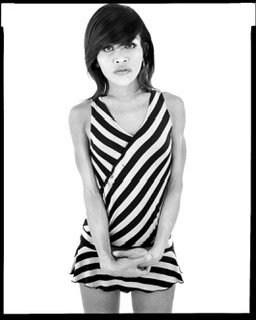
Ladyboy sex worker, Thailand 2003

Lin sex worker in her room, Thailand 2003

Today's Lost Negs


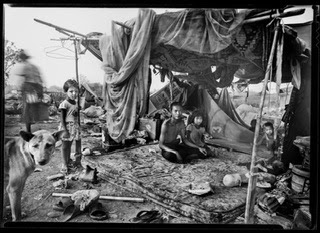
Baby boy with his mother in Tool Kok slum, Phnom Penh Cambodia 1999

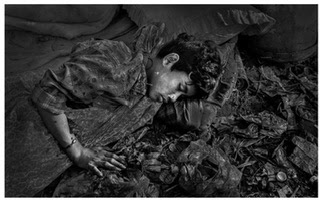
Sleeping child in a slum, Phnom Penh Cambodia 1999

Little person greeter, Thailand 1999

Tool Sleng doors, Cambodia 1999

Wider shot of homeless street man from webpage, Thailand 1999

Photo of photos of victims of Khmere Rouge from Tool Sleng museum, Cambodia 1999

Ring Flash

Tried something new, a ring flash with a 250mm lens and 4x5 HP5 film, might try this more in my next trip to Asia.

Lost Negs Rediscovered

Here are some of the images I recently found, with limited manipulation ( I have to learn photoshop!).

Nong in the bath, Thailand 1999

Young son of my Khmere language teacher, Cambodia 2003


Man on street with crutch, a wider shot of a photograph on my webpage, Thailand 1999

Da shortime bar sex worker, Thailand 2003

Lau brothel sex worker, Cambodia 1999

Working With Scanner

Got my first negative scanner at a discount price no less. I am quite happy with it, thou I hate spending the time with the scanner instead of in the darkroom. I am going full bore now with a book project I might call it 36 Photographs. The book is a selection of 36 images that I have chosen from my negative archives.

I am also using the scanner to browse through my archives and find negs of interest that I have never printed before. I will post a few of those scans here.

Sunday, February 22, 2009

Quote: Norman Seider (Cinematographer)

" a good still photograph will always stimulate the viewer to construct a myth, with the still image forming the opening scene."

Interview With An Artist

Great series of interviews (Jock Sturges, Shelby Lee Adams, Jody Ake)

http://interviewwithanartist.com/

Quote: Anais Nin

" We don't see things as they are; we see them as we are."

Saturday, February 21, 2009

Tintype: Civil War Era Young Freckled Girl

Paid a bit more for this one $52USD but loved the look in the girls eyes, her strength of character shines through. The black lace gloves, the freckles, the cameo, dress and hair all work along with the strong of the expression to make a great portrait.

Friday, February 20, 2009

Tintype: Young Woman Gypsy

This tintype was made between 1860s and 1880s. You got to love that hair, possibly a bit of a rebel in her time. I get the feeling she would have been a dynamite person to talk to and photograph. Happy to add this to the collection, might try to concentrate more on tintypes in the future, they are of more down to earth people and alot cheaper to buy.

Quote: Brassai

"I only take one or two or three pictures of a subject, unless I get carried away; I find it concentrates the mind"

Thursday, February 19, 2009

Daguerreotypes: Three People

A few more won auctions. Who were these people? What lives did they lead?


Who is this young woman? She has a beautiful and haunting gaze.

Abrotype: Mother and Daughter

Bidding on lots of auctions but winning very few, lots of bidders, lots of interest in these items.

What struck me was the expressions of the mother and daughter, it is almost like the sternness of the mother is pulling the daughter down the same life path.

Photo Stories

Next week after I get my scanner I plan to start a series of photo stories here on the blog. When I look back at my old photographs I have a memory flash to the moment when the image was made and the times leading up to and after the exposure. The plan would be to scan a negative and post it online with a little story about the making of the image. The history behind some of the photographs might be of interest and it will be fun for me to go back in time.

Quote: Henry David Thoreau

“Most men live lives of quiet desperation and go to their graves with the song still in them.”

Tintype: Wikipedia

Tintype, also melainotype and ferrotype, is a photograph made by creating a direct positive on a sheet of metal, usually iron or steel that is blackened by painting, laquering or enamelling and is used as a support for a collodion photographic emulsion.

Photographers usually worked outside at fairs, carnivals etc. and as the support of the tintype (there is no actual tin used) is resilient and does not need drying, instant photographs can be produced only a few minutes after taking the photograph.

An ambrotype uses the same process and methods on a sheet of glass that is mounted in a case with a black backing so the underexposed negative image appears as a positive. Tintypes did not need mounting in a case and were not as delicate as photographs that use glass for the support.

The process was identical to the wet plate process, where collodion is employed to produce a photographic emulsion where silver halide crystals (silver bromide, silver chloride and silver iodide) are suspended in the collodion, and are chemically reduced to crystals of metallic silver that vary in density according to the original light values of the original image.

When a photographic negative image on film or plate is very underexposed, it appears as a positive when viewed against a dark background. This is the basis of the process: a very underexposed image is produced on a collodion photographic emulsion on a dark metal backing; thus viewed the image appears as a positive. The fact that an underexposed image is required means that the effective film speed is increased and shorter exposures can be used, which is a great advantage in portraiture.

The process was first described by Adolphe-Alexandre Martin in France in 1853, and patented in the United States on February 19, 1856 by Hamilton Smith, professor at Kenyon College, in Ohio William Kloen also patented the process in the United Kingdom in the same year. It was first called melainotype, and then ferrotype (by a rival manufacturer of the iron plates used); finally came the name tintype. All three names describe both the process and the resulting photograph.[1]

The ambrotype was the first wet-plate collodion process, invented by Frederick Scott Archer in 1851 and introduced in the United States by James Ambrose Cutting in 1854.

While the ambrotype remained very popular in the rest of the world, the tintype process had superseded the ambrotype in the United States by the end of the Civil War. It became the most common photographic process until the introduction of modern, gelatin-based processes and the invention of the reloadable amateur camera by the Kodak company. Ferrotypes had waned in popularity by the end of the 19th century, although a few makers were still around as late as the 1950s and the images are still made as novelties at some European carnivals.

The tintype was a minor improvement to the ambrotype, replacing the glass plate of the original process with a thin piece of black-enameled, or japanned, iron (hence ferro). The new materials reduced costs considerably; and the image, in gelatin-silver emulsion on the varnished surface, has proven to be very durable. Like that of the ambrotype, the tintype's image is technically negative; but, because of the black background, it appears as a positive. Since the tintype 'film' was the same as the final print, most tintype images appear reversed (left to right) from reality. Some cameras were fitted with mirrors or a 45-degree prism to reverse (and thus correct) the image, while some photographers would photograph the reversed tintype to produce a properly oriented image.

Tintypes are simple and fast to prepare, compared to other early photographic techniques. A photographer could prepare, expose, develop, and varnish a tintype plate in a few minutes, quickly having it ready for a customer. Earlier tintypes were often cased, as were daguerreotypes and ambrotypes; but uncased images in paper sleeves and for albums were popular from the beginning.

Ferrotyping is a finishing treatment applied to glossy photo paper to bring out its reflective properties. Newly developed, still-wet photographic prints and enlargements that have been made on glossy paper are Squeegeed onto a polished metal plate called a ferrotyping plate. When these are later peeled off the plate, they retain a highly reflective gloss.

Tintype: Fierce Looking Man

First tintype, not sure exactly how this process was created or looks. I like the fierceness of this fellows stare. A tiny image measureing 2 inches x 2 1/2 inches.

Wednesday, February 18, 2009

Daguerreotype: Old Lady in Bonnet

Second daguerreotype in my collection. Does two count as a collection? Guess so!

Negative Scanner

I desperately need a negative scanner to use to promote my work. I plan on using it to scan images for a self published book I am working on, to scan negatives for gallery submissions and to scan images for my website.

I have been putting off this purchase for a long time because of the costs involved but I think the time is now. I recently sold a print to a collector so I could use that money and add the rest myself to purchase this item. The cost is $600 plus tax, a bit steep but if it can help get the work shown, it will be worth it.

Been looking at the Epson V700, will go check it out at a local photo shop the next time I am off work.

Got To Use Up That Darn Film!

I have 2 deep freezers filled with photo supplies, including many rolls of color transparency 4x5 and 120 film. I need to shoot this stuff before it becomes outdated. Keep thinking about how I can use the film if I take a trip to Thailand this year. I might try shooting some of the slide 4x5 stuff in studio when I do the 8x10 tri-x portraits. The 120 film will probably be used in the Mamiya 6 cameras (when I get them repaired) along with flash, probably a Vivitar flash which will allow me f11 with a 75mm lens.

Because most of the positive to positive darkroom processes (except Ilfordchromes) are now dead I will have to scan the slides and use photo shop and a printer to print the images.

Gerry the Collector

Last year I bought a daguerreotype of an old lady in a black dress, bonnet and wired round glasses that I just love. The daguerreotype process creates such a unique beautiful one of a kind photograph. I recently started bidding (ebay) on some daguereotypes along with tintypes and ambrotypes. Their is something very surreal and stunningly beautiful in these old photos shot in the 1800s. The people in the images are long since dead but because of the power of photography they live on in a different form.

I think that I will slowly add photographs and build a small collection. If I win any auctions will post the images on the blog for you all to check out.

Tuesday, February 17, 2009

Victorine Meurent


The naked truth
The Guardian, Friday 3 October 2008

Manet's favourite model, Victorine Meurent, has often been dismissed as a drunk and a prostitute. But as V R Main discovers, she was actually an ambitious artist.

Picture the predicament. She is 18, working-class, poor, with a secret ambition to become an artist. He is 30, rich, aristocratic, and a painter. The year is 1862; the setting, his studio in Paris. She is modelling for him, and, as they talk, their ideas merge. Two of the paintings he produces with her will become among the most famous in the world. But the majority of his biographers will ignore her influence. They will say that she was a prostitute and an alcoholic who died young. And, with that damning description, her contribution will be erased from art history.

It was more than a century after Edouard Manet's death that the art historian Eunice Lipton discovered that his model, Victorine Meurent, had actually lived to be 83. And it seems unlikely that she was his grisette - a young woman in a casual relationship with an artist - let alone a prostitute. Manet died at 51 from complications related to treatment for syphilis, then an incurable disease. If there had been a sexual relationship, Meurent would probably have died far earlier than she did.

Most importantly, Lipton realised that Meurent had fulfilled her painting ambitions and exhibited at the 1876 Salon - in the same year that Manet's work was rejected. And Meurent's story has a very recent postscript. It was thought that all her work had been lost but, just yesterday, a museum in Colombes, France, took possession of one of her paintings - another fascinating piece in the puzzle of her life.

The question remains: why was Meurent so dismissed by the painter's biographers? After all, Manet's inner circle seems to have recognised her importance. The artist's close friend Antonin Proust noted in his memoirs that Meurent was Manet's favourite model (she posed for nine of his canvases); Jacques-Emile Blanche, who also knew the painter, was moved to ask, "How often does a chance meeting between a painter and a model decisively influence the personality of his works?"

But while Meurent's contribution was recognised by Manet's friends, her willingness to pose naked made her a notorious figure to the general public, undermining her hopes of being taken seriously. In 18th- and 19th-century art, female nudes were highly appreciated, as long as they represented goddesses or mythical figures. In contrast, the women in Manet's most famous paintings, Le Déjeuner sur l'Herbe and Olympia, both modelled by Meurent, clearly belonged to contemporary Paris. And they weren't idealised goddesses; several critics commented that Meurent's body was far from perfect.

Le Déjeuner is such a strong painting that it inspired me to research its model and write a novel based on what is known of her life. The painting is a feminist work: it presents a powerful woman, offered for male inspection, but not objectified; the model's challenging stare meets the viewer's gaze in a way that thwarts desire. The female figure is disconcerting, exploding the stereotype of an anonymous, passive woman. In both Le Déjeuner and Olympia, Meurent refuses to collude with the spectator; her sexuality is all her own.


Le Déjeuner sur L'herbe, 1863, by Manet

The challenging nature of the Meurent portraits was not immediately appreciated by the public, and at a time when poor women were often forced to sell themselves, a woman whose naked body could be seen in public - albeit in an oil painting - was straight-forwardly perceived as a prostitute. When Le Déjeuner was first exhibited, at the 1863 Salon des Refusés, the public's response ranged from laughter to outright violence: more than one visitor expressed his outrage by hitting the image with a stick. Men would hurry their wives and children past the painting, only to return later to stare at it alone. The critical reception was no different to that of the public. Meurent acquired notoriety and became known by name, unusual for a model at the time.

Writing in the 1940s, Manet's biographer, Adolphe Tabarant, acknowledged that Meurent exhibited at the Salon, but remained as judgmental of her private life as his 19th-century predecessors. He wrote that by the age of 40 she was a wreck, that she had been selling her drawings to her "companions of the night", and had fallen into drunkenness and depravity, before disappearing.

What we know of Meurent's life is fragmented, but the reality is probably quite different from Tabarant's portrait. Born in Paris in 1844, Meurent came from a working-class family - her father is thought to have been an engraver and her mother to have owned a laundry shop. We know that she started modelling for Manet in 1862, but accounts vary as to how they met. It might have been at Thomas Couture's studio, where she apparently worked as a model, or through Victorine's father. Some have speculated that they met on the street near the Palais de Justice: there is a record of her address -17 rue Maître Albert - in one of Manet's notebooks.

In the early 1870s, she is believed to have travelled to America, perhaps engaged by an art dealer to accompany some paintings. By 1875, she had returned to Paris and was attending evening classes at the Académie Julian. Her self-portrait was shown at the Salon in 1876, and after that her work appeared there in 1879, 1885 and 1904. In 1903 she was elected a member of the Société des Artistes Français.

Despite this success, Meurent struggled for recognition, and never had the privilege of proper training - women were not admitted to the teaching studios until the late 1860s. Yet she was ambitious and financially independent. In the years after Le Déjeuner and Olympia, one of her lovers was Alfred Stevens, the Belgian painter, but she never actually lived with a man. For the final 20 years of her life, she shared a house with Marie Dufour, a piano teacher, in Colombes, just outside Paris.

In August 1883, four months after Manet's death, Meurent asked his widow for financial help. She claimed that years earlier he had promised her a small gratuity, which she had refused, on the understanding that she would remind him of his offer if she ever needed to. "That time has come sooner than I expected," Meurent wrote. Madame Manet, who had inherited most of her husband's paintings and was in the process of organising a sale, ignored the letter.

Tabarant wrote that Meurent was a strange girl of many faces, and he was right in at least two senses: she was strange because she was working class and longed to be a painter and because she was a woman and independent. The painting acquired by the Musée Municipal d'Art et d'Histoire de Colombes is Le Jour des Rameaux, which shows a young woman holding a palm leaf, and leaves one in no doubt that it was painted by an accomplished artist. It provides tangible proof that Meurent, marginalised because of her gender, was much more than just a woman with no clothes on. Perhaps the painting, currently under restoration, might prompt a much-needed reassessment of Meurent - the artist.


NOTE* THROUGH THE YEARS THIS BLOG ENTRY HAS RECEIVED SEVERAL EMAILS ASKING ME TO VERIFY THE PHOTOGRAPHS PLACED HERE ARE OF VICTORINE MEURENT. AT THE TIME I MADE THIS ENTRY UP I HAD FOUND AN INTERNET SOURCE THAT CLAIMED THESE PHOTOS WERE LEGIT BUT SINCE THAT TIME I HAVE NOT BEEN ABLE TO FIND THAT SOURCE AGAIN. I AM NOT A 100% SURE THE PHOTOGRAPHS IN THIS ARTICLE (THAT I FOUND ONLINE) ARE OF MANET'S ACTUAL MODEL VICTORINE MEURENT, SORRY FOR THE CONFUSION.

Olympia Influence

Did some reading on Edouard Manet's Olympia tonight, it seems his painting was influenced by the paiting "Venus of Urbino" by Titien.

Mr. Manet

"I paint what I see, and not what others like to see" Edouard MANET used to say to oppose to the academic doctrine, intending to assert his own subjectivity and the importance of the vision of the painter compared to the conventional rules.

Talked to a friend today about Édouard Manet, which got me thinking about the influence he had on some of my photographs. When I was thinking of how to approach the bargirl images I made in 2003 two of Manet's paintings were definite influences.

"A Bar at the Folies-Bergere, 1882"


and "Olympia, 1863"

I remember reading and studying these images (especially Olympia). The emotions he gave his subjects who worked as prostitutes was what I keyed on, I think he had those feelings just right. When you work selling sex to many men you get a tired worn out expression an indifference to those around you a sort of sad, hardened exterior.

Manet must have been quite observant or had personal knowledge of life in the bars and brothels of France, his work conveys a basic truth about the real emotions a sex worker has.


" When other artists correct nature by painting Venus they lie. Manet asked himself why he should lie. Why not tell the truth? "

Émile Zola defending Olympia as a masterpiece.

Monday, February 16, 2009

Cross Dresser Meeting

Last Thursday I went to my first meeting at a local social club/support group for cross dressers. I met some wonderful people who taught me a few things related to transgender issues. Thanks very much to the kind people who helped me out.

Hopefully I can learn more about the transgender world and that will lead to some insight in the transgenger portraits.

Collected

Had my work collected again by a new American collector. Thanks very much B.

Wednesday, February 11, 2009

Understanding Transgender Issues

I hope to continue to make photographs of Ladyboys in Thailand in the coming year. I need to have a greater understanding of the issues surrounding people who live life in a transgender, cross dresser or transsexual way.

Have made some contacts with a local social/support cross dresser group. I will go meet these ladies this week to listen and learn. I am hopeful that I can make friends and begin to understand some of the dangers/prejudices and life challenges these people face, with some luck I should learn more which will help my Ladyboy photography.

If things go really well I might even be able to photograph some people locally.

It All Comes Down to Making Photos

Been thinking a lot lately of the piles of equipment I have in my house. The whole buying the latest toy thing is a huge negative for my photography. What I should be doing is spending my time making photos and forgetting about the latest greatest camera gear I can purchase. I have limited funds and I should be using that money for film/darkroom supplies and for my travel expenses.

What it all comes down to is the photographs, the body of work you create. I need to work hard at making photographs not buying more equipment. From now on I will spend my time and money creating new work.

Thursday, February 5, 2009

Things To Do

Gosh, got lots of darkroom work ahead of me. I have to print a commercial job I recently finished shooting. I have to make up a series of 16x20 fiber archival prints for an art historian submission project. I have to create a series of scans for a very nice collector who might be interested in purchasing a print. I have to develop a ton of color film left over from the 2003 Bargirl Series as well as film I shot for the Ladyboy Series in 2008. I have to work out all the glitches my web page is currently going through.

So much to do so little time.

More Sex Worker Images

Been thinking lately of returning to Thai and continuing the Sex Worker on white background photographs. I would like to go back and photograph another 20 or 30 people, men, woman and ladyboys. I want to put together an exhibition of work from the 2007 photographs along with any work I would create in 2009. I would also like to put together a book of images along with a essay discussing the sex tourist scene. Adding an essay to the book would give a background to the images that would help readers understand a world they probably know nothing about.

The problem is time and money, how to get the time and how to get the money together that would allow me to create the work. I have to find a way somehow.


Mat 24 Ladyboy Sex Worker, Thailand 2007

Mary Ellen Mark Photograph

I found this image quite powerful, selling via Aperture at $7500 for a large archival pigment ink print 37x40.


Heather and Kelsey Dietrick, 7 years old, Kelsey older by 66 minutes, 2002

Aperture is pleased to offer this very special limited-edition photograph by renowned photographer Mary Ellen Mark. Produced in cooperation with IC LAB, under the supervision of the artist, this archival pigment ink print is from the artist’s Twins series, published in book form by Aperture in 2003.

Mark, voted by readers of American Photo as the most influential female photographer of all time, has made some of America’s most iconic images during a career that spans more than three decades, to date. In Twins, Mark turned both her eye and her heart to the extraordinary bond that exists between these very special siblings. For two consecutive years, she set up a studio at the site of America’s premier twins festival, Twins Day, in Twinsburg, Ohio, and invited participants to be photographed. Says Mark, “I’ve always been fascinated by twins. In my forty years of photographing, whenever there was an opportunity, I would take a picture of twins. I found the notion that two people could appear to look exactly alike very compelling.” Mark proceeded to create a compelling body of work, of which this photograph is a part. The astonishing detail afforded by the format used to make this image, the Polaroid 20 x 24, catches the very essence of Heather and Kelsey Dietrick. Chris Ewers, Director of IC LAB, worked directly with Mark and her studio to produce a print that is a faithful and accurate rendering of the unique Polaroid.

http://www.aperture.org/heather-and-kelsey.html

Sunday, February 1, 2009

Nit 49 Freelance Sex Worker


I have photographed Nit 3 times. In 1999, in 2003 and in 2008. She has been in the scene for around 30 years, hopefully I can photograph her again with the 8x10 next trip. She is a good hearted kind woman.

Sunday, January 25, 2009

Darkroom Week

Well I have 7 days to work in the dark! Going to make up some 16x20 fiber prints for critique by a art historian. I plan on making up 6 of the sex worker photographs, hope the historian finds them of some value and can give me an honest critique that will help me with the work. I want to continue this series later this year and any input I can get will be beneficial.

I am also going to make up some RC prints for a portrait project I am actually being paid for which is a first with me! I did a series of portraits inside a petrochemical plant, workers with hardhats and safety glasses and such.

Quote: Henri Cartier-Bresson

To take photographs means to recognize -- simultaneously and within a fraction of a second -- both the fact itself and the rigorous organization of visually perceived forms that give it meaning. It is putting one's head, one's eye and one's heart on the same axis.

Friday, January 16, 2009

An Interview With Jock Sturges

By David Steinberg

APRIL 20, 1998: In 1990, the FBI and the San Francisco Police Department raided the studio of Jock Sturges, an art photographer whose work includes portraits of nude children and adolescents. The agents seized Sturges's camera, trashed his studio, and launched an investigation that would, in the end, cost him $100,000 in legal fees.

The art community rallied around Sturges, as did civil libertarians, and a grand jury finally threw the case out. Suddenly more famous and more cautious, Sturges enjoyed a quiet five years until last November, when bookstore protests led by Randall Terry -- better known as the founder of the antiabortion group Operation Rescue -- dragged his work back into the public eye. Grand juries, appalled by pictures they considered obscene in Sturges's Radiant Identities (Aperture, 1994) and British photographer David Hamilton's The Age of Innocence (Aurum, 1995), handed down indictments against Barnes & Noble stores in both Alabama and Tennessee; grand juries elsewhere are reportedly mulling similar action. (For more details on the case, see Michael Bronski's story in this week's One in Ten.)

The two photographers don't share much beyond subject matter and a certain capacity to offend grand juries. Hamilton's work dreamily fetishizes young girls in bed, or by the water; one imagines he can quote whole passages of Lolita from memory, and not the ones about the American landscape. Sturges is different: his photographs, taken among nudist families in California and France, are stark and earnest and conspicuously humane.

David Steinberg conducted the following interview with Sturges between the time of his encounter with the FBI and the current indictments. Sturges's main point here is simple: his portraits take their strength from his subjects' interior lives, and if a lack of clothing makes such a portrait "obscene," perhaps it's the beholder who has, shall we say, issues.

Q: You've said that you don't want to dwell on your legal situation.

A: Not really. The problem with being investigated as invasively as I have been is that you run the risk of having that episode be the defining event in your life. I have no desire to be defined by such assholes, period. What I'm good at is making art. I became good at defending myself, but as far as I am concerned, that was a transient skill. It was an occasion I had to rise to. I'd rather get back to making art than talking about it.

They came, they did not conquer, they went away, and they made me fairly famous in the process. It's no small irony that the government inevitably and invariably ends up promoting precisely that which they would most like to repress.

Q: Has that in fact happened to you?

A: Well, yes and no. My work was doing pretty well before, and now it is doing dramatically better. Is that because people are collecting the pictures because of their notoriety? Or is it simply because people are more aware of the work? I don't know. I'll never get to know.

It's really, really hard to make it as a fine-art photographer exclusively. Now that I have, I'm permanently deprived of the pleasure of knowing whether that's based entirely on my work's merit or whether it's based on my notoriety. That's something that's been stolen from me that I don't get back.

I've been taken to task by some critics for exploiting the whole situation, but that was something I would never have chosen to have happen to me. I have to some extent, perhaps, exploited it, but only because living well was the single revenge presented to me, if that makes any sense. To basically take the opportunity that the feds created for me with their malicious intent and turn it into an advantage -- that feels really good. I went through terrible anguish, as [my work was] derailed by the morbid preoccupation with other people's sexuality that the feds impose on you.

All my life, I've taken photographs of people who are completely at peace being what they were in the situations I photographed them in. In very many cases, that was without clothes, and it simply was not an issue. They were without clothes before I got there, and they were without clothes when I left. That was just a choice that they had made, one they didn't even think about. They were simply more comfortable that way. It never occurred to me that anybody could find anything about that perverse, which is evidence of my having been pretty profoundly naive about the American context. I'm guilty of extraordinary naiveté, I suppose. But it's a naiveté that I really don't want to abandon, not even now.

Q: After you've been through all that, I can't imagine how you can take photographs now without having that somewhere in your mind.

A: There are photographs I don't take now that I previously would have taken without any thought at all.

The truth is that people who are naturists, who are used to being without clothes, are unselfconscious about how they sit around, how they throw themselves down on the ground, how they sit in a chair, how they stand. They don't think about it; it's not an issue. Before, I didn't think there was anything more or less obscene about any part of the body. I'd photograph anything. Now I realize that there are certain postures and angles that make people see red, which are evidence of original sin or something, and I avoid that. But it's difficult.

At one point, Maia [Sturges' wife] found me crossing legs, avoiding angles, giving instructions that inadvertently told young people that some aspect of what they were doing, some aspect of who they were, was inherently profane. I've had to relearn how I work with people so that if I avoid different things, I don't send those messages in doing so. I'm the last person who has any desire to instruct anybody in shame.

Q: The semantics are tricky here, but I'm interested in whether you see your work as erotic. I don't mean erotic as sexual, and I don't mean erotic as intending that people who look at your photos become aroused. But certainly, when I look at many of your photos, when I look at many of Sally Mann's photos, what I see is the natural eroticism of children, or preteens, or teens.

A: Western civilization insists on these concrete demarcations. Before 18, you don't exist sexually; after 18, you exist like crazy. It's ridiculous. The truth is that from birth on, Homo sapiens is, to one extent or another, a fairly sensual species. There isn't a person alive who doesn't like being caressed. Children masturbate as early as one and a half or one year old. They do it spontaneously and without any thought that there's anything evil about making themselves feel good. That's a sensual experience in their lives, one that should remain entirely the property of the child, as it were.

We're really blind in this country. People don't see the extraordinary inconsistencies. I think the average age for the loss of virginity for female children in this country now is something like 141/2 or 15. There's a vast epidemic of unwed mothers and teenage mothers, and yet we have an 18-year-old age of consent, which makes them all felons. If the age of consent were lower, you could talk to these children intelligently and not have to worry about school boards and PTAs going apoplectic if you mention the word condom, let alone sex. As soon as you forbid something, you make it extraordinarily appealing. You also bring in the phenomenon of shame. I'm perpetually exasperated by the American take on sexuality.

To give you a good example of a more intelligent way of doing business: in the Netherlands, the age of consent, I think, is 13, and children younger than that are not militantly discouraged from being sensual human beings. It's not a libertine culture -- it's actually fairly conservative in some ways -- but the Dutch quite intelligently recognize that people become sexually active fairly young in this day and age. One of the results of this is that the incidence of child abuse in Holland is vastly less than it is here. Why? Because children belong to themselves in that culture. If somebody aggresses them -- touches them in a way that's inappropriate -- they'll talk [about it]. They're not ashamed to be physical human beings. Their physical privacy belongs to them, and they tell [when someone violates it], and sexual abusers are caught and stopped and treated and dealt with.

In our society there's so much shame attached to sexuality that sexual abusers here, on the average, have had something like 70 or 100 victims before they're finally caught. In Holland the average is like three or four, because shame is absent and people tell much sooner. So when moral crusaders raise [age of consent] limits, create still higher barriers, they're getting the opposite of what they want. It's very shortsighted, I think, not to understand better how the species works psychodynamically.

Q: Focus a little for me on how that affects how you see your work. Isn't what you're calling the sensuality of children, or pubescent teenagers, a major part of what you go for, of what makes a photo of yours work?

A: I'm an artist who's attracted to a specific way of seeing and a way of being. Any artist involved in their work is going to have a focus in what they do. I am fascinated by the human body and all its evolutions. The images I like best are parts of series that I've started, in some cases, with the pregnancies of the mothers of the children in question, and I continue that series right on through the birth of children to the child that resulted from that first pregnancy. I have series that are 25 years long. I recently photographed a mother of two whom I first photographed when she was the age of her older child.

I have this naive and quixotic hope that in seeing the physical progress from start to "no finish," in looking at the body in all its different changes, looking at the fat-bellied babies becoming thinner children -- they get straight, they get long, they become sticks, they begin to develop, their hips go, the whole process matures -- that people [will] understand that the person occupying that body is more than just a physical object. The pictures don't objectify: they're about the evolution of personality and self as much as they are about the evolution of the body.

My hope is that my work is in some way counter-pinup. A pinup asks you to suspend interest in who the person is and occupy yourself entirely with looking at the body, fantasizing about what you could do with that body, completely ignoring how the person might feel about it. People who make pinup photographs don't care who the woman is, what tragedies or triumphs that person's life might encompass. My work hopefully works exactly counter to that. My ambition is that you look at the pictures and realize what complex, fascinating, interesting people every single one of my subjects is.

Q: Are you surprised when people find your photos erotic?

A: No. Not at all.

Q: And yet you seem to go out of your way to deny that the photos are erotic, to disassociate from collections of photos that are erotic, and so on.

A: Let me make an important distinction here. I will always admit immediately to what's obvious, which is that Homo sapiens is inherently erotic or sensual from birth. But that eroticism and sensuality remain the property of the individual in question up until he or she becomes sexually of age. It's arguable what that age is. If I said for attribution that [coming of age sexually occurred] before 18 years old, I'd be hung, drawn, and quartered in American society, whereas in Europe it would raise no eyebrows at all.

But there's also something else. As soon as the system, or an individual in the system, accuses another individual -- as I was implicitly accused, because there were never any charges brought against me -- the accused is forced into artificial polarities of political posture. I found myself serving a sentence of public denial from the very second the raid on my apartment happened. I had to pretend to be something that, quite frankly, I'm probably not, which is a lily-white, absolutely artistically pure human being. In fact, I don't believe I'm guilty of any crimes, but I've always been drawn to and fascinated by physical, sexual, and psychological change, and there's an erotic aspect to that. It would be disingenuous of me to say there wasn't.

One of the fascinating things for me has been to look at who the accusers are. Because invariably, when somebody becomes interested in your sexuality, in your moral life, they're very often manifesting an attempt to disguise disrepair in their own personal sexual life or morality. It's what I call the trembling-finger syndrome. If somebody's pointing a trembling finger at your pants and saying you shouldn't be doing something, follow that finger back, go up the arm, and look at the head that's behind it, because there's almost always something fairly woolly in there.

Q: How do you work with models, particularly young models, in a way that does not appropriate their sexuality, their eroticism, their sensuality for adult purposes?

A: The transactions between me and the people that I photograph are very, very collaborative. I know the families that I photograph extremely well and have known them for a very long time. The kids really enjoy what they do. I check with them constantly to make sure that they're really happy to be there.

Q: Do they like posing?

A: They adore it. Are you kidding?

Q: What do they like about it?

A: They like being taken seriously as people. After they've been in the process for a while, they realize that they get all the pictures we do -- the families get a copy of every photograph I take -- and they begin to really enjoy being thought of as beautiful.

We live in an age when anonymity is growing in magnitude like a bomb going off. As media stars become increasingly powerful, the rest of us are increasingly ciphers. The distance between the lives [of celebrities] and our lives is growing all the time. Children feel absolutely invisible, unnoticed, as if they can make no difference. The more of the world we see in the media, the more aware we are of how insignificant any one of us is.

Kids feel this, even if they can't articulate it in quite that way. Time and again, when interviewed about being photographed, they talk about the photography as a way of becoming less anonymous. They like the admiration; they like the thought that somebody thinks they can be art.

Now, there's [also] what happens after the photographs are made. It's not hard for me to imagine that there are some [people] who will buy my book, buy my photographs, look at them, and have "impure thoughts." There are people out there who buy shoe ads, Saran Wrap, and all manner of things who have impure thoughts. I can't really do anything about those people, except hope that, if they attend to my work closely enough, they'll ultimately come to realize that these are real people.

What pedophiles and people who have sexual desires for children lose sight of to a terrible, terrible degree -- a devastating degree -- is that their victims are real people who will suffer forever whatever abuses are perpetrated on them. If I'm able to make pictures of children that are so real, as you follow the children growing up over the years, perhaps there will be something cautionary in that visual example. The truth is that every pedophile's victim eventually grows up and becomes an adult who will turn around, and that's when they get caught.

Q: Obviously, your own pursuit of beauty has a lot to do with youth. So what is it about young people that you find so beautiful?

A: There's line, there's androgyny, there's a lot of different things. I've undone the psychological puzzle that is me, and it's not a very complex one. I was sent away to boarding school when I was very, very young, and it wasn't a lot of fun. So I'm particularly fascinated by that age -- the age of my own traumatization, as it were.

Q: What is it about these people that really grabs you? You could be photographing 40-year-old people, or 70-year-old people . . .

A: Well, beyond what I've just said, about what it was that lit the fuse on this work, I'm not really that worried about knowing.

Q: I don't mean what it is about you.

A: I'm letting you know why it is I like what I like.

Q: But what is it you like?

A: It's so different every time, because it evolves. I'm working with a lot of people now who are considerably older than the people I used to work with, because a lot of these kids have literally drawn me up through their lives. I've come to understand that they're even more interesting company and more interesting to photograph -- they're more interestingly complex -- when they're older, when they're in their early twenties and starting to get involved in relationships that may result in children.

When I enter a room, there's always a face or two that will stop me. Everything else is invisible to me; I don't see the other people that are there. There's a certain purity of line. You see the same obsession taken almost to the point of kitsch in English pre-Raphaelite painting. The best of pre-Raphaelite painting is just divine -- very, very pure. You see it in Botticelli, and then you see it in a very different, bitter, beautiful form in the work of my favorite painter, Egon Schiele.

Q: Can you give a picture of how you work with people, your process? Are you directive?

A: The less I direct, the better. People who pose models are really not paying attention to what's beautiful about our species, because poses by definition are limited to the archetypes in our head about how someone should look in a picture. All of which has very little to do, unfortunately, with how we are. People do the most beautiful things imaginable; the less I direct the better.

For me, an ideal shoot is with people I've worked with for a long time. We'll go to a beach or we'll go to a river and we'll spend days there. I interrupt nothing. If people want to go swim, they go swim. If they want to come back, they come back. If they want to leave with their boyfriends, they leave with their boyfriends. If their boyfriends want to be there, if they want to listen to the radio, whatever, I say nothing. I might change a little something, I might turn a head in a larger composition, or change the direction of eyes. Once in a while I'll say, "Don't move," and I'll quickly take a picture. The best photographs always come that way. It's what's the least manipulated and owes the most, therefore, to what the people themselves have done. All the art in my work dwells in the subjects; it's all theirs. It's not made up by me; I ain't that smart.

Thursday, January 15, 2009

"Life Time" Jock Sturges Photography Book


The book "Life Time" by Jock Sturges arrived at my door today via Amazon. I opened it and was stunned, the photographs simply took my breath away. The beauty of the images and the photographic vision that created it was almost to much to grasp. When you view work of this calibre you want to reach out and shake the artists hand and thank him.

After looking at this book I feel inspired, I wan to go out and make my own photographs in my own way. I want to tell the stories that I see in my heart, when you see great work it inspires you to chase down those photographs.

I highly recommend this book!

http://www.amazon.ca/Jock-Sturges-Life-Walter-Keller/dp/3865217001/ref=sr_1_1?ie=UTF8&s=books&qid=1232088079&sr=8-1

Sunday, January 11, 2009

Quote: Wynn Bullock

"Instead of using the camera to only reproduce objects, I wanted use it to make what is invisible to the eye---visible."

Saturday, January 10, 2009

Gerry Yaum Goes Spanish!

http://adncultura.lanacion.com.ar/weblogs/merle/index.asp

Funny how your work spreads online when you make up a webpage, last year it was Russian blogers, this year it is Spanish. Hope they are saying nice things!
----------------------------------------------------------------------------------------------------------------------------------
Translation of the text courtesy of Google Translator:

But what haunts me for weeks is that dichosde Sebastiao Salgado lei Gerry Yaum's blog, a photographer from Canada. He said the most famous Brazilian world of photography: "If the photograph of a man is not dignified, there is no reason to have taken. That is my way of thinking." What would Diane Arbus in this idea of dignity? I see pictures of Yaum and I ask you. I remember the advice of a great designer: "Never take photos of destitute in a foreign country" Hummmm ..... I truly believe that I am not interested in pictures of people homeless, although I did at the time, and I understand Salgado, but the reality must be shown that what is! Or not?

The same Yaum wondered if the legendary photo of W. E. Smith (see above) in their sick quest for human dignity in black and white, there will not be abused by the circumstances of this mother and daughter in an intimate moment?.

Pufff! that discussion vain! Especially if I am who fight .... I return to my humble photos January 1. Compared with those of Jeff Wall in Matador ... and I go crazy for a while, as Martin Romaña

Thursday, January 8, 2009

Another Rejection

Got the Ladyboy 2008 photos turned down by the VAAA. Not really much of a surprise, this time I was sort of just making the submission for the sport of it! I did get some feedback from VAAA people which might be helpfull in the future.

New Sex Workern 2007 Images

Am making up some a submission to a group show at the VAAA, last year I got 2 photos into this show. My hope this year is to get work shown that is more current and that I feel is more important.


Sunday, December 14, 2008

Exploitation

A question keeps coming to my mind. How do you photograph something that is exploitative without exploiting the person your photographing?

The nature of photography demands that the photographer be in the room, live with the subject. He has to be physically at the place he is photographing (at least with traditional film based documentary photography). How can the photographer be at the location and making an image documenting some kind of injustice (exploitation) without himself exploiting his subject to some degree? Isn't the act of making the photograph also an act of exploitation? Does the end justify the means? If your making a photograph to inform, to educate, to raise awareness, if your making a photograph for the greater good does the end then justify the means?

Tomoko Uemura in her bath by  W. Eugene Smrth

In this great image by W. Eugene Smith he was documenting a birth deffect caused by mercury poisoning, he was educating the veiwer about this trajedy. Was he also exploiting the young girl and her mother? Or does the fact the image speaks to the horror of the birth defects through negligence and the obvious power of a mothers love allow the artist the right to exploit.

Does the creation of a great work of art allow the artist the right to be exploitive? I don't know.

Monday, December 8, 2008

Free Film from Ilford Rep

Got some free film sent to me from a Ilford Rep today, 25 sheets of 8x10 HP5. The film retails at $82 USD plus shipping at Freestyle, can't beat that!

I have about 200 sheets of Tri-x in one deep freeze. I think I have about 100 sheets in another deepfreeze almost enough for the next white background sessions in Asia (wanted at least 400 sheets) I might get some more Tri-x (in those lousy 10 sheet boxes) or go with the HP5+, I am leaning towards topping up my supply of 8x10 film with HP5+.

Ilford seems to care much more for their customers than Kodak does. I get the feeling that Ilford really does want my business where as Kodak is a big faceless corporation that dumps products quickly and without consideration for the people that use and need it.

Quote: Sebastiao Salgado

"If you take a picture of a human that does not make him noble, there is no reason to take this picture. That is my way of seeing things."

Saturday, December 6, 2008

Canadian Based Darkroom Supply Store

This store is located in Wiinnipeg.

http://www.darkroomcentral.ca/index.htm

Hong Kong Photographs


Here is a selection of some of first Hong Kong photographs.

British/Chinese Cemetery

On the last day before I left Hong Kong I visited a very photographically beautiful cemetery. This graveyard was the best I have ever shot in, filled with old trees and wonderful old moss covered tombstones. The place was also historically interesting, the graves dated back to the 1850s. I ended up photographing in the British section of the graveyard for about 3 hours until I ran out of film. Darkness set in as I continued to explore the place. I wish I had such a historic and photographic place to shoot as this to shoot near my home!!