Finally got around to varnishing this plate from 2023.
Cottonwoods, 12x20 inch clear glass ambrotype, AMBROTOS KANATA, Dinosaur Provincial Park, Southern Alberta, 2023


Finally got around to varnishing this plate from 2023.
Cottonwoods, 12x20 inch clear glass ambrotype, AMBROTOS KANATA, Dinosaur Provincial Park, Southern Alberta, 2023
Some work from today. Moving up to larger digi negs and 11x14 platinum prints soon. Hope to print every day off this week
Images:
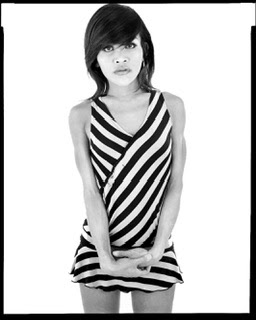
Khun Anapon in his slum home with found white rose, THE PEOPLE WHO LIVE UNDER THE FREEWAY, Klong Toey, Bangkok, Thailand 2018
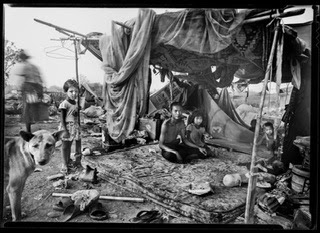
Dump homes and wild dogs, THE FAMILIES OF THE DUMP, Mae Sot, Thailand 2017


“Try not to become a man of success, but rather try to become a man of value. He is considered successful in our day who gets more out of life than he puts in. But a man of value will give more than he receives.”
― Albert Einstein
Earlier this week when I printed some higher contrast Platinum prints, I did not think there was much change in the print from wet to dry. Yesterday’s work of more softer prints went too dark after drying down.
The image I preferred wet is now too dark. Even the print I thought was to light wet is a bit to dark dry. The one gross looking chemically high contrast bleached out print when wet looks bad but much better dry.
I think I need to slow down in the many new prints thing and instead print slower, wash and then dry individual Pt-Pd prints to see exactly what I got before proceeding
Note* I have a LONG way to go before becoming a MASTER PLATINUM PRINTER!! :)


 |
| I thought this print was too light wet but it looks much better dry, maybe too dark still in real life viewing. |
 |
| Left is the wet, gross, bleached out print, almost usable when dry, the right is the one I liked wet, now too dark dry. |
There will be lot added to the darkroom. Large metal sinks, 8x19 enlarger, etc., in the years ahead.
Here is the current look!
 |
| View from far side. |
 |
| UV printer |
 |
| 1 of 2 plastic sinks |
 |
| 1 of 2 light boxes |
 |
| Coating Area |
 |
| Varnishing area |
In my retirement I hope to work towards becoming a MASTER PLATINUM PRINTER. A long way to go but I love working in the darkroom and I really love seeing my work in platinum, so I think it is possible.
Baby steps first. Today is a learning day. I will make one more image moving up from 6.5 minutes to 7.5 minutes.
Note* I ended up making 2 more prints, so had exposures of 6.5, 7 and 7.5 minutes. 7 seems to be the best wet. We shall see when they all dry.
Note** The 14 drop chemical is Ferric Oxalate not Ferric Oxide.
Khun Anapon in his slum shack home with a found flower, THE PEOPLE WHO LIVE UNDER THE FREEWAY, Kong Toey Slum, Bangkok, Thailand 2018


The dump homes 10 minute Platinum Print exposure turned out best. The white dog has detail. The 8 minute print was a bit washed out. I will try reworking the digi negative with some dodging in the back shack area of the print to bring out more detail. Will print this in 11x14 for the potential exhibition.
Dump shacks and wild dogs, 8x10 Platinum Print, THE FAMILIES OF THE DUMP, Mae Sot, Thailand, 2017

Varnishing some 14x14 inch Ambrotypes from September 2024.


Some of today’s Pt-Pd work. You can see a 16x20 Silver Gelatin version of the print in the background.


Decided to rip off a couple of more Palladium prints before sleeping. I just wanted to see what they looked like in straight Palladium.
Tech: 8x10 print. Digi neg from a 5x7 print and from a digital file.. 15 drops FO, 15 Pallaidum, 2 Tween. Han paper. PO development. 9minute exposures.
Need to see them dry to understand what I got.
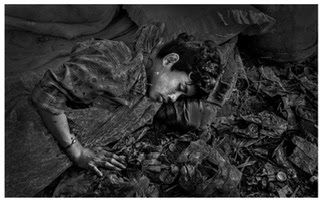
Woo Family, THE FAMILIES OF THE DUMP series, Mae Sot, Thailand, 2017
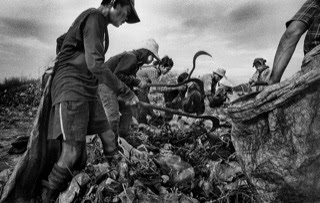
Khun Dao, THE PEOPLE WHO LIVE UNDER THE FREEWAY. Klong Toey Slum, Bangkok, Thailand, 2022

 |
| Woo family |

 |
| Khun Dao |
Today’s quick Platinum print before bed time, am working tonight.
Tech: 8x10 print. Digi neg from a 5x7 Tri-x film negative. 15 drops FO, 14 Pallaidum, 1 Platinum NA2, 2 Tween. Han paper. PO development. 10 minute exposure.
The contrast is quite intense. I will try a softer digi neg next time. Might also remove the platinum drop. Will decide after I spend some time with the dry print.
From THE FAMILIES OF THE DUMP series, Mae Sot, Thailand, 2017


After my recent plea for ways to store my Ambrotypes from the project AMBROTOS KANATA. I received the following. I think I can make some of these with my new woodworking tools.
DW - My suggestion would be to go out to your woodworking shop and make cases sized to fit. A box is a relatively easy thing to make, with the only consideration is to weight: the heavier the plate totals the sturdier the box needs to be. To give a really rustic look, butterboxes can be found at any antique store, just fabricate the slots to hold the plates in the vertical position. This apothecary style cabinet holds 26 glass plates per drawer, or back-to back 52 aluminum per drawer.
Meanwhile this 5x7 road case uses 3D printed slots and holds 18 plates. I no longer use the 3D slots as they make more noise than wood grooves as the glass rattles when "driving down the road."
BR-big boxes for the 20x24 need the plates spaced out better. I alternated the grove is the bottom so every other plate is higher in the box makes it easier to grab hold of.
DW- Here is your guide to making the "racks" for inside the box. I use low grade poplar available at any building store. You want on the sides AND bottom. The trick here is cutting the slots with a 60 degree bit on the router table. If you look long and hard, Craftsman used to make a moulding blade for table saw, one of the blade was a 45 degree bit, and that works. If you have a sled made for your table saw, it would be the easiest and fastest. (You should have a sled - it will make all your crosscuts so much easier and far more accurate)

 |
| DW boxes |
 |
| BR boxes |
Sent this out to my Facebook friends
Hey good folks, some suggestions please.
As my long term Ambrotype project of Canada progresses (AMBROTOS KANATA) I am collecting more and more larger plates. I have spent the last several days varnishing 12x20 and 11x14 inch glass plates. I will be shooting 24x24 inch plates this summer. Eventually I might have over 1000 ULF Ambrotypes.
Here is the question.
What is the best way to safe guard and protect the plates? How and in what way should I store them?
My hope is to shoot over the next 15 years and them donate it all to somewhere that cares. Before that happens I need to protect the plates from damage.