Gull Lake Tree with Leaves, 8x10 Clear Glass Ambrotype, Alberta 2022


Gull Lake Tree with Leaves, 8x10 Clear Glass Ambrotype, Alberta 2022
Forested area 8x10 Clear Glass Ambrotype, 2022
 |
| Beside a bit of an overexposed Ambro from back in the day, 1870s? |
Been into Ambrotypes for a while now! From 6 years back.
Bought this today off eBay ($95USD), measures 3x4 inches. A ambrotype (photo on glass) from the 1880s. 2 Japanese women in kimono. The seller was someone in Ama-Gun Japan. I find the image mysterious, beautiful and haunting. Will take it with me when I do my own ambrotypes for inspiration. I wonder who they were? What lives did they live?

 |
| Japanese Ambrotype |
From last year’s Facebook post.


 |
| Got to love Ambrotypes |
I have been thinking a lot about the identity I want to have with my Ambrotypes. What do I want to say, and how will I say it?
Are artifacts ok? I think so.
Are slightly overexposed plates acceptable? Yes they kinda have a glow to them. Certainly better than underexposed Ambros that Jack heart.


 |
| Old portrait, and new landscape Ambrotypes! |
 |
| Last night's post on chemical mixes for next week, got this response from a friend. |
Got this question from a Facebook friend, thought I would share it.
CC
I've been wanting to experiment with hypo clear, how long have you been doing your rinses for? (You can make a hypo clear test using a little bit of silver nitrate and glacial acetic acid, I don't have the recipe handy but should be able to find the Kodak one online)
GY
My goal in the project AMBROTOS KANATA, an Ambrotype series on Canada. Is to be able to complete 35x35 inch plates (also 20x24, 8x10) from start to finish in the field. I will be traveling for up to 4 months at a time, long distances. It is important to be able to complete the plate in the field, safely and efficiently. To that end, I have a 14x7 foot darkroom trailer and recently purchased a large, quick set up tent, to use for washing, drying and varnishing Ambrotypes. The idea is to wash the plates in the field using large trays and agitation pumps. I will need to change out the water in the trays several times. I was told that hypo clear is safe for ambrotypes. By using hypo clear, I can cut down on the wash time and the amount of water I will need to haul all-round the country. I am using a 32% mix of Sodium Thiosulfate (Hypo) as my fixer, so a hypo clear bath seems the smart way to go. I do a fix till the white clears and then a bit extra, a 1-part hypo clear to 4 parts water (hypo bath) tray for maybe 10-15 minutes with limited agitation and then a wash in multiple water baths for about 2 hours. I have 4 of these (see photo) pumps that I use for agitation, they really circulate the water, jet like. 2 for the trailer and 2 for the tent, plus multiple sources of battery power, assisted by solar. Hope that helps Chad. Will check for the test you mention.
 |
| One of my 4 agitation pumps. |
A Facebook friend asked if my AMBROTOS KANATA YouTube channel was up and running yet. This is my reply:
MW
“Not yet but it will be in the next month or so. I will post a link then. The channel will be sort of shitty at first but I hope it will improve and grow.
Should be a learning and promotional tool. When making submissions I can link the channels vids.
It would be cool to create a top notch ULF Ambrotype and also have a video of the process. The video could even be played at exhibitions on a monitor beside the exhibited work.”
he ambrotype (from Ancient Greek: ἀμβροτός — “immortal”, and τύπος — “impression”) also known as a collodion positive in the UK, is a positive photograph on glass made by a variant of the wet plate collodion process. Like a print on paper, it is viewed by reflected light. Like the daguerreotype, which it replaced, and like the prints produced by a Polaroid camera, each is a unique original that could only be duplicated by using a camera to copy it.

The ambrotype was introduced in the 1850s. During the 1860s it was superseded by the tintype, a similar photograph on thin black-lacquered iron, hard to distinguish from an ambrotype if under glass.
One side of a clean glass plate was coated with a thin layer of iodized collodion, then dipped in a silver nitrate solution. The plate was exposed in the camera while still wet. Exposure times varied from five to sixty seconds or more depending on the brightness of the lighting and the speed of the camera lens. The plate was then developed and fixed. The resulting negative, when viewed by reflected light against a black background, appears to be a positive image: the clear areas look black, and the exposed, opaque areas appear relatively light. This effect was integrated by backing the plate with black velvet; by taking the picture on a plate made of dark reddish-colored glass (the result was called a ruby ambrotype); or by coating one side of the plate with black varnish. Either the emulsion side or the bare side could be coated: if the bare side was blackened, the thickness of the glass added a sense of depth to the image. In either case, another plate of glass was put over the fragile emulsion side to protect it, and the whole was mounted in a metal frame and kept in a protective case. In some instances the protective glass was cemented directly to the emulsion, generally with a balsam resin. This protected the image well but tended to darken it. Ambrotypes were sometimes hand-tinted; untinted ambrotypes are monochrome, gray or tan in their lightest areas.
The ambrotype was based on the wet plate collodion process invented by Frederick Scott Archer. Ambrotypes were deliberately underexposed negatives made by that process and optimized for viewing as positives instead.[2] In the US, ambrotypes first came into use in the early 1850s. In 1854, James Ambrose Cutting of Boston took out several patents relating to the process. Although Cutting, the patent holder, had named the process after himself, it appears the term, "ambrotype" itself may have been first coined in the gallery of Marcus Aurelius Root, a well-known daguerreotypist, as documented in his 1864 book The Camera and the Pencil as follows:[3]
"After considerable improvements, this process was first introduced, in 1854, into various Daguerrean establishments, in the Eastern and Western States, by Cutting & Rehn. In June of this year, Cutting procured patents for the process, though Langdell had already worked it from the printed formulas.
"The process has since been introduced, as a legitimate business, into the leading establishments of our country. The positive branch of it; i.e. a solar impression upon one glass-plate, which is covered by a second hermetically sealed thereto, is entitled the "Ambrotype," (or the "imperishable picture"), a name devised in my gallery.
Root also states (pp. 373): "Isaac Rehn, formerly a successful daguerreotypist, in company with Cutting, of Boston, perfected and introduced through the United States the "Ambrotype," or the positive on glass." What isn't mentioned in the referenced book is the particular year in which the term "ambrotype" was first used.
Ambrotypes were much less expensive to produce than daguerreotypes, the medium that predominated when they were introduced, and did not have the bright mirror-like metallic surface that could make daguerreotypes troublesome to view and which some people disliked. An ambrotype, however, appeared dull and drab when compared with the brilliance of a well-made and properly viewed daguerreotype.
By the late 1850s, the ambrotype was overtaking the daguerreotype in popularity. By the mid-1860s, the ambrotype itself was being replaced by the tintype, a similar image on a sturdy black-lacquered thin iron sheet, as well as by photographic albumen paperprints made from glass plate collodion negatives.
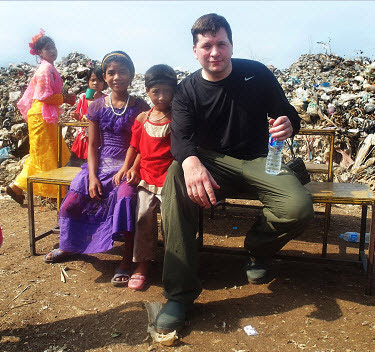
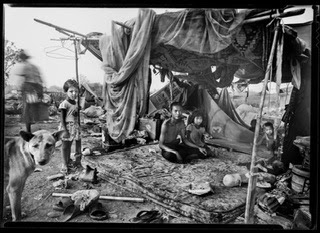
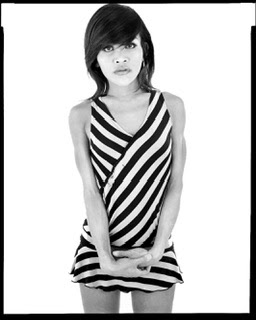
Forgotten THE FAMILIES OF THE DUMP imagery, from 4 years
 |
| Child wearing happy birthday glasses, "Families of the Dump", Mae Sot, Thailand 2019 |
 |
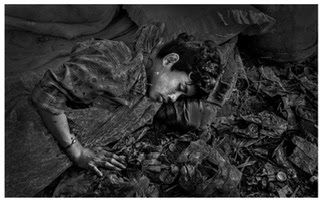
| Wee Loo after waking up. "Families of the Dump", Mae Sot, Thailand 2019 |
 |
| Wee Loo after waking up. "Families of the Dump", Mae Sot, Thailand 2019 |
 |
| Self Portrait after a day photographing in the dump, "Families of the Dump", Mae Sot, Thailand 2019 |
 |
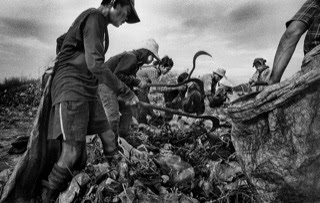
| Morning smoke before heading out to work the garbage. "Families of the Dump", Mae Sot, Thailand 2019 |
 |
| Early morning, preparing for the day. "Families of the Dump", Mae Sot, Thailand 2019 |
I am developing a YouTube channel for the cross Canada AMBROTOS KANATA Ambrotype project. To that end I am shooting a variety of videos.
I feel good, am happy with the progress today on ULF 20x20 Ambrotypes. :)
I think the fact it was cooler 15c-19c, made a huge difference. Doing wet plate collodion in hotter temps over 22C is damn tough! I expect eventually to be working in the cold as well, that I have heard is near impossible, or at best very hard.
5th plate. Gerry Collodion. 20x20 inch, HF2024 camera, 3mm clear glass, vinegar developer, El Nikkor 240mm enlarger lens. Exposure 10 minutes at f45. overcast.


Working from home, in Freddy the darkroom trailer with available light, today and tomorrow. I am trying to improve my mammoth plate technique. Still lots of errors but improving. BIt by bit, by putting in the hours the plates are slowly getting better.