Social Documentary Photography for a Better World!

Sunday, February 28, 2010

More Leica Tests


A month or so I went out with a friend shooting at an old school house. I used the Leica with 21 and 28 mm lens, Tmax 3200 and Tri-x. I quite like working with this camera and the results so far have been positive. I am going to London and Paris for a short trip in May and will only shoot the Leica's, should be tons of fun shooting in places where Robert Frank and Henri Cartier0-Bresson shot.

Saturday, February 27, 2010

Quote: Amedeo Modigliani


Reading a biography about the artist Modigliani written by Jeffery Meyers. A quote from Amedeo Modigilani from a letter he wrote to a friend.

"People like us (artists) have different rights, different values than do normal,ordinary people because we have different needs which put us--- above their moral standards. Your duty is never to waste yourself in sacrifice. Your real duty is to save your dream. Beauty herself makes painful demands; but these nevertheless bring forth the most supreme efforts of the soul. Every obstacle we overcome means an increase in will-power and provides the vital and progressive renewal of our inspiration."

My Father Series


Did a bit of work 2 days ago on the "My Father" series. The photo was shot the same way as the Thai color heads, a ring flash on a Hasselblad with a Hoya close up filter. Used Kodak Portra VC 220 and did a tiny bit of clean up work in photoshop.

I like the expression, it speaks to me of some of the things he has gone through in his life.

Tuesday, February 23, 2010

Going Back in TIme

Been developing some old film. The stuff was exposed years ago and then sat in my darkroom waiting for me to get around to working on it. This last week I developed some stuff that dates back to when I was 16 and in Germany. I had taken a school trip to Europe with my Social Studies class. Strange to be transported back in time, to see me in an old world I had long forgotten.

Might post one for fun, mostly pictures of castles and such. Another film I developed was of members of my family in younger days, kind of jarring.

Tuesday, February 16, 2010

Bla Color Headshot


Scanned these images this morning, minimal photoshop adjustments made. Will try to post some more later when I have time to work on them.

Monday, February 15, 2010

VAAA 2010 Photography Submission

Spent the day developing color 120mm film. I am trying to get 5 head shot ring-flash images for a submission to the VAAA (Anual Photography Competition). I think I will go with 2 female workers, Long and Bla along with 1 or 2 male and 1 or 2 ladyboy workers. I can only submit 5 photographs, so I will look for the 5 visually strongest faces.

Not sure this will lead to anything, 2 years ago I got in with some old b/w images from 1999. Last year I got rejected when I tried to enter some 2007 white background sex worker photographs. The accepted photographs for the 2009 VAAA Photography Show did not include portraits and the images that did include people did so in a very abstract visual sort of way (like they were there only for form).

I doubt the heads will make it in but heck you got to go with what you feel is your important work. I do not want to sell out and put in photographs I feel are second rate just because I want to be accepted. You got to go with your heart and put work out there that you think is important and needs to be seen.

2009 Blad Color Images

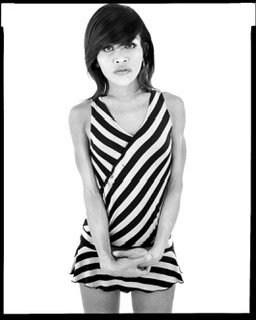
Am learning photoshop from a friend. These 2 images are from film shot in 2009 in Thailand. The head-shot of Long was done with a ring-flash and the full body shot of Bla was shot in room with a side mounted flash. I want to make a submission of the heads to a local gallery.

Saturday, February 13, 2010

Email from a Thai Photographer

Got an email from a Thai photographer this last week, thought I would add it. It is encouraging that a Thai person is interested in the "Khon Thai" project, it gives me the hope that I am on the right track and that the project might lead to important photographs.
---------------------------------------------------------------------------------------------------

Hello, Mr. Yaum.

I am Thai who keep following your blog for a few months.Your blog is very interesting for others.I quite surprise about "thai sex worker project" and wonder how you approached to her/him.They are existed but hardly to deal.

And on your latest "Khon Thai Project Technique?",it is a big surprise for me because it is also in my heart.I was roughly planned to travel across country to take photographs concentrate in portrait and life.

I'm not good in english conversations but glad to write you a few words.

Best Regards.
T P

Wednesday, February 10, 2010

New/Old Work


Been going through some of my old work which looks new to me because I have not worked with some of the negs. This photograph is part of the 2003 Bargirl Series.

Wednesday, February 3, 2010

Khon Thai Project Technique?

Been thinking how I will spend my 5 weeks in Thailand this coming year. I want to work on my "Khon Thai" photo series, the idea is to travel the country making potraits of people from all walks of Thai life.

How to use my 5 weeks best? I could just wander the streets of Bangkok looking for people to photograph, the population of Bangkok is over 10 million (maybe closer to 15 million) so I should be able to find a few souls willing to be photographed.

The other option is a bit more radical. I was thinking what about just going to a bus station and getting on the first bus I see! and getting off where ever it goes making photos then getting on another bus, get off make photos then another and another etc until my 5 weeks or up. I want to photograph the Thai people and all those buses are going to cities, towns and villages around the country why not just let fate take me where it may.

Karsh Aztec Arctifacts


Visiting the AGA Karsh exhibit was both fun and funny. I loved all the interactive displays of equipment and technique. There was a show of several cameras of lens, tripods and lighting equipment, they even had some of his brushes on display that he used in Bromoil printing techniques. There was a darkroom section with some retouched negatives and short explanations on techniques he used in his photography.

It was a bit much thou when they had his dodging tools (think mine are on the floor of my darkroom in a box) under glass sort of floating there, 6 different tools I think sort of floating like precious diamonds under glass, I kind of felt like I was expected bow to them!

The dodging tool thing was a bit funny as well as the way they treated his photography equipment, sort of like Ancient Aztec Artifacts. Heck there was tons of things on display that I still use, do not make me an Ancient Artifact just yet PLEASE : ) I own one of the Karsh lens, his tripod, several similar cameras and most of the darkroom equipment. Seeing all this stuff, my stuff, on display like that under glass was sort of unnerving, kind of made me feel old : )

They also had several of his best images. I found them a tad soft and dull to look at, he sort of made everyone look like a god, it is not the type of portraiture I feel is honest to the subject, they look great but heck they looked way to much like statues on mount Olympus.

I do love his photograph of Churchill thou because it showed the ferocity of spirit the man possessed.

You all know the story behind this picture don't you?

Karsh wanted to photograph Winston without his cigar and politely asked Churchill to remove it. Churchill being the tough old guy that he was wanted nothing to do with this little young Canadian photographer. Karsh seeing the cigar was going no where prepared his camera then walked up and PLUCKED THE CIGAR FROM CHURCHILLS MOUTH while apologizing softly. Karsh returned to his camera turned and made the photo, a photo that is one of the most famous portraits of all time, a portrait that had an influence on WWII.

The power of photography can truly be a great thing.

AGA: The Alberta Gallery of Art


Visited the wonderful new Alberta Art Gallery last week. It is a 4 story glass/metal and concrete jewel of a building. I loved the natural light that floods the place along with the wide open spaces/high ceilings and friendly staff.

There is currently a show of Degas Sculptures, Goya prints and a wonderful interactive exhibition of Yosuf Karshs working methods and photographs. I plan on taking several of the courses and lectures the AGA will be having int he coming months on both Karsh and Degas. It was a wonderful day visiting this new facility. The staff at the gallery had a real love for art, you could feel their enthusiasm, there love of what they did and their love of the work being shown. I talked to one member of the staff about the Degas sculpture "Little Dancer" and you could see the joy in his eyes as he described the work, a real love for art, how can I not like a facility that has this going for it? It is like being in a sort of creativity heaven.

One of my dreams is to one day have my work shown in this gallery and to have the work added to their permanent collection. I so want the photographs to be seen by a larger audience, to communicate the message of the work to others. I want the people I photograph to be seen, they are important, their stories are important and they deserve to be remembered.

Monday, January 25, 2010

Photo Idea

Driving home from work today through the snowy streets I thought of a new project I would like to work on. The photographs would be a series of portraits of my father, the photographs would be taken from now to the end of his life. I watched a fascinating documentary on the wonderful photographer Sally Mann, the doc reminded me of the importance of family and the powerful effect photography can have on those relationships. I want to share this photographic experience with my father, I will talk to him about it this week.

http://www.imdb.com/title/tt0483836/

Think I might call the series "My Father"

Friday, January 22, 2010

Latest Stuff

Been busy over the last weeks developing all my 2009 8x10 white background images along with some 5x7 stuff from 2007. Last week I also did a ton of contact sheets along with some 11x14 RC prints. I have to finish making the contacts in the coming days and also print all the better images on 11x14 RC paper. I want to make a selection from the 11x14s for my VAAA show of 2011. I have been taping the photos to the wall and trying different combinations to see what works best.

I also want to make a selection of the best 2007 and 2009 sex worker white background images for a submission to a photographic gallery in British Columbia. The hope is that I can get my first one man show, I have talked to the owner of the gallery and there is a chance it might happen. I have to make a selection of fiber exhibition prints for him to examine and if he likes them then the one man show would be a go.

I so want to get the work seen on a larger scale. The group show I have coming at the VAAA will only allow me about 8 large prints, if I get the one man show in BC I would have more photographs on the walls which would allow me to tell a bigger more complete story.

Over the coming month or so I should be posting more work here on the blog along with updating the webpage.

I also recently had a fun photo outing with a my friend Rob. I took my Leica's and shot some Tri-x at an abandoned school and at a graveyard. It was fun and fast shooting with the Leica's, I used 3 bodies and 3 lens, a 21mm a 28mm and a 50mm. If any of this 35mm stuff turns out I will post it on the blog. I need to become more fluent with these cameras, there is a real rhythm and beauty you can get out of shooting 35mm that is hard to capture with other formats.

Joy, Werner Bischof Photograph


I read a story about this photograph yesterday, what struck me about the story was how they described the image, they called it an image of "Hope". I think that pretty well nails it, it is a photo of youthful joy, of optimism, of beauty, it allows the viewer to enjoy the past and feel hope for the future.

My photographs are often to gloom and doom in nature, I must make an effort to take photographs that communicate hope, joy and beauty.

Mr Bichof died a few days after making this photograph, he would be happy to know I am sure that he left us all with a bit of hope.

Thursday, January 21, 2010

Quote: Bruce Lee

"Man, he is contantly growing and when he is bound by a set pattern of ideas or way of doing things, that's when he stops growing."

Monday, January 18, 2010

Quote: Ann Noggle (Photographer)

Speaking about self portraiture/portraiture:

"I don't try for expression, I try for feeling, and the expression follows... expression comes from our thoughts which are the breeding grounds for how we look, it's the subtle things, like the play of emotions inside your head, that reflect in your face."

Sunday, January 10, 2010

Quote: Eugene Richards

Speaking about the impact photography has and what photographs can do:

"....that it provides a record of history, that photographs can prompt dialogue. What we can do as photographers is to carry viewers into the lives of others - the life of an African villager or the a drug addict or a new mother - so hopefully viewers will be more understanding and sympathetic."

Thursday, January 7, 2010

Need To Make Photographs

Feel a hunger to make photographs a deep need that I cannot satisfy. I am in Canada stuck working my regular job, I need the money but time is passing and the photos are not being made. It is frustrating to not be able to chase down the images that dance in my mind.

I have to be happy with printing last years work but I want to move on to new and exciting ideas. Wish I had the money so I could just go make photographs and forget everything else. The minutes are ticking by and I am not using them as well as I should be.

Quotes: Diane Arbus

"A whore I once knew showed me a photo album of Instamatic color pictures she'd taken of guys she'd piked up. I don't mean kissing ones. Just guys sitting on beds in motel rooms. I remember one of a man in a bra. He was just a man, the most ordinary, milktoast sort of man, and he had just tried on a bra. Like anybody would try on a bra, like anybody would try on on what the other person had that he didn't have. It was heartbreaking. It was a really beautiful photograph."

"One of the extcitements of strobe at one time was that you were essentially blind at the moment you took the picture. I mean it alters the light enormously and reveals things you don't see."

"What is thrilling to me about what's called technique - I hate to call it that because it sounds like something up your sleeve - but what moves me about it is that it comes from some mysterious deep place. I mean it can have something to do with the paper and the developer and all that stuff, but it comes mostly from some very deep choices somebody has made that take a long time and keep haunting them."

Tuesday, January 5, 2010

Quote: Edward Steichen

"The art of photography is a dynamic process which gives shape to ideas and explains man to man."

Saturday, January 2, 2010

Quote: Vincent Van Gogh

Speaking of the ultimate truth he was searching for in art.Van Gogh said that art was

" Greater and higher than our own adroitness or accomplishments or knowledge."

This belief gave him a deep modesty, and he often signed his painting simply "Vincent"

Saturday, December 26, 2009

Thailand Sex Worker Book


Been thinking more and more about the importance of having a strong subjective point of view in my work.

Robert Frank in his book "The Americans" has a clear subjective statement to make, he knows what he wants to say and made photographs that told the story he wanted to tell.

Philip Jones Griffiths book "Vietnam Inc." is another example of a photographer who had a clear defining subjective way of looking at things then he worked towards telling that story in photographs.

Being objective and neutral creates work that is so so grey, you need to have a strong point of view something that drives you to work your ass off to make the important photographs to go that extra mile when your tired out and want to rest.

I think back to Dorthea Lange wonderful photograph of the desperate mother in the tent with her children during the depression. Lange was tired, exhausted and worn down when she drove past but then turned back to make this iconic image. She had something to say and her exhaustion was no excuse not to tell that story.

You need to have a burr under your saddle, a driving subjective force in your heart and mind to propel you into making great photography.


I might try to do a definitive book on prostitution in Thailand, to show all aspects of that world from Western sex tourism to the local brothel world. The most important part of the book would have to be the workers, to show them with respect and honesty, to tell their story.

Saturday, December 19, 2009

Looking in: Robert Frank's the Americans


Been studying a wonderful book called "Looking in: Robert Frank's the Americans". The book details the history and making of the very important photography book "The Americans" by Robert Frank.

Looking at the contact sheets that are reproduced is fascinating. There are times that 2 great famous images are on a single segment of 6 negs (1 of 6 cut segments from a roll of film) on the contact sheet. The man was really in the zone he knew exactly what he wanted to say and said it with an economy of film.

Frank also used a variety of films, Ilford, Kodak Plus-x, Tri-x, Super xx, along with several films I did not recognize.

What it really comes down to is the type of film does not matter, cameras do not matter (Frank just used one I believe with a so so lens) but what really matters is the photographers vision, Frank knew exactly what he wanted to say and he said it.

Friday, December 18, 2009

Quote: Horacio Salinas (Irving Penns former Assistant)

About Irving Penn.

"What I took away from working for him was that you have to have a strong vision of what you want to say — not just for the day but for your entire career.

Friday, December 11, 2009

Quote: Henri Cartier-Bresson

His photographic credo

"Mind, eye and heart must be brought into line."

Tuesday, December 8, 2009

Film Film And More Film

Spent the week developing my 8x10 film from the last Sex Worker Series. I want to get all the work developed so I can choose the best negs to use in my group show for the VAAA in 2011. Ended up doing something like over 125 sheets in the Jobo. Many of the negs look so so but there are a few that I am quite excited to print. I have to complete developing all the film (around 300 left) then make contacts and make my final selection for the VAAA show. I will only have 8-10 photographs in the show unfortunately but I will choose the best that are available based on the submission that was accepted by the gallery.

Friday, December 4, 2009

Book: Tears Of A Butterfly

Been thinking of doing a hardcover book that would be self published. I want to have a book I can leave at the gallery so that the visitors can check out some of the work the gallery did not want to show. I would not make much money on any books sold but it would be a good way to get the photographs seen by a larger audience.

The idea would be to make something up of 100 to 200 pages with photographs dating back the last 25 years or so back to my time in Oakland when I was 21.

Tuesday, December 1, 2009

I'd Rather Be Anonymous

Been thinking about Oct. 13, 2011 a lot over the last few days. On that date the group show will open at the VAAA. I have always wanted the work seen but have always been uncomfortable in being seen myself. One of the reasons I chose to use a pseudonym Gerry Yaum was because I just want to make the photos and not really be recognized for the work, the work is not about me it is about the people in the photographs, they are the story, they should be getting the acknowledgment not me. I have never had much of a problem with negative reactions, when people are negative I just get a bur under my saddle that eggs me forward but having someone praise the work has always made me feel uncomfortable.

I wish I could attend the show anonymously and just be a fly on the wall, I want to watch how people respond to the photographs I want to hear their comments but I do not want them to know who I am. I remember reading a story about Diane Arbus where she kind of hung around eves dropping on conversations at her New Documents show at MoMA. Diane wanted to hear what they said and know how they felt about what she had put up on the walls but she did not want the viewers to know who she was.

Maybe I can come a bit late and sort of sneak in and try to be one of the crowd, doubt that will work but it might be worth a try.

Saturday, November 28, 2009

Day After Thoughts

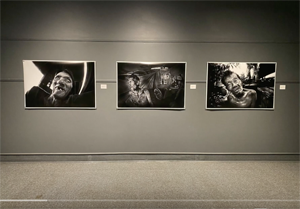
Still on a bit of a high, heck on quite a high not a bit! Am happy that the work can finally be seen as a group. I have always shown the sex worker white background photographs individually. The photographs will now be seen together working as a team to tell a message. It will be a small team of maybe 8 images but they will be printed large working together under good lighting in a gallery setting.

I hope the photographs can humanize the Thai sex worker for people who view the show. Many times people who open newspapers and read statistics lose the human element. When they see Bla, Long or Oews eyes in a large print staring back at them maybe the statistics will fall away and the viewer will see the underlying humanity behind the numbers. If I can communicate the human side of my subjects in these show photographs then I will be happy, I will have accomplished my goal.

Group Show Photos

These 2 diptychs are part of the submission I made to the VAAA that was accepted. It should be lots of fun to print, mat and frame prints for the show. I will print each photograph to 16x20 and place a 4 inch matt around it. Am not sure if I will go with white or black metal frames. I have seen white before and it looks very nice, black is more standard style stuff, will experiment.


Bla 21 Freelance Sex Worker, Thailand 2009

Oew 28 Freelance Sex Worker, Thailand 2009

Friday, November 27, 2009

TRUCK Rejection Letter

Got a nicely worded rejection letter from "Contemporary Art In Calgary - TRUCK". I will try this place again in the future. I still have about 65% of the Sex Worker on white images not developed from 2009. When I get all the work from 2007 (still have undeveloped 5x7 film from 2007) and 2009 scanned and developed, I will try again at TRUCK.

"Thank you for submitting your proposal to TRUCK for consideration for the 2010-2022 programing season. The Programming Committee was impressed by the number and the quality of proposals submitted. As you can imagine, the number of worthy proposals we received greatly exceeded our programming resources. Unfortunately the Programming Committee was not able to accept your proposal."

VAAA Group Show

I got an envelope from Visual Arts Alberta (VAAA) today as well as Contemporary Art In Calgary (TRUCK), earlier this year I made a series of submissions to both galleries (1 to Truck and 4 to the VAAA). Anticipating being rejected I had a blog entry all written up and was going to type in the polite rejection reply I have received 4 times before from this Gallery. I opened up the envelope and was surprised and delighted to see I had been accepted in a group show along with 2 documentary photographers from Quebec.

Some of the work can now be seen, some selected images will be finally hanging as a group. I can tell a bit of the story I want to tell, am happy and excited.

The exhibit is not for a long while but I want to print it and get it ready as soon as possible, so I can move on to other work and other submissions.

Mr Elliot Erwitt was right, hard work does eventually create results. I now need to work even harder.

The letter from VAAA:

On behalf of the Visual Arts Alberta Association I would like to thank you for submitting your work for consideration in the VAAA Gallery's 20010/20011 exhibition schedule. I am pleased to advise you that you have been selected by the jury for a joint exhibition with Quebec documentary photographers Patrick Dionne and Miki Gingras titled "Humanidad and Human Voices" scheduled to run from October 13, to November 10, 2011.

The Dauntless Spirit Philip Jones Griffiths: 1936-2008

by Peter Howe


Philip Jones Griffiths and his daughter Fanny Ferrato at an anti-Iraqi war protest in Herald Square, New York. 2003 Photo Donna Ferrato

If you knew Wales, you knew Philip Jones Griffiths. To the end of his life he remained true to his Welshness, which defined him with a power that few environments exert. Both he and his birthplace are rife with contradictions. It is a breathtakingly beautiful land, and relentlessly bleak, a land of strong communities made up of fierce individualists, where physical poverty has produced spiritual richness. Philip's personality reflected this duality. He was a cynical idealist; a serious man with a playful wit; his mind was analytical but his soul was passionate; profoundly moral he could be wickedly lascivious; he was opinionated but compassionate. The one area of his life that was without contradiction, and which dominated him to his last day, was his craft. He was without compromise, without hesitation and without deviation a photographer, one of the greatest photojournalists this profession has been proud to call its own.


He was born in 1936 in a village called Rhuddlan, situated at the far northern edge of Wales. To ensure that the young Master Jones Griffiths was in no doubt that he was Welsh surrounding towns and villages bore such unpronounceable names as Waen Goleugoed, Groesffordd Marli, Pen-Y-Cefn. But however powerfully his birthplace formed the man he was to become, its smallness could never contain his curiosity. The cliché of the photographer introduced to his profession by the family's Kodak Box Brownie was to be his story, with the twist that from an early age he realized it could be his passport to the world outside of the mountains and valleys of his homeland. His parents, however, had other, more practical ideas. He was to become a pharmacist, a plan that he went along with because however tedious the job might be, it would be one that he could practice anywhere in Britain – maybe not such a satisfying passport as photography, but still a pathway to the wider world. He claimed that the decade he spent behind the counter of various pharmacies was wasted time, although there were a couple of side benefits. The training developed his analytical skills, an expertise that was to serve him well as a journalist. It also took him to London, to what was arguably the most dangerous pharmacy in the land – Boots the Chemists in Piccadilly Circus. Famous for being the place where heroin addicts could get their prescribed Methadone and streetwalkers came in to rest their feet, it gave him an introduction to London's netherworld, a subject he found fascinating, and which he started photographing.


He, of course, had a different explanation as to how he got started as a photographer, and the role that the pharmacy played: "I think that the important thing in life is always to be somehow propelled by something, and I'm propelled essentially by boredom, so when I'm bored I've got to do something else." If nothing else, life behind the counter was boring. His ennui-induced photographs were good enough to get the attention of a great picture editor, Dennis Hackett of the London Observer, who gave him valuable advice. "He said look, remember, who, what, why, where, when. Those are the five W's you've got to get right every time when you take a picture. That's what I want to see when I look at a picture. And the more I thought about it, I thought, you know, all of them are standard, but the one in the middle, the why, that is the one that interests me. Why. Call it simple curiosity; call it a search for the truth, call it whatever - but it's the Why, the middle W, that counted."


It was the "Why" that took him in 1966 to the other land that was to powerfully influence him to the end of his life – Vietnam. Of all the many fine photographers who covered that tragic conflict nobody understood Vietnam and the Vietnamese better than Philip. Others may have had a better grasp of the military, others may have been more reckless, but he profoundly comprehended the mentality of the Vietnamese, and as a result was one of the first to realize that the war could not be won, not in the way it was being fought anyway. This awareness was as a result of two things. The first was that Philip thoroughly did his homework. He was passionately opposed to what he called "fireman" journalism, where the photographer jumps into a situation for a couple of days or even weeks, and then is off on to the next conflict, without really having understood what he or she was shooting in either of them. He prepared before going to Vietnam, read about the history, culture and religion of the country. It was important to him to understand the "Why" of Vietnam.


He also made a remarkable discovery upon setting foot on Vietnamese soil for the first time. "I found my village in Wales. In a Welsh village you're taught to keep quiet, to keep your eyes open, to listen, and not to give too much away. I felt that this was the ethic that the Vietnamese themselves lived by. I was fascinated by the fact that the most powerful nation on earth – with a military might never before seen – was being regularly hoodwinked by rice farmers." Over the three years that he covered the war he developed profound insights into what was happening, and what he should be photographing. He realized that the "bang-bang" photographs of combat were, in his words, meaningless. "They only show GIs running up and down hills, and of course it was an enemy lure to get them away from the populated lowlands in preparation for the Tet Offensive. The brilliance of the Vietnamese commander, General Giap, was that he said, 'I will give the American army what they understand, which is taking a hilltop.' I'm glad I missed those battles, because they were a distraction."


He was also well aware of a popular fallacy that persists even to this day – that it was the press coverage of the war that caused the American people to lose faith in the ability of the government and its military commanders to bring the conflict to a successful conclusion. "Although the press coverage had a gripping effect, I vehemently object to the idea that the press lost the war. The truth is that the press was always way behind the American people, who were anti-war long before it was. In general, 95 percent of the press was totally in favor of the war; 4.999 percent was in favor of the war but not the way it was being fought. And then there was me and two Frenchmen." He attributed the public's disillusionment to the fact that, with a conscripted army whose troops served one-year tours and then returned home, the stories of how poorly the war was progressing came not from newspaper articles, but from the newly discharged sons, brothers and nephews of the American family. Press reports merely served as confirmation of the picture that the vets were painting. In fact in both his photographs and in interviews on the subject, Philip was sympathetic to the plight of the GIs. One of my favorite pictures of his from this period is of an American soldier and a Vietnamese child taken in the Mekong Delta in 1967. The poignant expressions on their faces are a clear indication that both were victims of the war. One of his most famous photographs depicts a group of GIs sharing their water canteen with a wounded Vietcong fighter who had fought for three days with a stomach wound over which he had taped a kitchen bowl to keep his intestines from falling out. The concern and respect that the three Americans show for their courageous enemy give the photograph its power. Francis Ford Coppola lifted the scene for his 1979 movie, "Apocalypse Now." When Philip contacted him about this "he said, 'So sue me.'"


His three years covering the war led to the publication of his greatest work, the book Vietnam Inc. published in 1971, and reprinted in 2001. It is not only the finest book to come out of the conflict, it is probably one of the best publications on war ever produced. It is unflinching in its portrayal of war, and although the reader is never in any doubt as to the author's attitude towards the bloodshed, it is compassionate to those for whom the photographer felt compassion. Whenever Philip heard someone describe him as a war photographer he always corrected them – "Anti-war photographer." His fondest personal moment during this time was after the book was published and he had left Vietnam. "I had an assignment to go back, but I was banned. President Thieu uttered the immortal words, 'There are many people I don't want to see back in my country, but I can assure you that Mr. Griffiths' name is at the top of the list.' I begged Life magazine, which had given me the assignment, to get that in writing!"


But go back he did. The cessation of hostilities in 1975 did nothing to decrease his interest in the country. In the last 30 years he made more than 20 return visits, and out of them produced two more fine books – the harrowing Agent Orange: Collateral Damage in Vietnam, published in 2004, and Vietnam at Peace, published in 2005 and reviewed on this Web site in the July issue of that year. He summed up his feelings during the war by saying, "For me, Vietnam was the most intense experience imaginable, and one that was filled with a kind of macabre humor, which of course didn't detract from the tragedy of the whole thing. But most of the time, it was the ultimate clash of civilizations – the wise, smart little David running around irritating the hell out of this huge Goliath. That's an inspiring thing to observe."


For more than 40 years Philip was a member of Magnum, serving five years as its president. It was always a stormy relationship, and he claimed that he had to live in London towards the end of his life because the agency invalidated his health insurance, forcing him to rely on the free medical treatment available in the United Kingdom. Whether or not this was true it was certainly typical of the ambivalent attitude that he had towards the cooperative. His initial expectations of what Magnum could do for him were, however, unreasonably high. "I was 16 when I first read about Magnum. In those days it was a rather more practical problem that I had. My mother had always done my laundry, and what was I going to do when I left home? I read in a magazine that Magnum did Robert Capa's laundry for him. I said, 'That's for me. That's the place I'm going to end up.' Anyway, not only did they not do my laundry, they've done very little else for me over the years, but still it was a great concept, this idea of a band of brothers who would wander around the world righting wrongs, doing humanistic photography, finger on the pulse of humanity, and the very idea that you could just keep traveling – all you needed was a small suitcase and a camera bag. Somehow you need never come home, you could just keep on going from A to B to C to D and you could sort of circumnavigate the world indefinitely; I found all that very exciting. Of course the reality is somewhat different."


He did keep on going to the end of his life, planning another trip to the Far East for this fall that he would never make. He loved being a photographer, and regarded it as a privilege as much as a profession. "I had a grandstand view of this conflict, and that's what being a photographer, or a man with a camera running around Vietnam, afforded me, and for that I'm very grateful. It was almost worth doing without film in the camera. Of course that would have been a crime, but still, what I got out of it was worthwhile in and of itself." His biggest complaint about the "fireman" approach to photography was that you learned nothing, which, in his mind, negated the whole point of being a member of the profession in the first place. He described this peripatetic journalism as "like watching a movie with the lights on and everybody talking. It seems to me that you're losing such a valuable opportunity to learn the truth of what is happening."


During the time period that I've been writing this piece I attended a Barack Obama fund-raiser. At the end of the senator's presentation my friend who invited me and who has been involved in politics for a long time said, "You know what distinguishes him from most other politicians in this country – he's fearless." This characterization also applies to Philip. The two clichés seen most frequently in obituaries are that the subject died of a massive heart attack – nobody seems to die from moderate ones – or after a long battle with cancer. In Philip's case the cliché was a truism. He faced cancer with all the courage that he showed in the other areas of his life, and I am convinced that he lived longer because of it than a less determined man would have done. The thesaurus on my computer tells me that courage "implies not only bravery and a dauntless spirit but the ability to endure in times of adversity." Philip had all of these in spades, but above all he had an uncompromising moral courage coupled with an unerring eye.


He spoke to me once about courage when talking about one near death experience he had during the war. "I've never freaked out. I don't know what the explanation is. The closest I can think of is that if you have a job to do, a mission, a passionate mission, then you don't get scared. You can do it. You find you can do it. It's the people who are insecure or really don't know why they're there, and don't know what they're doing, who suffer, but I knew. I did all of this half for me and half to show the world."

Thursday, November 26, 2009

Quote: Bruce Davidson

"My way of working is to enter an unknown world, explore it over a period of time, and learn from it"

Quote: Irving Penn

"A good photograph is one that communicates a fact, touches the heart and leaves the viewer a changed person for having seen it. It is, in a word, effective."

Types of Photos


W. Eugene Smith

Philip Jones Griffith


I have been thinking what kind of photographs I want to make, what I should be trying to achieve.

Important subjects and forgotten people.

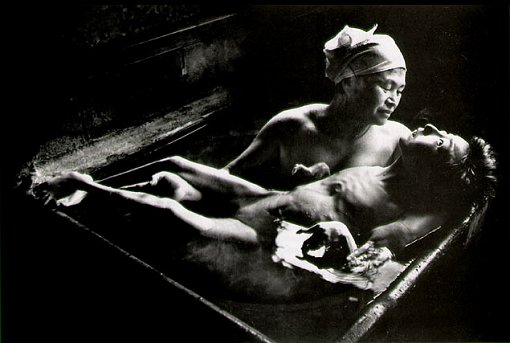
Lately I have been reviewing the work of 2 great humanist photographers, Philip Jones Griffith and W. Eugene Smith. Griffiths book Vietnam Inc. and Smith's book Minamata are both stunning examples of what a photographer can acheive. Both photographers shot important subject matter of forgotten people, they had a definite point of view, a subjective point of view which they translated into great photographs that told a meaningful story.

I need to find subject matter that inspires me that gets me angry that gets me motivated.


Philip Jones Griffiths: Brother Finds His Sisters Body, Vietnam

W. Eugene Smith: Tomoko In Her Bath, Minamata Japan

Quote: Elliot Erwitt

"Making pictures is a very simple act. There is no secret in photography. Schools are not really useful except for technical instruction. You just need practice and application for what you've learned. My absolute conviction is that if you are working reasonably well, the only important thing is to keep shooting. It doesn't matter whether you are making money or not. Keep working, because as you go through the process of working things begin to happen."

Quote: Arnold Newman

"We don't take pictures with our cameras. we take them with our hearts and our minds."

Tuesday, November 24, 2009

Quote: Mary Ellen Mark

Talking about her motivation for photography.

"In the very beginning, my motivation was the same as it is now: to explore the world and to look intimately at the lives of so many different people."

Monday, November 23, 2009

1999 35mm

Geez I have still had some 1999 film sitting around my darkroom in a box. Tri-x shot in 35mm in Cambodia, got to get this stuff developed sooner, these images waited 10 years to be processed.


Cambodian girls with bones at a killing fields Pagoda, Cambodia 1999

Skulls at killing fields Pagoda, Cambodia 1999

Long In Her Room 2009


Sunday, November 22, 2009

RingFlash Blad Tests

Played around with exposure and development using the ring flash with Blad and 80mm.


Dad 77 years old.

Thursday, November 19, 2009

Cambodian 35mm Stuff

Shot this on one of my 2 days in Cambodia this last trip. One is of an outdoor barbershop another if of a mural I found in a partially destroyed Buddhist temple building. Not sure who painted the mural or why it was there, it seemed to depict, murder, rape and torture.

These images were made with a Contax G2, the automatic features of this camera made me feel uncomfortable, I am hoping the Leica range-finders will allow me more control and be more fluid to use.


Monday, November 16, 2009

Possible Projects

Been running many story ideas over in my head the last few days. Things I might try to do in the future, not sure how much of this I can do and how much is fantasy but every photograph, every photographic project starts with an idea.

1) Khon thai, photos of thai people from all levels of society.
2) Rural Cambodia, photographs of people I meet on motorcycle trips through Cambodia.
3) Rickshaw driver in Phnom Penh his life story.
4) Cambodian street children, their lives their story day to day in the Phnom Penh.
5) Long or Bla's story, photographs of their lives.
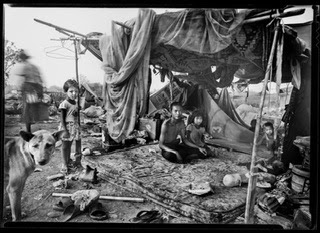
6) Slum life, photographs of people living in Thai slums.
7) Refugee camps, life of various people/family's in the camps (Burmese refugees around the Thai border).
8) Bangkok at night, photographs of everything that happens in the wee hours in one of the busiest cities in the world.

Thursday, November 12, 2009

Quote: Edward Steichen

"The mission of photography is to explain man to man and each man to himself."

Wednesday, November 11, 2009

Quotes: W. Eugene Smith

"Photography is a small voice. at best. but sometimes one photograph. or a group of them, can lure our senses into awareness.... Someone, or perhaps many, among us may be influenced to heed reason, to find a way to right what was wrong."

" Each time I pressed the shutter release, it was a shouted condemnation hurled with the hope that the pictures might survive through the years, with the hope that they might echo through the minds of men in the future. causing them caution and remembrance and realization."

"I have never made any picture, good or bad, without paying for it in emotional turmoil."

"I can never photograph without love,...I create only when I have the spirit and spirituality of life that love gives me"

"I believe if you stir human emotions, much can come out of it. I don't believe you stand a chance of changing many of the important wrongs in the world unless you reach through the emotions that stir the brain."