|
| Civil rights leader Andrew Young (L) and others standing on balcony of Lorraine motel pointing in direction of assailant after assassination of civil rights ldr. Dr. Martin Luther King, Jr., who is lying at their feet.Joseph Louw |
The woman who cooked MLK's last meal died from the sound of the bullet that killed him. Loree Bailey ran the switchboard at the Lorraine Motel. The rifle shot triggered a stroke.
She died the same day they buried him. Her dishes are still in his room. Read this.
The dishes are still in the room.
Not behind glass in some archive, not cataloged in a warehouse. They are right there on the dresser in Room 306 of the Lorraine Motel in Memphis, Tennessee, where they have been sitting since the evening of April 4, 1968.
Two coffee cups in their saucers, plates, napkins from the kitchen downstairs. The food was catfish, fried Mississippi River catfish, prepared by Loree Bailey, the woman who co-owned the motel with her husband Walter.
Loree had cooked for Martin Luther King Jr. every time he came to Memphis, and he loved her catfish so much that it became a ritual between them. On the afternoon of April 4, when Reverend Billy Kyles came to take him to dinner at his home, King teased him, saying that if the food at Kyles's house wasn't as good as what Loree made, he was coming back to eat at the Lorraine.
He never made it to dinner. He never came back to that room.
The Lorraine Motel started as a whites-only establishment called the Windsor Hotel, built in the 1920s on Mulberry Street in downtown Memphis. In 1945, Walter and Loree Bailey bought it and transformed it into something else entirely.
They renamed it after Loree, a play on her name and the jazz standard "Sweet Lorraine," and they opened its doors to Black travelers at a time when Memphis offered almost nothing for them. They added a second floor, a swimming pool, air conditioning in every room, and charged a flat rate of thirteen dollars a night.
The Lorraine became a Green Book listing, one of the few places in the city where Black motorists could sleep safely. It also became a gathering place for the musicians who recorded at Stax Records nearby, artists like Otis Redding, Ray Charles, Aretha Franklin, Count Basie, and Sarah Vaughan.
Martin Luther King Jr. stayed there so often that Walter Bailey called Room 306 the King-Abernathy Suite. King didn't come to Memphis in April 1968 because he wanted to.
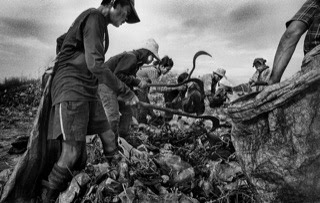
He came because two men were killed in the back of a garbage truck on February 1 of that year, and the city that employed them acted like it barely mattered. Their names were Echol Cole and Robert Walker.
Cole was thirty-six years old. Walker was thirty.
They were sanitation workers for the Memphis Department of Public Works, earning about a dollar sixty an hour, which was low enough that many of their coworkers qualified for food stamps. On a rainy Thursday afternoon, near the corner of Colonial Road and Verne Road in East Memphis, Cole and Walker climbed into the barrel of their garbage truck to get out of the rain.
They did this because the city had a policy. Black workers were not allowed to take shelter in white neighborhoods during storms, and white supervisors could stay on the clock during bad weather while Black workers got sent home without pay.
So men like Cole and Walker had learned to press themselves into the only dry space available, the loading hopper of the truck itself. At about 4:20 that afternoon, an electrical wire shorted out and the hydraulic compressor activated.
The stop button was on the outside of the truck, beyond their reach. A woman named Mrs. C.E. Hinson watched from her kitchen window across the street and told a reporter it looked like the machine just swallowed him.
It took crews a gruesome amount of time to retrieve their bodies. Both men were pronounced dead at John Gaston Hospital.
Neither Echol Cole nor Robert Walker could afford the city's life insurance policy. The city classified them as hourly employees, which meant their families received no workers' compensation and were left with nothing.
The thing most people don't know is that two other men had died the same way four years earlier, in 1964, in the same kind of truck. T.O. Jones, a garbage collector turned union organizer, had already asked the city to retire the truck that killed Cole and Walker, telling them it was too old and too worn out, and the city refused.
Ten days after the deaths, on February 11, over four hundred sanitation workers packed a meeting at the Labor Temple and voted to strike. On February 12, 1968, nine hundred thirty of eleven hundred sanitation workers did not show up for work, and only thirty-eight of one hundred eight garbage trucks moved that day.
The men who walked off the job earned so little that forty percent of them received welfare benefits despite working sixty hours a week. They carried garbage in leaking steel tubs balanced on their heads, came home smelling so bad their own families didn't want to be near them, and the showers at the end of the shift were for white workers only.
Their signs said three words. I AM A MAN.
Those words were a refusal of something so ordinary most white people in Memphis probably never thought about it, the decades-long practice across the Jim Crow South of calling grown Black men "boy." The signs, printed by Allied Printing on white poster board in stark black letters, drew a line borrowed from the opening of Ralph Ellison's "Invisible Man," the idea that a person can be standing right in front of you and still not be seen.
Reverend James Lawson, the acting chairman of the strike committee, called King and asked him to come lend his voice. King arrived on March 18, 1968, and addressed a crowd estimated between fifteen and twenty-five thousand people at the Bishop Charles Mason Temple, the largest indoor gathering in the history of the civil rights movement.
He returned on March 28 to lead a march that started at the Clayborn Temple with over five thousand people, but it turned violent when a faction broke away and began looting storefronts. A sixteen-year-old boy named Larry Payne was shot and killed by Memphis police during the unrest.
King was devastated and left Memphis the next day, unsure whether he should return. But he decided that if the nonviolent struggle for economic justice was going to mean anything, he had to go back and prove that a peaceful march could work.
He returned on April 3, his flight from Atlanta delayed because of a bomb threat. He arrived at the Lorraine Motel around eleven in the morning and checked into Room 306.
That evening, he was supposed to speak at the Mason Temple again, but he wasn't feeling well, so he sent Ralph Abernathy in his place. When Abernathy got to the temple and saw the crowd, people who had walked through a thunderstorm to hear King speak, he called the motel and told King he had to come.
King came. And standing before that crowd of sanitation workers and their supporters, exhausted and sick, he delivered the speech that would become his last public address.
He told them he had been to the mountaintop and that he had seen the promised land. He told them he might not get there with them, but that as a people, they would get to the promised land.
The next morning, April 4, Walter Bailey later said that King seemed particularly happy. He went out to the balcony to smoke a cigarette, a habit he kept hidden from the public.
He attended an SCLC staff meeting that morning and had lunch with Abernathy, catfish from Loree's kitchen. Abernathy took a nap while King went down the hall to visit his brother, A.D. King, who had arrived from Florida and checked into Room 201, directly beneath him.
That afternoon, around four o'clock, King got into a pillow fight with Andrew Young. The tension broke into something almost childlike, grown men throwing pillows at each other in a motel room in Memphis because Young had been late getting back from court.
Reverend Billy Kyles arrived around five to take King to dinner. The meal had been prepared at Monumental Baptist Church by a group of women led by Virginia Boyland, who had cooked all of King's favorites, fried chicken, ham, sweet potatoes, two kinds of greens, crowder peas, and sweet potato pie.
King asked Kyles what was for dinner, and then told him a story about a preacher in Atlanta whose wife served cold ham, hot Kool-Aid, and hard biscuits on card tables because they couldn't afford furniture after buying a new house. They were laughing when King stepped out onto the balcony of Room 306 at about one minute after six.
He saw Ben Branch, a saxophonist, standing in the parking lot below. King leaned over the railing and asked Branch to play "Take My Hand, Precious Lord" at the rally that night, and told him to play it real pretty.
The shot came from a bathroom window at 422-and-a-half South Main Street, a rooming house run by a woman named Bessie Brewer. A man who had checked in that afternoon under the name John Willard fired one round from a Remington Model 760 Gamemaster rifle.
The bullet struck King in the jaw and severed his spinal cord. He fell backward onto the balcony, unconscious, and Ralph Abernathy rushed to his side.
King was taken to St. Joseph's Hospital and pronounced dead at 7:05 p.m. He was thirty-nine years old.
When Reverend Kyles tried to call an ambulance from the phone in Room 306, no one answered the switchboard. The person who usually ran it was Loree Bailey, who had suffered a cerebral hemorrhage the moment the shot was fired.
She died five days later, on April 9, 1968. It was the same day as Martin Luther King's funeral.
The news of King's death spread and the country came apart. Riots broke out in over one hundred cities, more than forty people were killed, and President Johnson deployed federal troops to Washington, D.C., where fires burned within sight of the White House.
In Memphis, the sanitation workers kept going. On April 8, four days after King was killed, his widow Coretta Scott King came to Memphis with their children.
Harry Belafonte had called her and told her she had to go, even though her family begged her to stay home. She walked at the front of a silent march through the streets of the city, and an estimated forty-two thousand people walked behind her without making a sound.
Walter Reuther, president of the United Auto Workers, was in that march. He wrote a check for fifty thousand dollars to the sanitation workers' strike fund, the largest single contribution from any outside source.
On April 16, twelve days after King's death, the city of Memphis finally recognized the sanitation workers' union. The settlement included a wage increase and was almost identical to the proposal Mayor Henry Loeb had rejected weeks earlier.
The workers had to threaten to strike again later that year just to make the city honor the agreement. That is how little their labor was valued, even after a man died for it.
Walter Bailey never rented Room 306 again. He kept it exactly the way it was on the evening of April 4, the unmade bed, the dishes Loree had sent up from her kitchen, the coffee cups on the dresser, a can of pomade on the vanity, a Gideon Bible on the nightstand.
He ran the Lorraine for another fourteen years, but the motel never recovered. The neighborhood declined, the clientele changed, and in 1982 Walter Bailey declared bankruptcy.
A group called the Save the Lorraine Foundation bought the motel at auction for a hundred and forty-four thousand dollars. Walter Bailey died on July 7, 1988, at the age of seventy-three, and he never saw the Lorraine become a museum.
In 1991, the National Civil Rights Museum opened inside the Lorraine Motel. You can walk through exhibits that trace centuries of struggle, but at the end, you come to Room 306.
You cannot enter it. You stand behind a glass partition and you look inside.
The bed is still unmade. The coffee cups are still on the dresser, still in their saucers, next to plates and napkins from Loree Bailey's kitchen.
It looks like someone just stepped out for a moment. Like they might walk back in.
Martin Luther King Jr. was killed fighting for men who earned a dollar sixty an hour to carry other people's garbage on their heads. He was killed in a motel owned by a Black couple who named it after the wife, who cooked him catfish every time he visited, who charged thirteen dollars a night and treated him like family.
The woman who gave the motel its name died from the shock of hearing the shot that took his life. Her dishes are still in his room.
Fifty-eight years later, Room 306 remains frozen at the exact moment everything changed. The bed will never be made, the cups will never be washed, the meal will never be finished.
And every year, on April 4, people stand behind that glass and look at what a country did to a man who asked for nothing more than what those signs said. I am a man.
The dishes are still in the room. They are still waiting.