Social Documentary Photography for a Better World!

Tuesday, September 8, 2009

Trying Some Diptychs

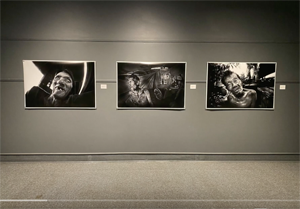
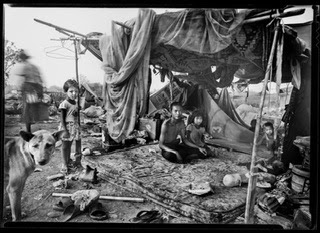
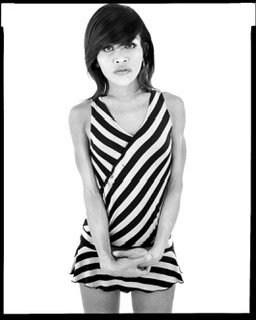
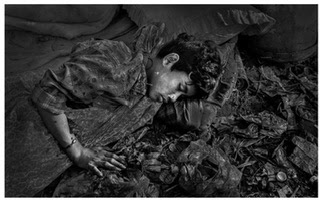
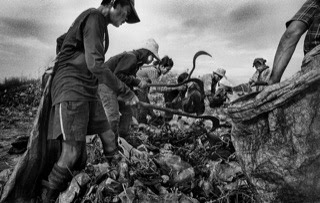
Trying to put together some diptychs for a VAAA submission. I make a yearly submission that is rejected, think I have been rejected 5 times now. This year am going to try to do more than one submission, maybe as many as four. When I shot the sex worker images this year I had diptychs in mind, here are the first attempts.

Um 22

Nanoy 27

Da 22

Oew 33

Wednesday, September 2, 2009

Photography's Greatest Strength Lost

I have always felt that photography's greatest strength was the illusion of reality it represents. You see it in a photograph and there is an assumption that it is real, that it really happened (This assumption is of course false because photographs are not reality but a subjective statement created by the photographer). The fact that it is perceived as real gives the photograph special power that painting/drawing etc can never obtain.

The problem with the current digital age in photography is that this illusion of reality is being lost. People who view images in the year 2009 know that in photoshop you can pretty much create anything you want. Is the photo real? Did it really happen? No it is just a photoshop illusion, it is not real.

Photography's greatest strength is being diminished by the advent of digital manipulation of imagery.

Americansuburbx: Great Photography Site

Found this site by accident today while researching Tuol Sleng. A wonderful site especially if your interested in documentary style photography.

http://www.americansuburbx.com/

Tuesday, September 1, 2009

AP Story on Nhem Em (Ein)

CAMBODIAN PHOTOGRAPHER RECALLS VICTIMS OF KHMER ROUGE REGIME.


Byline: Robin McDowell Associated Press Associated Press: see news agency.
--------------------------------------------------------------------------------
Associated Press (AP)

For 10,000 people, stepping before the camera was a step toward the grave. Some days, hundreds gazed forlornly into the lens, many en route to horrible torture before execution.

Nhem Ein held the chunky Canon. He focused on their faces. He heard their screams. He said nothing.

``One day, I saw the face of a close relative through my camera,'' he now recalls. ``I kept silent even after he was taken to be interrogated and then killed.''

Nhem Ein was chief photographer at Phnom Penh's infamous Tuol Sleng torture center during the rule of the Khmer Rouge name given to native Cambodian Communists. Some 20,000 people passed through Tuol Sleng's bloody chambers before being trucked to the Choeung Ek killing field 10 miles outside the capital and bludgeoned to death.

A fraction of the photographer's grim black-and-white mug shots have stared for years from the walls of Tuol Sleng, turned into a genocide museum when Vietnam drove out the Khmer Rouge in 1979.

But until a few months ago, the man who took the photos, this prime witness to Cambodia's profound nightmare, was a mystery. It turns out the photographer was just a 16-year-old boy, though a trusted Khmer Rouge veteran, when he started his grisly task.

Nhem Ein, now 37, is one of thousands of war-weary guerrillas to have abandoned the Khmer Rouge's northern jungle strongholds and defected in the past year.

The story he told The Associated Press last week of his time at Tuol Sleng adds an eerie footnote to the anonymous portraits on the walls.

``It was incredible to meet the person who took all these pictures,'' said Douglas Niven, an American photographer who spent three years helping clean and catalog 6,000 negatives found in forgotten drawers at the prison, covered in fungus and dirt. ``Anyone who has been to the Tuol Sleng museum just cannot forget them.''

At Tuol Sleng, officially known as the S-21 interrogation center.

``They used many ways, such as taking a clamp to pull out a nail, or using an electric shock on the tongue to force confessions,'' Nhem Ein said.

The cries and screams were constant.

Nhem Ein recalls seeing face after face filled with fear and ``deep sadness.''

``Those who arrived at the facility had no chance of living,'' he said. Only seven of the 20,000 prisoners are known to have survived. In all, Nhem Ein figures he took about 10,000 photographs.

``I took pictures of the prisoners just after they had a number pinned on them,'' Nhem Ein said. ``The photos were taken before they were interrogated or tortured.''

Cambodian scholars had long wondered why many prisoners wore the same number. Nhem Ein said the numbering system began anew every 12 hours. No. 1 was pinned on a prisoner at 1 a.m. At 12:59 p.m., the number might be 100 or 150 or 225. At 1 p.m., it was back to 1.

``I and three others were able to develop and print the pictures. We did this every day,'' he said. ``I took hundreds of photographs at a time, sometimes thousands.''

Nhem Ein was just 10 when he joined the Khmer Rouge, shortly after Gen. Lon Nol Lon Nol, 1913–85, Cambodian general and political leader. His mother had died when he was 2, and his father, a poor bean farmer, struggled to raise eight boys.

The teen-ager was sent to Shanghai, China, for training as a photographer, filmmaker and cartographer. He returned in May 1976 to be named chief photographer at Tuol Sleng, in charge of five apprentices.

The number of prisoners arriving at S-21 increased dramatically the following year, when Khmer Rouge purges intensified. Up to 600 people were delivered each day, Nhem Ein said.

``I knew that I was taking the pictures of innocent people, but I knew that if I said anything, I would be killed,'' Nhem Ein said.

Son Sen, who had overall responsibility for internal security, visited Tuol Sleng as often as once a week, Nhem Ein said. Pictures of important people - before and after execution - were sent to him and Pol Pot as proof they had been killed.

After the Vietnamese invasion, Nhem Ein took pictures for a Khmer Rouge newsletter. He said he'd lost faith in the revolution by mid-1977 but feared leaving his comrades and being killed by the Vietnamese.

Besides Nhem Ein's photographs, the Tuol Sleng museum also displays skulls and clothing of Khmer Rouge victims, primitive torture chambers where people were shackled to iron beds and some of the absurd confessions extracted under torture.

Only once, Nhem Ein said, did he see a face he knew in the viewfinder, a 25-year-old cousin named Chhan, whom the Khmer Rouge accused of spying for the CIA.

``I went back to Tuol Sleng in October to see if I could find his picture, but it was missing,'' Nhem Ein said last week. ``Being there made me feel very, very sad.

NY Times Interview with Nhem En Photographer of Tuol Sleng Prisoner Photographs

Out From Behind a Camera at a Khmer Torture House
By SETH MYDANS
Published: October 26, 2007


PHNOM PENH, Cambodia, Oct. 25 — He had a job to do, and he did it supremely well, under threat of death, within earshot of screams of torture: methodically photographing Khmer Rouge prisoners and producing a haunting collection of mug shots that has become the visual symbol of Cambodia’s mass killings.

Tuol Sleng Museum of Genocide
Before killing the prisoners, the Khmer Rouge photographed, tortured and extracted written confessions from their victims.
“I’m just a photographer; I don’t know anything,” he said he told the newly arrived prisoners as he removed their blindfolds and adjusted the angles of their heads. But he knew, as they did not, that every one of them would be killed.

“I had my job, and I had to take care of my job,” he said in a recent interview. “Each of us had our own responsibilities. I wasn’t allowed to speak with prisoners.”

That was three decades ago, when the photographer, Nhem En, now 47, was on the staff of Tuol Sleng prison, the most notorious torture house of the Khmer Rouge regime, which caused the deaths of 1.7 million people from 1975 to 1979.

This week he was called to be a witness at a coming trial of Khmer Rouge leaders, including his commandant at the prison, Kaing Geuk Eav, known as Duch, who has been arrested and charged with crimes against humanity.

The trial is still months away, but prosecutors are interviewing witnesses, reviewing tens of thousands of pages of documents and making arrests.

As a lower-ranking cadre at the time, Mr. Nhem En is not in jeopardy of arrest. But he is in a position to offer some of the most personal testimony at the trial about the man he worked under for three years.

In the interview, Mr. Nhem En spoke with pride of living up to the exacting standards of a boss who was a master of negative reinforcement.

“It was really hard, my job,” he said. “I had to clean, develop and dry the pictures on my own and take them to Duch by my own hand. I couldn’t make a mistake. If one of the pictures was lost I would be killed.”

But he said: “Duch liked me because I’m clean and I’m organized. He gave me a Rolex watch.”

Fleeing with other Khmer Rouge cadres when the government was ousted by a Vietnamese invasion in 1979, Mr. Nhem En said he traded that watch for 20 tins of milled rice.

Since then he has adapted and prospered and is now a deputy mayor of the former Khmer Rouge stronghold Anlong Veng. He has switched from an opposition party to the party of Prime Minister Hun Sen, and today he wears a wristwatch that bears twin portraits of the prime minister and his wife, Bun Rany.

Last month an international tribunal arrested and charged a second Khmer Rouge figure, who is now being held with Duch in a detention center. He is Nuon Chea, 82, the movement’s chief ideologue and a right-hand man to the Khmer Rouge leader, Pol Pot, who died in 1998.

Three more leaders were expected to be arrested in the coming weeks: the urbane former Khmer Rouge head of state, Khieu Samphan, along with the former foreign minister, Ieng Sary, and his wife and fellow central committee member, Ieng Thirith.

All will benefit from the caprice of Mr. Nuon Chea, who complained that the squat toilet in his cell was hurting his ailing knees and was given a sit-down toilet.

Similar toilets are being installed in the other cells, said a tribunal spokesman, Reach Sambath, “So they will all enjoy high-standard toilets when they come.”

It is not clear whether any of the cases will be combined. But even if the defendants do not see one another, their testimony, harmonious or discordant, will put on display the relationships of some of the people who once ran the country’s killing machine.

In a 1999 interview, Duch implicated his fellow prisoner, Mr. Nuon Chea, in the killings, citing among other things a directive that said, “Kill them all.”

Mr. Nhem En’s career in the Khmer Rouge began in 1970 at age 9 when he was recruited as a village boy to be a drummer in a touring revolutionary band. When he was 16, he said, he was sent to China for a seven-month course in photography.

He became the chief of six photographers at Tuol Sleng, where at least 14,000 people were tortured to death or sent to killing fields. Only a half dozen inmates were known to have survived.

He was a craftsman, and some of his portraits, carefully posed and lighted, have found their way into art galleries in the United States.

Hundreds of them hang in rows on the walls of Tuol Sleng, which is now a museum, their fixed stares tempting a visitor to search for meaning here on the cusp of death. In fact, they are staring at Mr. Nhem En.

The job was a daily grind, he said: up at 6:30 a.m., a quick communal meal of bread or rice and something sweet, and at his post by 7 a.m. to wait for prisoners to arrive. His telephone would ring to announce them: sometimes one, sometimes a group, sometimes truckloads of them, he said.

“They came in blindfolded, and I had to untie the cloth,” he said.

“I was alone in the room, so I am the one they saw. They would say, ‘Why was I brought here? What am I accused of? What did I do wrong?’”

But Mr. Nhem En ignored them.

“‘Look straight ahead. Don’t lean your head to the left or the right.’ That’s all I said,” he recalled. “I had to say that so the picture would turn out well. Then they were taken to the interrogation center. The duty of the photographer was just to take the picture.”

Tuol Sleng Prisoner Photographs

Doing research on Cambodia now, need to know more before making possible portraits in the country at some future date. Am currently reading a very good book by Nic Dunlop called "The Lost Executioner" The story deals with the history of Cambodia under the Khmer Rouge and the search for the leader comrade Duch who led the infamous Khmer Rouge torture, execution center of Tuol Sleng in Phnom Pehn between 1975 and 1979. Over 20 000 people went into the prison and only 7 came out alive. These photographs were taken of the prisoners sometime before they were tortured and executed, the photographers name is Nhem En.


Summer Lake Photos

Was at a lake recently filled with weekend beach people. There was all types of people, old/young, men/women/children, thin/chubby, macho and meek. It was exciting to think of all the portrait options. Have been thinking of doing a series of portraits at various beaches and lakes around the province, it could make for some good work. Things might have to wait till next year as the summer season is ending but this idea is a definate maybe.

Friday, August 21, 2009

Quote: Diane Arbus

"For me the subject of a picture is always more important than the picture. And more complicated. I do have a feeling for the print but I don't have a holy feeling for it. I really think that what it is, is what it's about. It has to be of something. And what it's of is always more remarkable than what it is."

Quote: Woody Allen

"I don't want to achieve immortality through my work. I want to achieve it by not dying."

Tuesday, August 18, 2009

Some Bananrama Tests

Been playing with the Bananrama (4x5 rangefinder conversion camera), experimented with some tripod mounted shots last week, technically ok (a bit of flaring, no lens shade used) photographs, kind of boring subject matter. I am learning with the camera thou which is good, it is the camera of choice for the "Khon Thai" project, need to be able to use it without thinking tech stuff.


.

Sunday, August 16, 2009

Oew 33 Part 2, 2009


Da 22


The first thing that attracted my attention with Da was his hairstyle, but later I enjoyed making photographs with him because of his sensitive eyes. A nice man who worked the freelancer sex scene after leaving a gogo bar.

Saturday, August 15, 2009

Found 5x7 Negative From 2007


Found this negative lying around the darkroom, kind of like the feel of it.

Tuesday, August 11, 2009

Quote: Joel Meyerowitz

"It is most important to find out what your essential self is. Authenticity will separate your work from the masses."

Monday, August 10, 2009

Nong 1999

Went through my negative archives looking for a neg to print tonight, found these 3 that I might give a try. The photographs were made in 1999 when I lived in Bangkok.


Ebay Print For Sale

Photograph of Mat Ladyboy Sex Worker, Thailand 2009 is now for sale on Ebay. Hopefully I can make a few print sales to pay for film costs for the upcoming "Khon Thai" project, this last group of sex worker on white photographs cost me over $10 000 too produce. I also plan on doing a box set portfolio of 10 images from the 2007 and 2009 studio white background sex worker photographs.

http://cgi.ebay.ca/ws/eBayISAPI.dll?ViewItem&item=190327774525#ht_500wt_1182

Sunday, August 9, 2009

Quote: Alexander Lieberman

"The creative life of a photographer is like that of a butterfly-he must adjust-transform."

Saturday, August 8, 2009

Quote: Ben Maddow In His Book, Faces

"I believe, myself, truth of character is an absolute essential of great portraiture. It is dangerous, like any other truth; it may wound the sitter, splatter back on the photographer... or offend the average viewer."

Shoot One Camera For A Year?

Jock Sturges gave me some advice once, he recommended that I concentrate on using one camera and to sell the rest.

Been thinking tonight of only shooting my Bananarama 4x5 for 1 year, of just using that camera with color and b/w film. How much better would I be with this tool if I just concentrated on making photos with it and ignored the others? The Camera would become an extension of my hand/mind/heart, and then when I was in Asia again making portraits, everything would flow, no mistakes, no confusion, the pictures would be allowed to come forth.

I need more flow in my work, need to totally forget the technical side of things and concentrate on the emotional.

Will try this for the next few months and see how it goes, maybe I can keep it up till next year.

Friday, August 7, 2009

"Bangkok At Night"?

Been thinking about a possible project I had forgotten about again. The idea was to make photographs of Bangkok at night. Portraits of people on the street, photos of places after closing, photos of the feel of Bangkok at night.

Bangkok is such a action packed place filled with nightlife. Making photos of the city would be fun and I am also comfortable in that world, feel safe and at home. The photographs of people could also fit into my "Khon Thai" project.

Equipment:
Bananrama 4x5 Rangefinder
Vivitar 283 Flash
3 Grafmatic Film Holders (18 shots)
Large Grey Camera Bag
2 Mini Flashlights (for focusing and camera settings)
------------------------------------
Box of unexposed 4x5 Tri-x
Box for holding exposed film
Changing Bag (incase I need to shoot more than 18 shots a night)

Fazal Sheikh Website

I was awestruck by the beauty, complexity and humanity of this mans photographs.

http://www.fazalsheikh.org/


Thursday, August 6, 2009

O Zhang Artists Website

Found this wonderful artists work today, the project Horizon is especially good.

http://web.mac.com/zhang_o/iWeb/Site/O%20Zhang,%20artwork.html


Learning Khmer

Am trying to learn some Khmer. Have taken on a project of learning a word or phrase a day. During my time in Poipet this last trip I really really enjoyed myself. There was a real beauty to the 30 or so people I met over the 2 days I visited. I want to try to go back and make more photos of the locals, there is an honesty to them that I think will translate well in my portraits. I have to learn to communicate thou, if I cannot talk to them I really limit myself, communication is a key. Back in 1999 I learned Thai this way little by little. I have to try to do the same now with Khmer (have studied the language before back in 2003), it will be difficult to learn without the help of any native speakers (doing it online) will have to try and find some local people here in my city that might be able to help.

There is some common vocabulary between Khmer and Thai and many Cambodians along the border can speak Thai so I have a bit of advantage there but damn learning khmer will be hard, step by step we will get there.

jim-ree-up-sooo = Hello
khyom mun-yohl-tay = I do not understand
khyom yohl = I understand

Tuesday, August 4, 2009

Quote: August Sander

Speaking about photography.
"It can depict things in magnificent beauty, but also in terrible truth, and can also deceive enormously. We must be able to bear seeing the truth, but above all we should hand down the truth to our fellow human beings and to posterity, be it favourable to us or unfavourable.

Studying August

Spent the night looking at the work of August Sander. He records his subjects with such humanity, he communicates such a understanding of the people photographed, a master portraitist.


Monday, August 3, 2009

Goethe: German Writer

Writing in his travel journal about his visit to Michelangelo's Sistine Chapel in 1787.

"...until you have seen the Sistine Chapel, you have no adequate conception of what man is capable of accomplishing. One hears and reads of so many great and worthy people, but here, above one's head and before ones's eyes, is living evidence of what one man has done."

Style: You Shoot Like Avedon

Been thinking lately about style in photographs and following in the footsteps of photographers you admire.

I have been criticized in the past for the white background 8x10 work because it is very similar in style to Richard Avedon's work. There are differences in the photographs, lens used, lighting etc, the main difference thou is subject matter.

The people I photograph are completely unrelated to Avedon's subjects. I agree that the white background and film format are the same but the fact that the subjects are entirely different negates that argument that the work is a copy cat version of his. It would be a little like saying photographers could not shoot zone system large format in Yosemite National Park because Ansel Adams had done that already. Each photographer can find an independent vision even if the technique they use is similar. Different subject matter creates different work.

Chris The Barang

At a casino on the Cambodian (Poi Pet), Thailand border I met an interesting Western man (barang in Khmer) named Chris. Chris was playing Texas hold em at one of the tables and we had a little chat. He had traveled though out South Asia, previously in Thailand, Malaysia, Indonesia and was now in Cambodia (with Vietnam on the horizon). The cool part of Chris's trip was he was doing it via motorbike, he would buy or rent a motorbike in each country then use it to travel at his own leisurely pace. The idea of spending months possibly even a year traveling on a motorcycle in Cambodia is intoxicating. To have the freedom to meet and photograph people, to eat the local food to speak the language (need to learn Khmer) would be a life changing experience. I have to look into going down this road in the future.

I got Chris's email address and will try writing him tonight, want to learn more about his travels and adventures as well as the more practical stuff.

August Sander Influence


This famous photograph by the German photographer August Sander has been a great influence on my coming "Khon Thai" project. The heroic nature and strength of this man is inspiring. There is such a rugged independence to him, a sense of finding his place in the world of accepting that place and thriving in it.

If I can give my Thai people photographs a similar feeling of place and belonging, if I can communicate who and what they are in Sander fashion then the project will be a success, I will have accomplished my goal.

Sunday, August 2, 2009

Sunday's 8x10 Sex Worker 2009 Scans


Long 27 Female Sex Worker, 2009

Mat 27 Ladyboy Sex Worker, 2009

VAAA Alberta Open Photo Show 2009

Went to see the VAAA Alberta Open Photo Show today at the Kaasa Gallery. In the interests of full disclosure 5 of my sex worker 2007 images were rejected by the jury curating this show.

After viewing the images today I felt sort of like I had just eaten a strawberry sundae at McDonald's. It was sweet and tasty at times but in the end it makes you feel empty and a bit nauseous. The photos in the show were a mixture of boring abstracts and cliches (haystacks, flower shots, pretty garden photos etc). Out of the 63 photographs on display I felt less than 10 deserved a place on the walls, 4 or 5 images were of quality. The rest of the work was all style with no substance, highly disappointing.

I counted 5 photos with people in them and of those five in four the people were used as stylish shapes, they were non people in the photographers eyes (a tree or mannequin would have done served the same purpose), the show lacked any kind of feeling or emotion, it lacked humanity.

Art should challenge us, make us ask questions, make the hair stand up on the back of our necks. MAKE US THINK!!! This show was sweet and simple and quickly forgotten. After viewing the photographs I felt the need to use mouthwash, the show left a bitter after taste.

Please judges/curators of next years show, show us some substance, give us some meat to chew on, enough of the cotton candy crap photography. Safe, boring, sweet forget full art is not what you should be promoting, CHALLENGE YOUR AUDIENCE!!

2 More Scans Tonight


Waves Hong Kong, 2008

Ladyboy Sex Worker, 2008

Tree Near Chiang Rai Thailand, 2003

Bargirl Series 2003

Finally got around to developing and scanning some transparency film shot for the bargirl series of 2003. Still have quite a bit of undeveloped film in the fridge from this series of photographs.


Saturday, August 1, 2009

A Couple More


Bla 21 Female Sex Worker, Thailand 2009

Mickey Ladyboy Sex Worker, Thailand 2009