Social Documentary Photography for a Better World!

Showing posts sorted by relevance for query japanese ambrotypes. Sort by date Show all posts

Sunday, December 26, 2021

Reversed Ambrotype Technique

 Hi Everyone, Merry Xmas

I decided to write up a little note for my blog and Facebook about the system I will probably use to make ambrotypes. Writing things down helps me focus my thoughts, figure things more clearly.
First off, I wanted to thank all of you who have reached out with advice through the last 2 or 3 years. Without your help and suggestions, I would have never been able to move forward. My goal in all of this is to develop a working system that will allow me to make 35x35 inch plates. I need a practical working technique that can go that large. I will be working out of a darkroom trailer while traveling around Canada in an RV. If possible, I want to complete the entire plate in the field. The photo making trips could last up to 4 months each, having completed plates makes a certain amount of sense. Seeing the completed plates will inspire me (assuming they are good) to work harder to make more. That’s the hope anyway.
What type of substrate? Tin types were never my thing, Black glass while beautiful if done right I find a bit to 2 dimensional, I also do not like the reversed image. The glass is also hard to find. For me the answer is clear glass ambrotypes. Not only clear glass but reversed clear glass. I love the illusion of 3d this creates, I also love the idea, the feeling that the image is caught INSIDE THE GLASS. There is a certain innate beauty in having a subject IN the glass. A moment of time inside that is captured from a “another world” and preserved like Orwell’s coral paperweight from 1984. A nice bonus for me to doing these reversed ambrotypes is that everything is the right way around, no backwards writing, backward subjects. Another thing I prefer about “clear glass reversed ambrotypes” is that the front of the image is glass, not varnish. I like that you cannot see the varnish, only the sheen/shine of the glass. It all works out for me as the most beautiful type of ambrotype.
So, then the question becomes, how to make the reversed clear glass ambrotypes? Many have spoken against applying paint/Asphaltum or other substances to the collodion side of the plate. Many have said this is archivally unsound and it may well be. How long will it last? 100 years? I have Japanese Ambrotypes that are coated on the collodion that are in reasonable shape after 150 or so years. My thinking on this is simple, the reversed ambrotypes are the most beautiful in my eyes. So, I will work to create them as archivally as I can but being archival is not my main goal. The main goal is to create beautiful photographs, photographs that matter and photographs that inspire. If this type of Ambrotypes lasts only 100 years or 75 years, so be it. I would rather have the kind of imagery that inspires me that last a shorter period of time than create archivally longer lasting works that leave my heart cold. What is the use of creating technically more archival work that fails to excite?
So here is the system I am thinking of using to create clear glass reversed ambrotypes. I will of course continue to adapt as necessary and listen to suggestions of people with much more experience at the process.
- I will use readily available 3mm clear glass (possibly 4mm for the 20x24 to 35x35 plates) as a substrate.
- A double layer varnish of modern “Liquatex High Gloss Varnish” will be applied. Double seems better than single.
- A blackening coating of high-grade artist black acrylic paint by Liquatex (have experimented with many types of acrylic). The acrylic coating will be applied on top of the varnishes, the plate is taped off allowing for a thicker coating. I have also
tried to use Asphaltum in a mix of 1-part mineral spirits and 2 parts Asphaltum. This works fine
and creates a nice black. Not a fan of the smell and not sure I can get the Asphaltum in enough
quantities to coat possibly hundreds of large 20x24 and 35x35 plates. Not sure Asphaltum is
practical to use on the large plates. I have also tried black velvet but do not like the resulting look.
- Before flowing the plate with collodion I will first coat the entire glass plate with Albumen to get better adherence. Currently I am using a non-ether added collodion. Thanks, Borut P for that suggestion.
Any thoughts? Play nice 😊
Here is a link to a video of a 4x5 clear glass reversed ambrotype made as indicated (except for the Albumen coating).

Sunday, April 23, 2017

Bought Me Am Ambrotype "Japan Antique Photo : Japanese Woman Sitting / Ambrotype Kimono Brazier"

Instead of buying a bunch of cheaper ambrotypes/tintypes I have decided to invest in just a few that I really love. Quality over quantity, you pay more but get more emotional impact, images that I feel are important and inspirational. I want to do a series of group ambrotype portraits for the "Oh Canada" project and to that end bought this inspiring Japanese portrait of 4 women (mother, daughters and granddaughter?) from 1894. The ambrotype is a little more than 4 inches long, the cost was a very hefty $124.51 USD including shipping from Saitama Japan. All 4 in this group look so glum, sad lives, lost family members? Where are all the men? What were the stories of these womens lives? I will now will be able to study this work up close, and hopefully be inspired by it to make my own group ambrotypes. Maybe in 120 years, some other photographer doing ambrotypes will be inspired by my portraiture, wondering about those lives.

Note" I like the wooden presentation of the Japanese ambrotypes I have seen online like the one I now own. It might be a way I can present my work. Each ambrotype in its only specially labeled wooden box. You open up and present each work of art slowly and separately.

Friday, May 12, 2017

Got My Japanese Women Group Ambrotype, It Is Stunningly Beautiful

I got the Japanese women group ambrotype today, it is tiny and stunningly beautiful. This piece is like a precious memory stone from a distant pass. Who were these women, what were their stories? What is the history of this little beautiful ambrotype in its sweet little box? This is the type of work I want to do on my wet plate project, possibly. I should be able to do group portraits of this nature in 4x5, 8x10, 11x14 and even 16x20 sizes. I doubt I will have enough light to do it 35x35 but I will try it and see.

This work is the best of my ambrotypes and highly inspiring to me. I plan to take it on the road with me when I shoot the wet plate project Oh! Canada!

Another thing I like about the Japanese versions of ambrotypes is the cute little light wooden (balsum?) boxes they come in. They seem more personal some how. A box with writing on it in felt and a magical ambrotype inside. I want to do larger versions of these things later on, little island like beautiful warm tone ambrotypes in boxes.

Here is my little gem:

Japanese family group ambrotype (1870-1900?)

Monday, June 19, 2017

Bought A Second Japanese Ambrotype, Titled: 2 Japanese Antique Ambrotype Glass Photo Meiji Frame Girl Kimono 1880’S

I am laying off my buying now, but had bid high on this Japanese ambrotype last week. This item is expensive $95USD (plus shipping) but rather haunting and beautiful. a mysterious enigma. The type of ambrotypes I hope to make in the "Oh! Canada!!" "Kanata" project. I will carry both my Japanese kimono women ambrotypes with me in my mobile darkroom unitility truck when I am traveling, making my wet plate images. Hopefully these wonderful 130-40 year old works will help to inspire me. I also like the beauty of the simple wooden (Balsa wood?) box case frame. It seems so right to exhibit the image and protect the glass this way. I wonder who these women were. I am very happy I own this, cannot wait until it arrives from Ama-Gun Japan.

2 women, Japan 1880s

Saturday, April 25, 2020

I Love Ambrotypes Talk

Had a rather animated discussion with a Facebook friend about wet plate. All the wet plate guys constantly speak of how tough things are to do in wet plate. They are the experts I guess, but I find the negative talk, to negative at time. Prefer to see the beauty of what will happen in my wet plate future, not the negative nelly stuff.

Here is one of the comments I wrote him about why I love wet plate photography.
-------------------
Gerry Yaum But what I fell in love with is Ambrotypes is how the subject looks to BE ALIVE INSIDE THE GLASS..a 3d illusion of life...almost like you could speak to them...I found that so fascinating, so absolutely beautiful, compelling, wonderful, stunning..all those big great words...I have a bunch of Ambrotypes I got from Japan that I find especially enthralling. Probably made way back when 1880s? 1890s? that glass has these people in them, CAUGHT INSIDE THE GLASS LIKE THEY ARE ALIVE STILL!!!...that is the reason I am doing all this to try to do my own versions of that MAGIC FEELING..
------------------- 
Japanese women ALIVE INSIDE THE GLASS

Saturday, May 13, 2017

4 Japanese Women

I keep looking at the 4 Japanese women in my new ambrotype. Who were they? What can I learn from this single exposure, this small moment caught in time forever.

Clouse up Japanese women ambrotype (1870-1900?)
Thoughts on the photo, some guesses.

-The older lady on the left seems sad, like she has given up on life for some reason. No family? No husband? A widow? She seems angry and resigned to her fate, looking down and away.
-The grandma second from left seems resigned to her fate, like she has suffered much in her life. She seems to have seen it all and has given up on things. She wears a ring on one finger, her wedding ring? The last memory of a lost husband? There is also some movement in the shot, like she cannot stay still. Is it some kind of old age shaking sickness like Parkinson's?
- The youngest women second from the right must be the daughter of the woman to the far right (nearest to her) and the grand daughter of the old lady. She seems suspicious and unsure of herself, not happy or content with her life. Did she eventually marry? Have children? Live through WWII? Die in the bombing? Hiroshima? Nagasaki?
- The last figure the older women on the far right and the possible mother of the young girl seems e frightened and suspicious. She stares at the camera/photographer with real fear. I have seen that look in the eyes of sex workers in Cambodia, the sort of scared beaten dog look. She seems the most vulnerable of the 4 women in the ambrotype, the most fragile. I can almost guarantee some bad things happened in her life that gave her that fear like, don't hurt me please expression.

I like to make up stories about my found Ebay photographs,. There are so many interesting faces for sale there, those faces and those stories inspire me to make my own photos, to record my own subjects and tell my own stories.

Note* The original sharp ambrotype has a beautiful tone and a more subtle and smooth tonality to it, than this rephotographed and heavily sharpened ( my camera movement) digi version. It has a very appealing light brownish sepia tone to it. This portrait seems so timeless. I hope I can do similar work of families across Canada.

Upate* I love this newly collected group work, it is probably my favorite wet plate image. One quality clear glass ambrotypes have over tintypes is a sense of DEPTH. you look through the glass at the image on the other side, there is something very special, very 3D. very real about that. With this Japanese image I feel I can walk through time and touch their lives.

Tuesday, June 20, 2023

Bought This Ambrotype, 6 Years Ago

Been into Ambrotypes for a while now! From 6 years back.

Bought this today off eBay ($95USD), measures 3x4 inches. A ambrotype (photo on glass) from the 1880s. 2 Japanese women in kimono. The seller was someone in Ama-Gun Japan. I find the image mysterious, beautiful and haunting. Will take it with me when I do my own ambrotypes for inspiration. I wonder who they were? What lives did they live?

Japanese Ambrotype

Friday, April 14, 2017

Ambrotypes Of The North

Whenever I start to think of buying a new camera the dominating thought in my mind is what kind of unique photographs I can create with only that camera. I guess it is part of the rational process that eventually leads to and helps justify in my mind yet another camera buy.

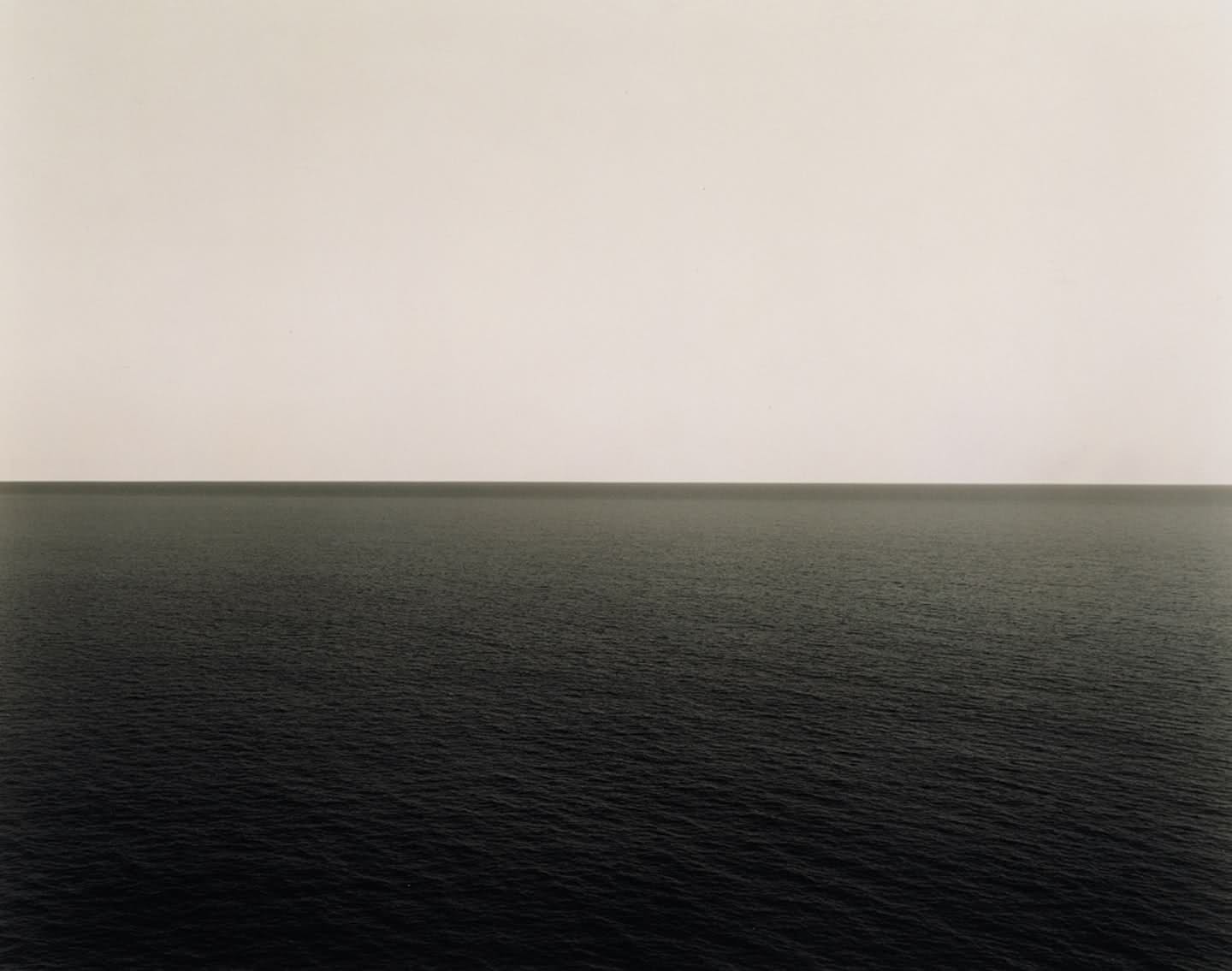
I have been thinking of what kind of pictures I would want to make with the HL 35x35 ULF view camera (from the Czech Republic). The work of the great Japanese photographer Hiroshi Sugimota comes to mind. The simplicity-sparseness of his seascapes I find so utterly beautiful and peaceful.

Hiroshi Sugimota Seascapes
What if I could create something similar but yet very unique and different. My idea would be to create ambrotypes of the Canadian North that have the same type of common visual calmness and beauty to them as the Sugimota seascapes. The vast Canadian plains of the North are like oceans, but instead of water they are endless empty land masses. I do not believe any photographer has done a study of the North in that style, I would be the first, or at worst one of a few. I also might be able to get grant funding to do such a large and important Canadian based project. There might possibly be funding at both the provincial and national level available.

Imagine these pictures, large 24x35 or 35x35 ambrotypes (pictures on glass), one of a kind works that speak to the vastness and tranquil beauty of Canada. I could see work like that in eventual display at the National Gallery of Canada in Ottawa. Can it be done? Yes I believe it can. Anything is possible if you work hard enough to achieve it.

Thursday, March 14, 2019

We Have Water!!

The plumber was in yesterday to hook up my 3 sinks. He connected 2 faucets, 5 drains and my water temp mixing device (not sure what these things are called). The plumber also fixed up sink and drain in a room I hope to rent to help pay the bills on mom and dads home. The total cost for everything was $640, not as terrible as I feared.

Everything went well, the only problem was with the water temp mixer thingy, there is a persistent drip when I am use it. I have tried lots of different things to stop the leak, nothing working so far. I hope to be able to use this device to allow me to wash film and prints at a constant easily set water temperature. Also hope to use it to quickly get to the proper water temperature when mixing chemistry. This thing was given to me years ago by a pro photo lab that was closing down. I have another 2 mixing valves that I could try replacing it with if all else fails.

Below are some shots of the new connected sinks. I am in wash mode now, have dish pan hands! Washing all my tanks, containers and trays, lots to do there. The big ass double metal restaurant sink that dad bought for me (he asked if I could use it before buying it 20 years ago) is especially good for this big time washing stuff. Tonight felt like the old days when I used to wash pots and dishes as a part time job. In darkroom #2 it was more fun thou, got to listen to great classical pieces, early rock and jazz (John Coltrane) on my $60 stereo system. Washing to the tunes!

This darkroom is almost ready to work in. I still need to light proof the 3 doors, finish the cleaning, bring in a few more things but I am almost ready to whirl. I should be mixing up some fresh chemistry soon. Still looking for my machine chemical mixer and a big safe light I bought years back. Most everything else I need is in the space already.

As you can see in the photos, I put down some anti fatigue mats, to help with the long hours of standing. Going to be an old man soon, got to prepare for that. I can print my lifetime of negs now Large prints, small prints, in prints in Platinum, whatever! I can also use the space as my wet plate area.

Note* I put screws into the floor feet of the sink legs. This helped stabilize my home made sink stands. They are are not that bad, pretty solid. The stand I made is actually more stable than the one I got for free (thrown in with the black plastic sink).

LIFE IS GOOD TODAY, AM IN A HAPPY PLACE!

Leaky mixing valve thingy
Big deep double washing sink
Sinks #2 and #3 fished with washed items from sink #1, gosh thats a lot of sinks!
Anti fatigue mat under condenser enlarger
Wide darkroom #2 view
My pretty new space
Drying
Banarama (Poloroid Conversion Camera) and Stereo Camera
Blad with 55mm lens and Canon 1/2 frame camera
Fuji 65mm 6x9 camera and Rolleiflex F
Chess game (I am white) and Japanese Ambrotypes (super beautiful)
Anti fatigue mats
Nong and Pong with some Russian cameras

Sunday, July 30, 2017

Bought Me Another Japanese Ambotype Portrait - 3 Women 1850s

Even thou these Japanese portrait ambrotypes are quite expensive I find them almost impossible to lay off of. This one, my 4th, was advertised as coming from the 1850s. It is missing the top cover of the box, which is unfortunate.

Who were these women? What lives did they lead? How long did they live? What did they feel and think? Did they ever fall in love? Were they happy or were their lives filled with sadness and heartbreak?

Ambrotype in anicent Greek means "Immortal"  In the 1850s (or possibly a bit later) these women sat for an ambrotype photo. They posed and someone made a wet plate picture of them. In 2017 their picture was put online for the world to see. Later when I die someone else will own the photograph and wonder about these long ago lives. These women live on through the work, in a sense they have become immortal.

"Ain't Photography Grand!!"

3 mystery Japanese women from the 1850s

Friday, September 3, 2021

ALIVE INSIDE THE GLASS!!

Here is a conversation I had with MS (the founder of modern wet plate) on Facebook. Thought it was important to include some of my motivations for making these difficult things.

  • MS
    1
    • Like
    • Reply
    • Share
    • 1h
    • Edited

  • Gerry Yaum No problem … but be aware that eventually it will fail and destroy your image as it has with every other collodion image done that way given enough time. Another form of magic. 
  • 😄
  • Gerry Yaum
    Author
    +1
    MS
  • MS---  those ambrotypes shown in the links are most likely 130-160 years old (1860-1890).....seems pretty good, long enough... I can view these old pieces at home with no problems, limited damage. In fact I love the look so much they inspire me to push forward through the difficulties of wet plate. Will they actually last 250-300 years? maybe?? Seems long enough to me. My pics are not that important ðŸ™‚. Sometimes we get carried away with the whole archival thing. 200 years seems plenty long. The other and maybe better option (as you know, being the YODA of this whole wet plate thing) is just coating with varnish, then framing with black velvet or some other cloth behind. That will get the same 3D looking through the glass effect that I love. Want the illusion of 3D, the subject alive inside the glass. That is what is magical for me, and why I am not a huge fan of tintypes. It is like the moment in 1984 where Winston Smith has the piece in glass (paperweight) from another age, it is a magical wonderous thing, a time tunnel to a past long gone world. When I look at the Japanese woman in the ambrotypes, it is like they are still alive captured inside the glass. That is the feeling I want the work to have. The photo from the most recent version of the film. The life inside the glass is precious and special.

Winston Smith finds a glass paper weight from the movie 1984 staring John Hurt

Friday, June 24, 2022

Wabi-sabi And Ambrotypes

Been thinking of this Japanese based philosophy tonight, in regards to the impermanence of wet plate ambrotypes covered with asphaltum.


Wabi-sabi
Wabi-sabi is a concept that motions us to constantly search for the beauty in imperfection and accept the more natural cycle of life. It reminds us that all things including us and life itself, are impermanent, incomplete, and imperfect. Perfection, then, is impossible and impermanence is the only way.

Sunday, September 24, 2023

Bow Lake Shoot

Spent the day yesterday making Ambrotypes at a tourist central Jasper Park view point at Bow Lake. Hundreds of tourists stopping tou photograph the mountains, lake and themselves (mostly themselves). Germans, Koreans, Chinese, Japanese, Indian, Americans and Indians. My camera was completely surrounded at times. Had to arrive at 730am to get a spot (left our camping area at 530am).

Did 8x10 clear glass Ambrotypes. First time shooting at 2c, first time shooting in a major tourist area and first time using filters for wet plate. Made 9 plates of two setups. Over a 12 hour period, including set up and take down, a shower, 2 meals and 2 hour nap.

Wednesday, August 2, 2023

Little Old Man, Japanese Ambrotype

The latest Japanese Ambrotype buy. My collection of these type Ambrotypes is about 6 or 7 now. I find these little beauties fascinating. Who was he, what happened to him. What kind of life did this little old man have? Did he have a family? What was his story? 

The Ambrotype probably dates to 1870-1890. Meaning the man has been dead for 100 years plus but amazingly still lives inside the glass. You got to love the beauty and lifespan of wet plate collodion photography.

Monday, October 11, 2021

Arrived At Prince Albert National Park Saskatchewan (Update From September 22)

After a 6 hour drive mostly on back roads, am now at “Prince Albert National Park” in central Saskatchewan. A surprisingly beautiful place this time of year. Who knew Saskatchewan was so beautiful? I thought if it as a farm place only.

The changing colour of the leaves on the hundreds of thousands of trees is truly beautiful. Quieter and not remote here than I expected. You feel like your back in the past. Took a almost unused dirt road into the parked yesterday, it was lovely. Felt a bit like going back in time to s previous Saskatchewan.

Will photograph and work at the trailer in the campsite for 3 days before venturing out and photographing around the park. Looking to do up some small finished ambrotypes this trip (have yet to completely complete glass plates). Will try to make, wash, varnish and black coat some plates in the field without running water.

Some good food in the days ahead, babacued Bison, Beef and Japanese Sashimi.

One of the joys and fears of this photography project will be learning and having your eyes/mind changed to both the good and bad that is Canada. A evolving of what you thought was true but is not. The beliefs you grew up with are often so wrong. The wonders and the beauties of the Canadian landscape alongside the hate/racism indigenous people face (the murdering of children at residential schools) are two extreme example of what Canada is. So much to learn and to try to understand.

I need to evolve my preconceived ideas of what KANATA (Canada) is and move forward from there. Now how the hell is that captured in ambrotypes? I have no idea but then that’s part of the fun.

Today is a great day to be alive!!!

Fanny and Freddy In The Campsite at the park
Dim Sum looking for something to kill